INSCRIPTIONS

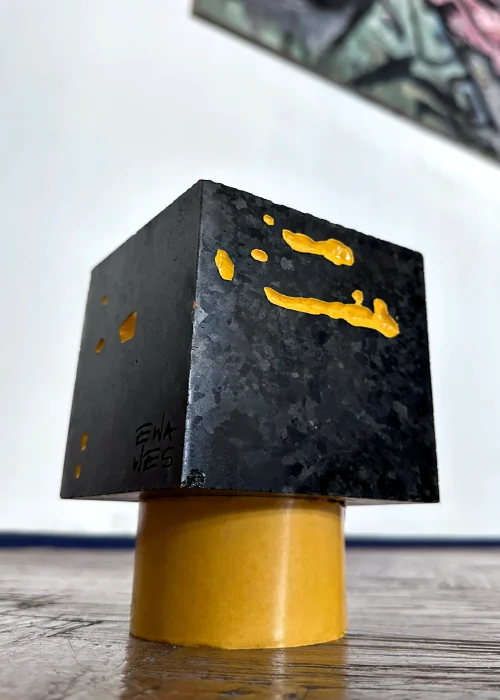
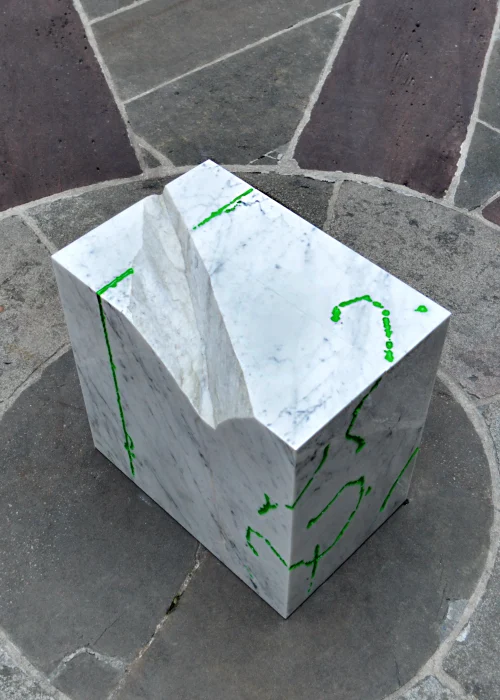
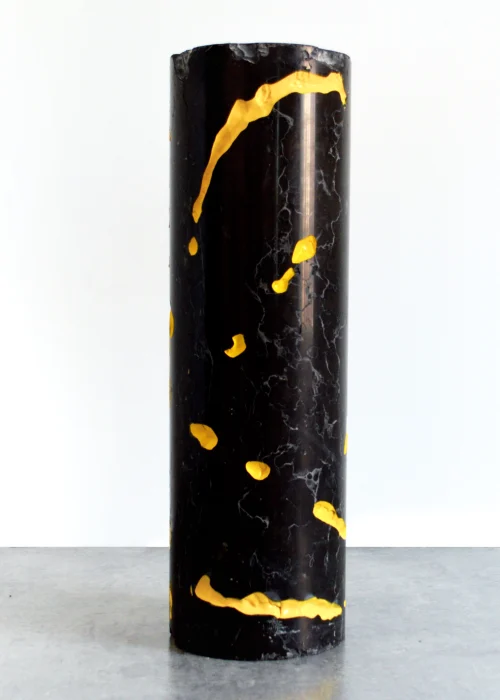
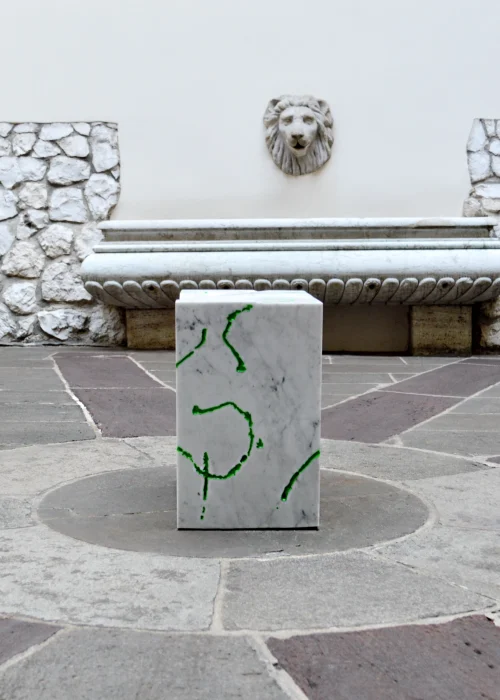
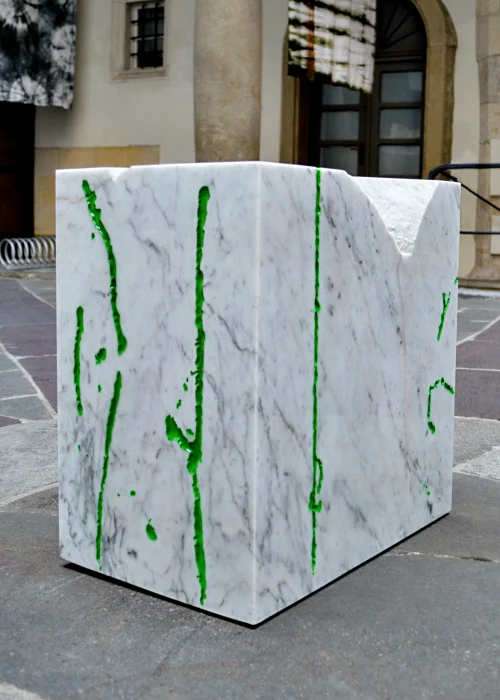
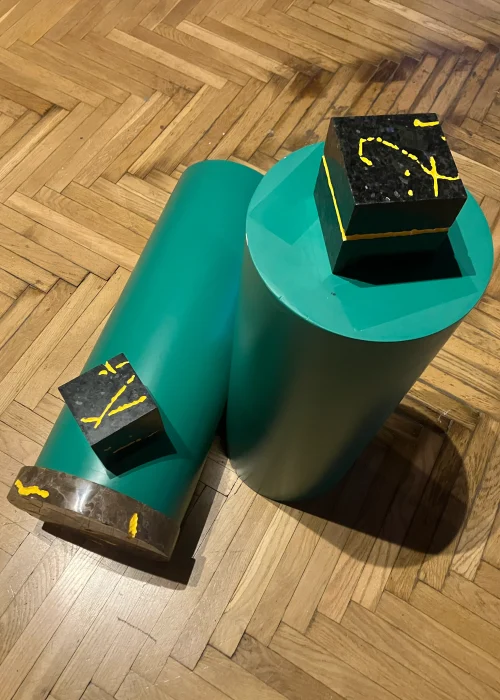
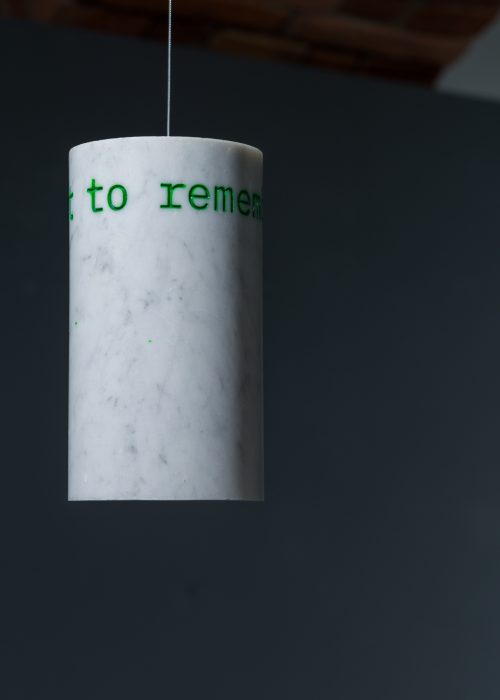
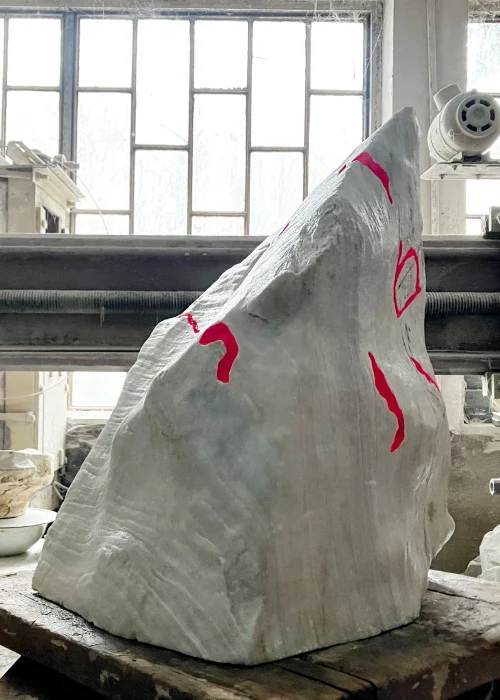
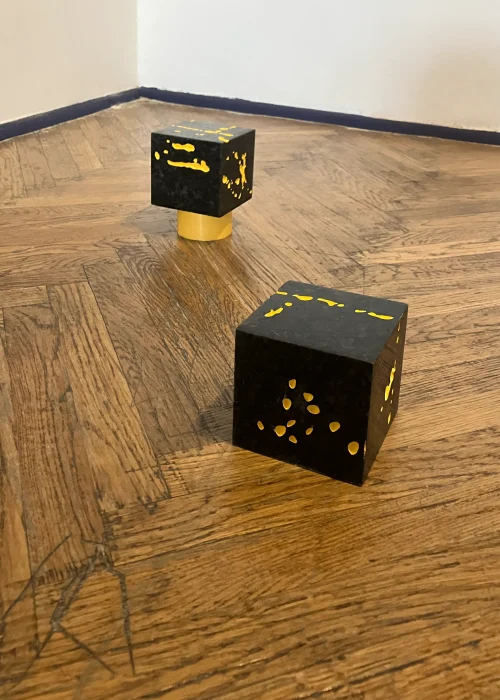
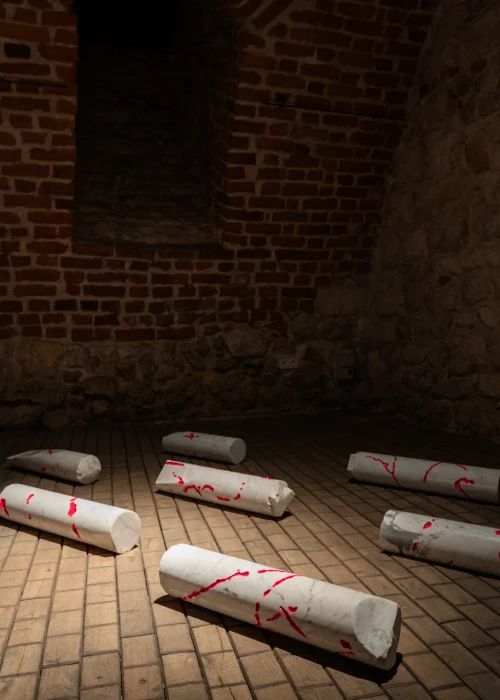
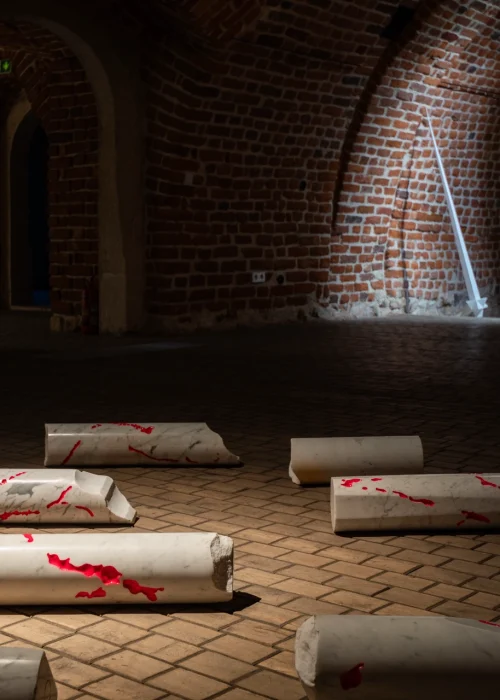
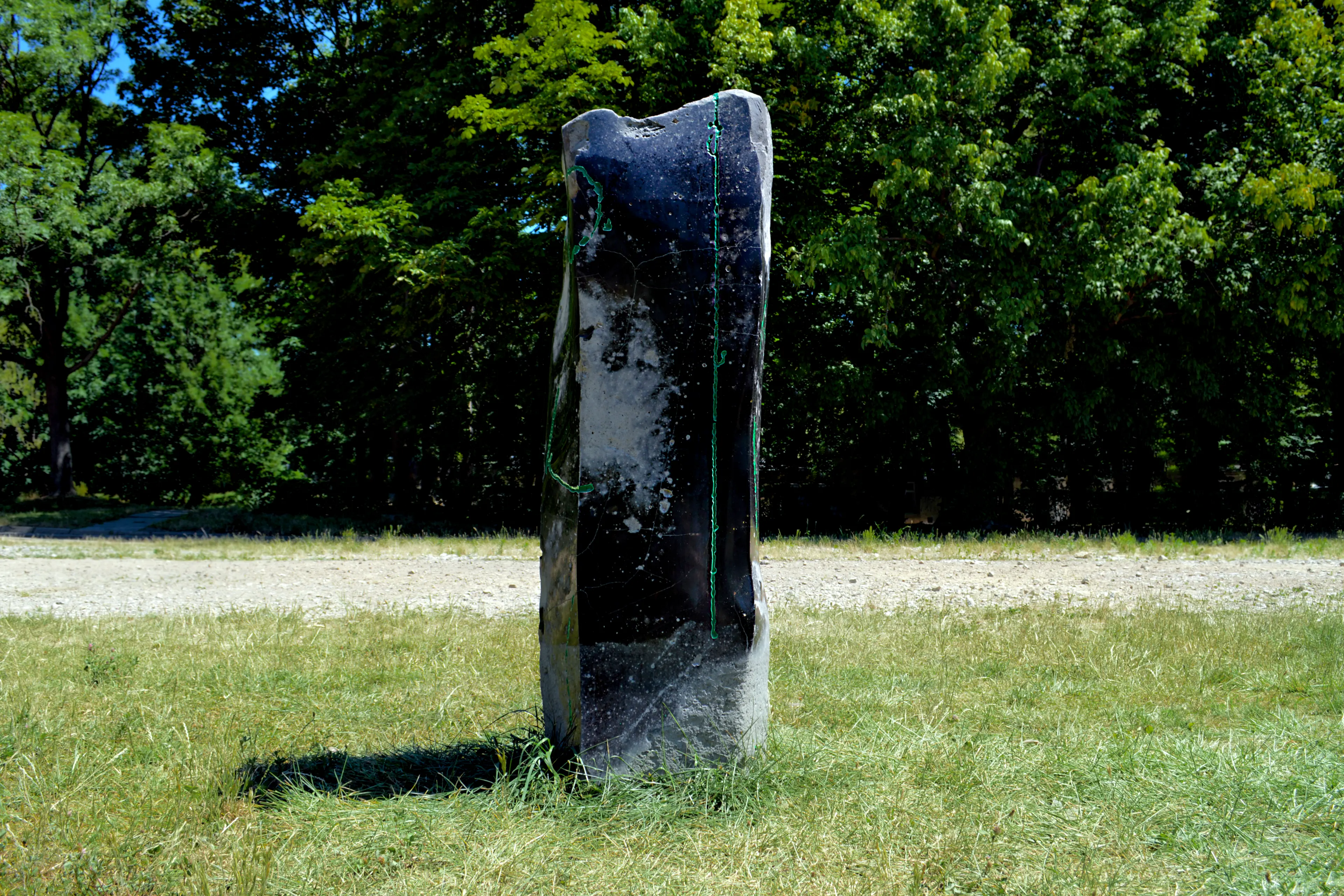
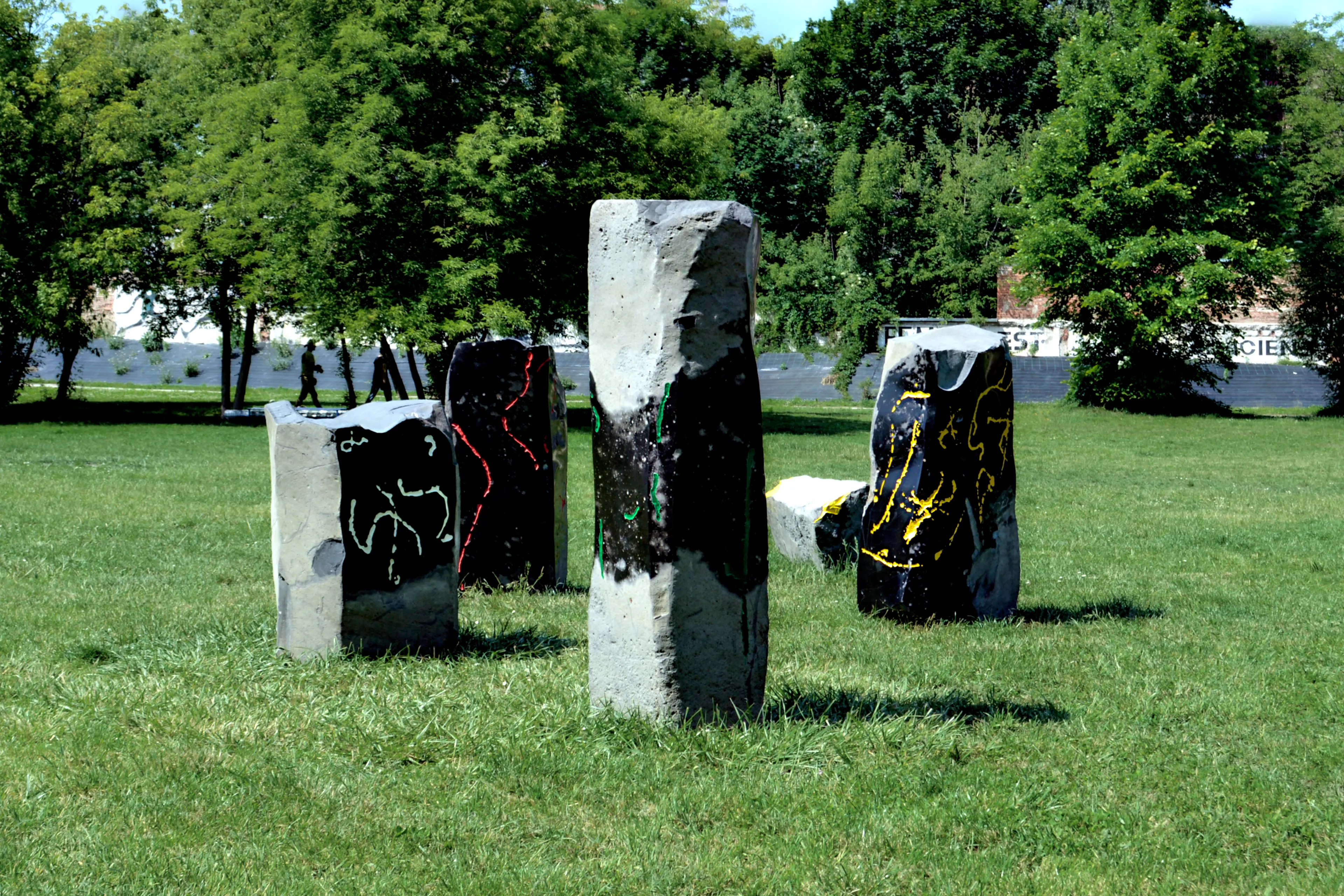
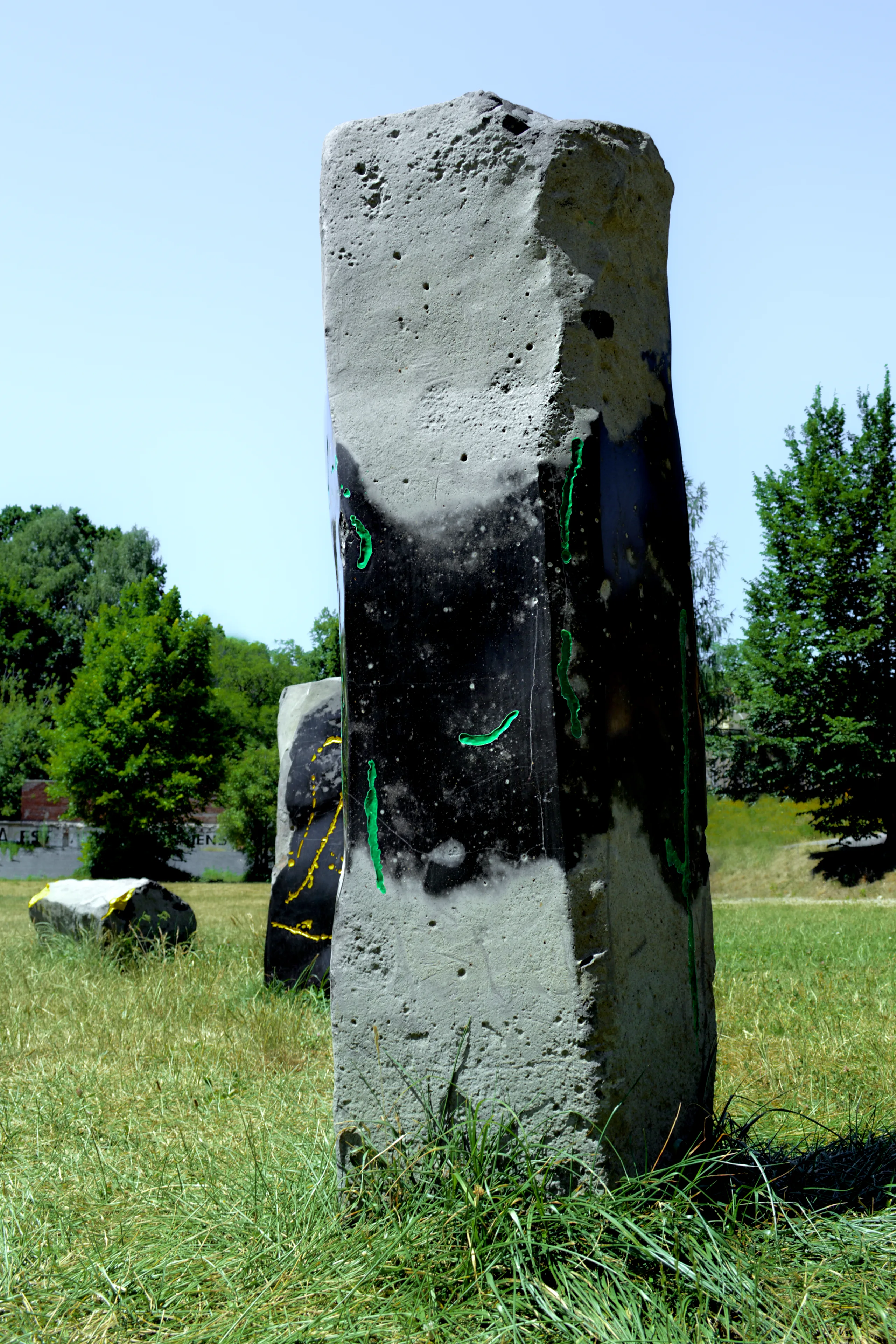
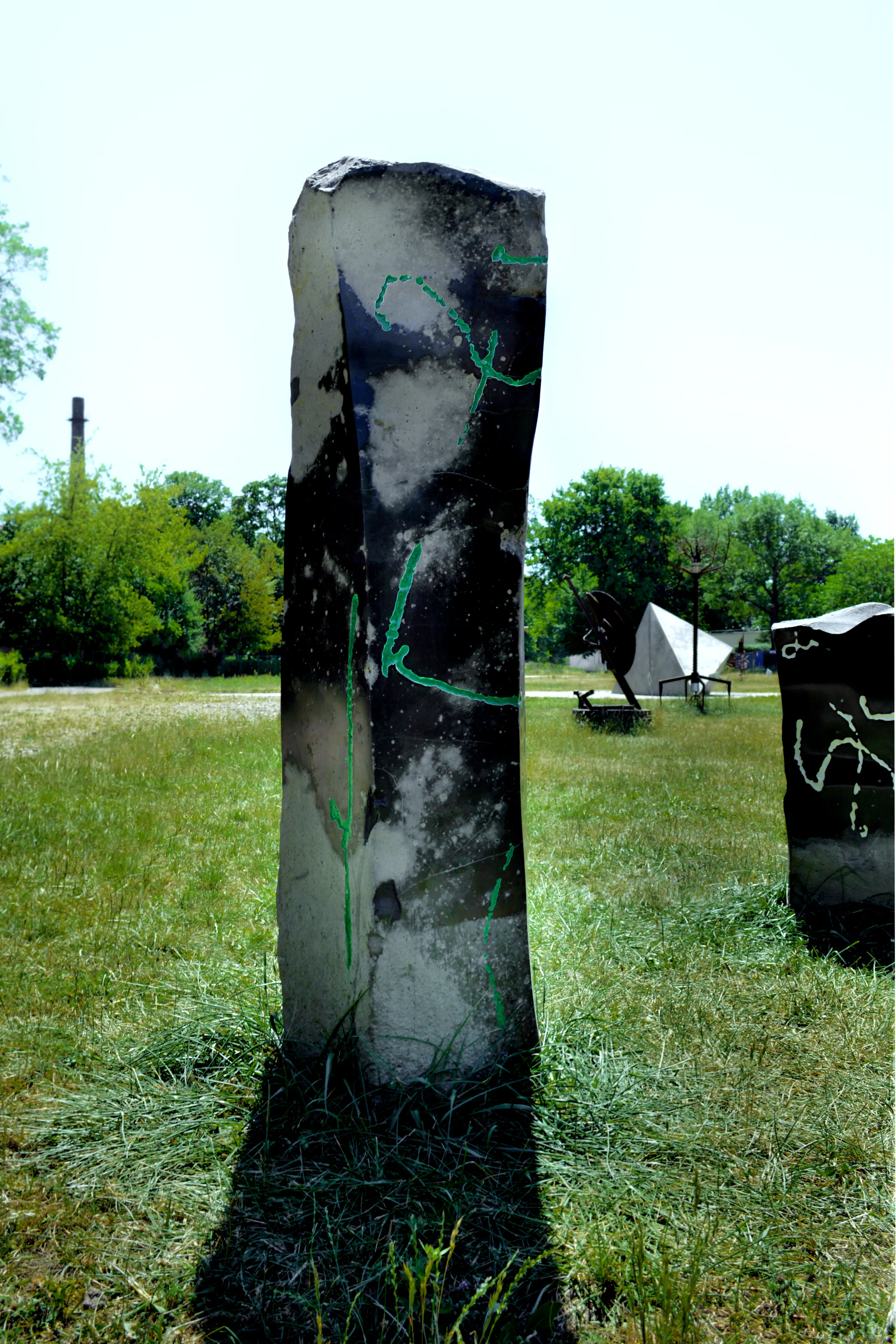
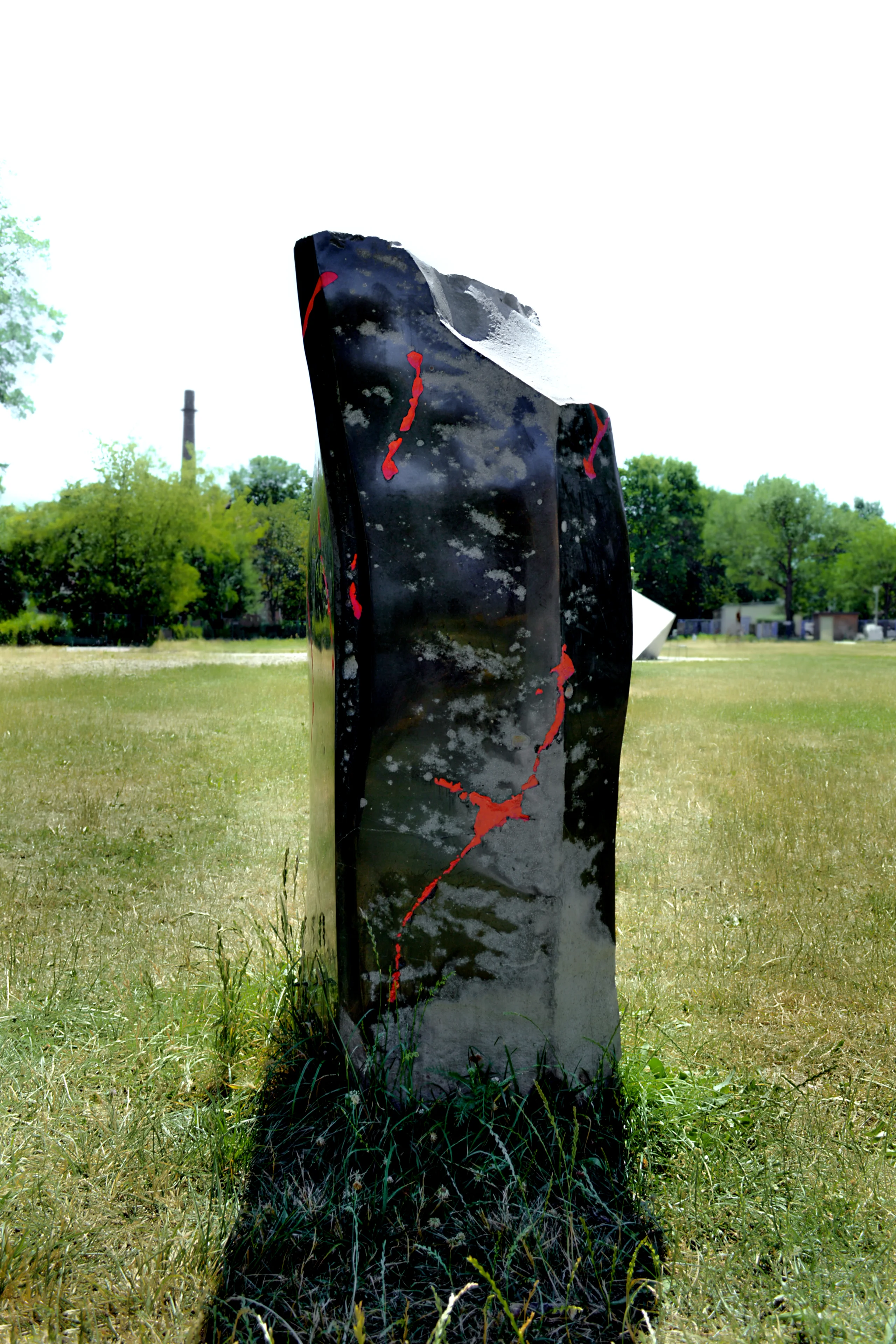
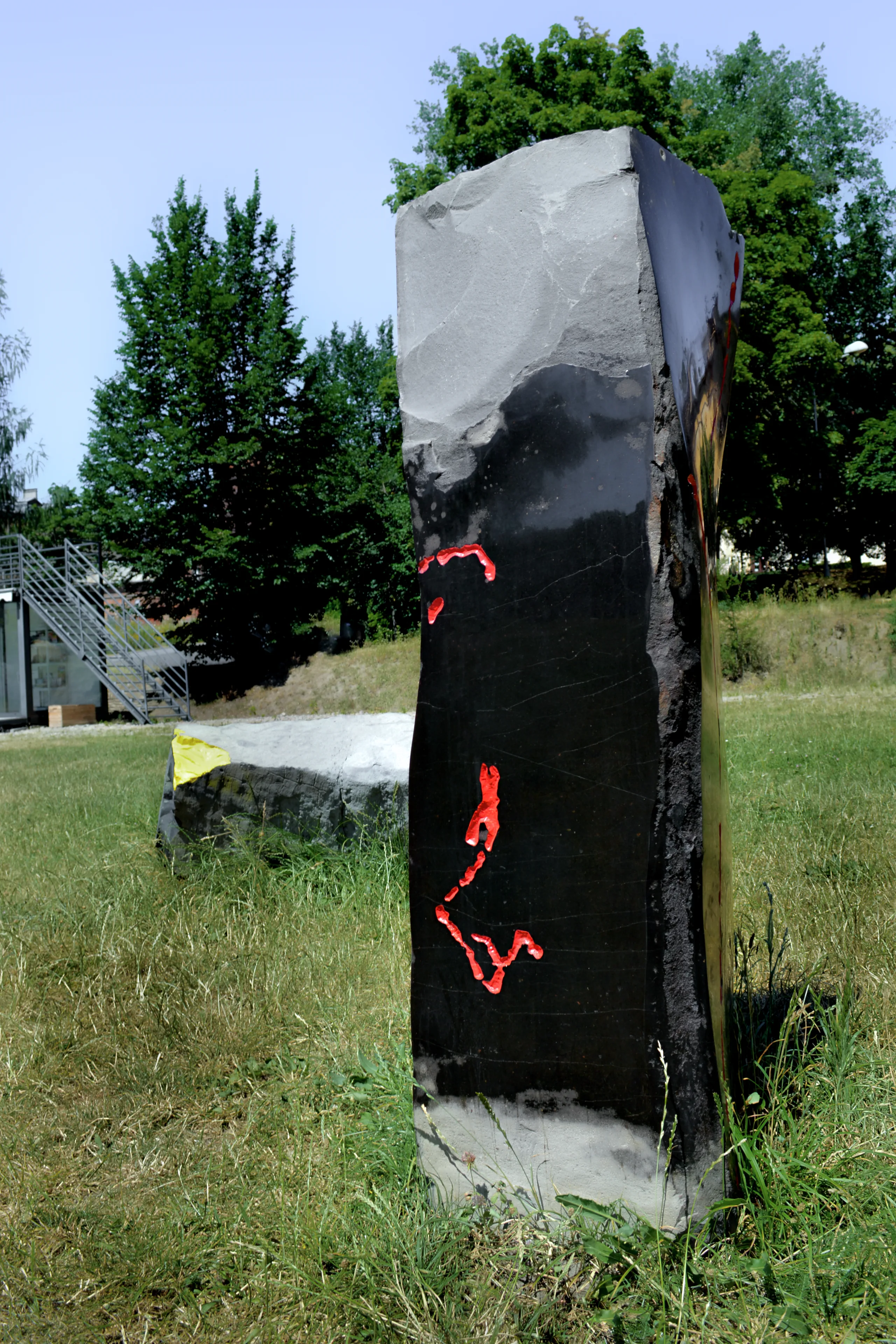
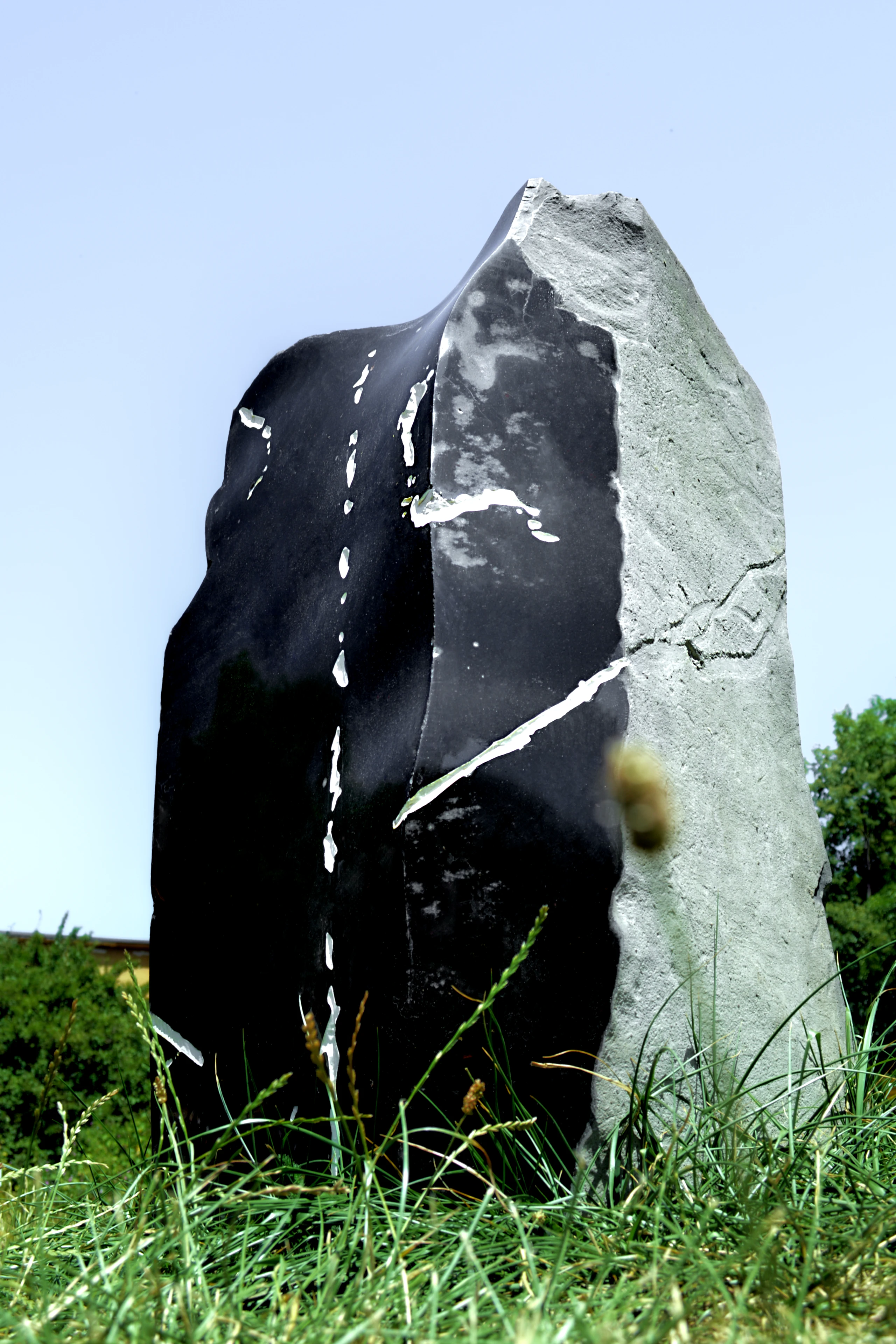
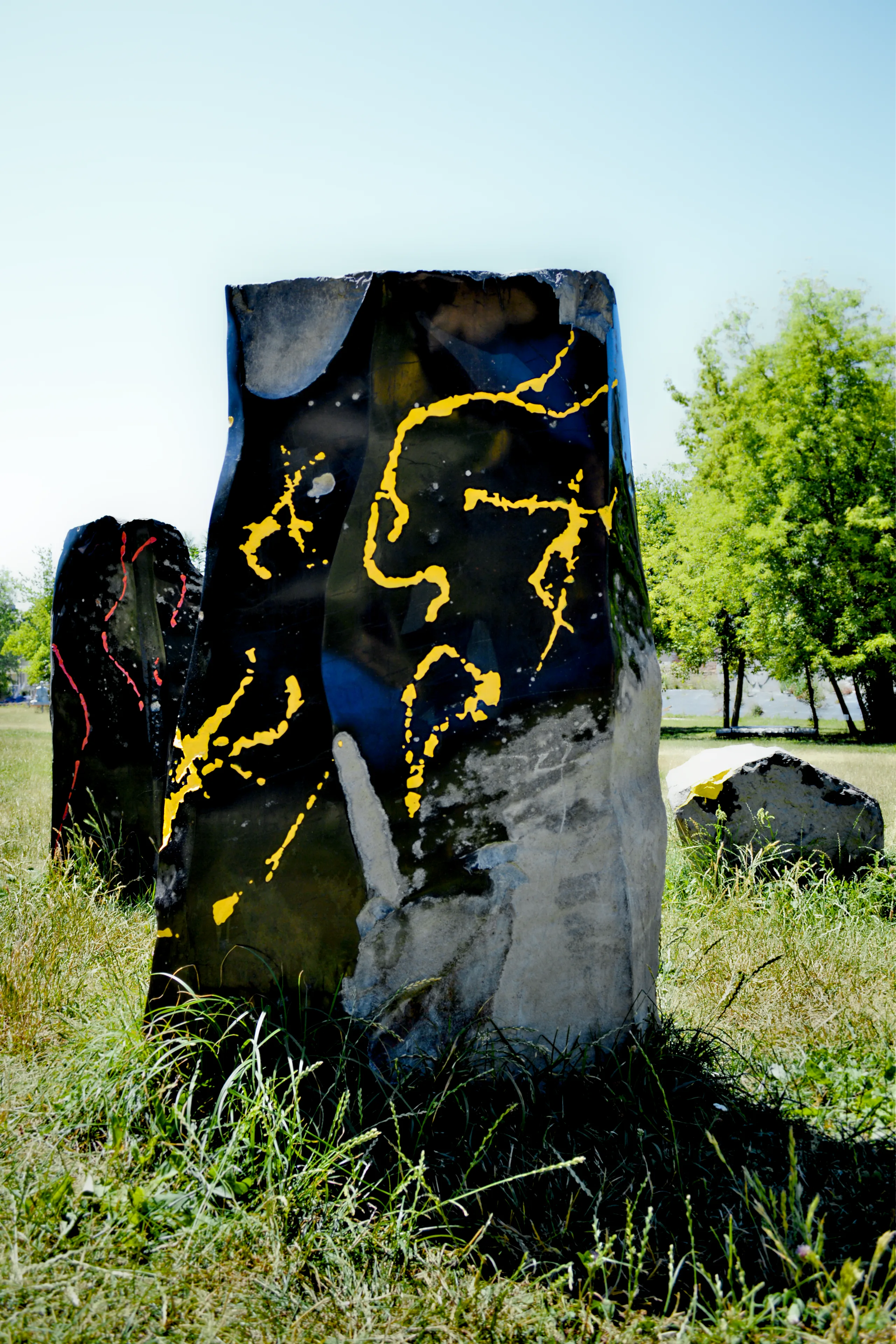
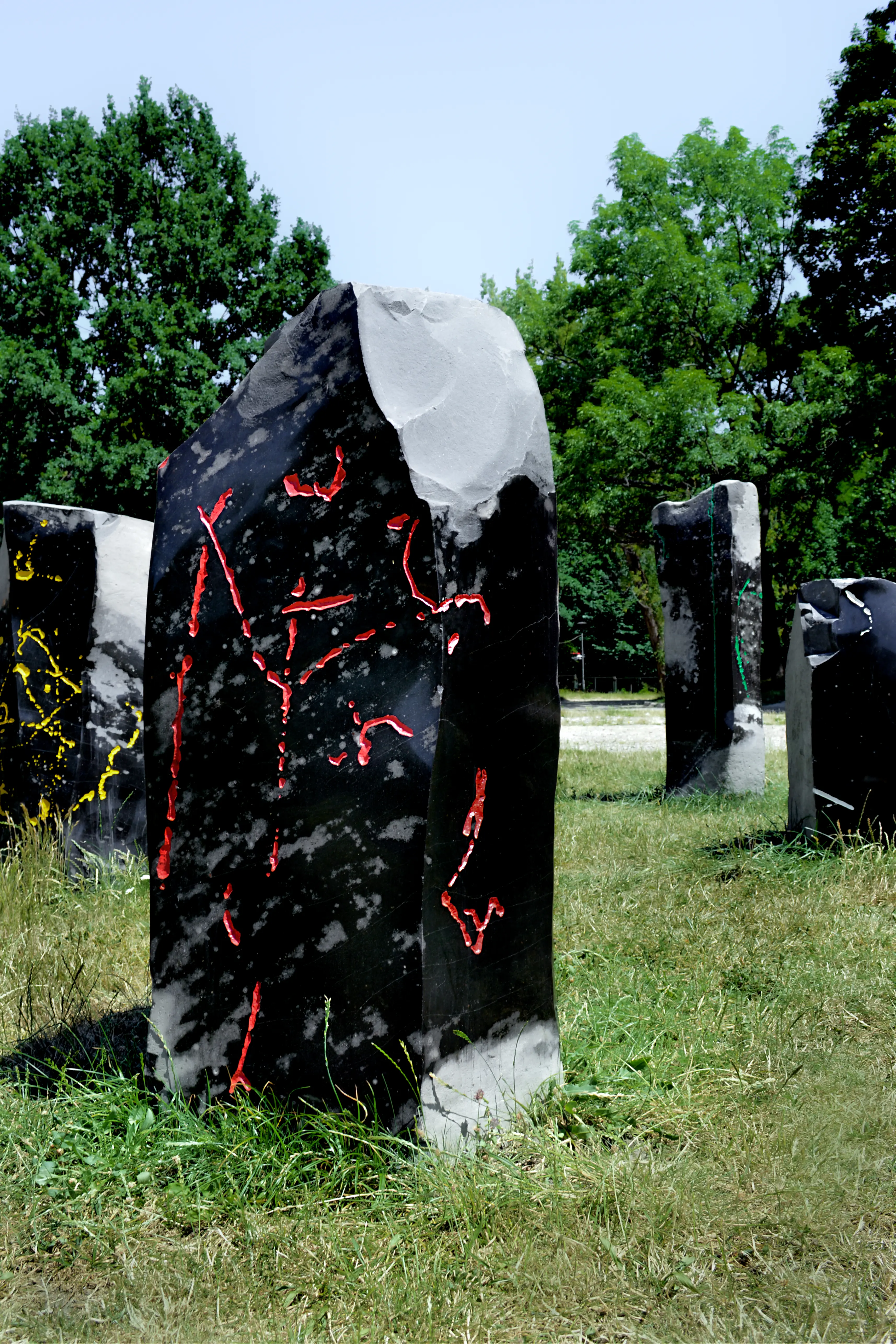
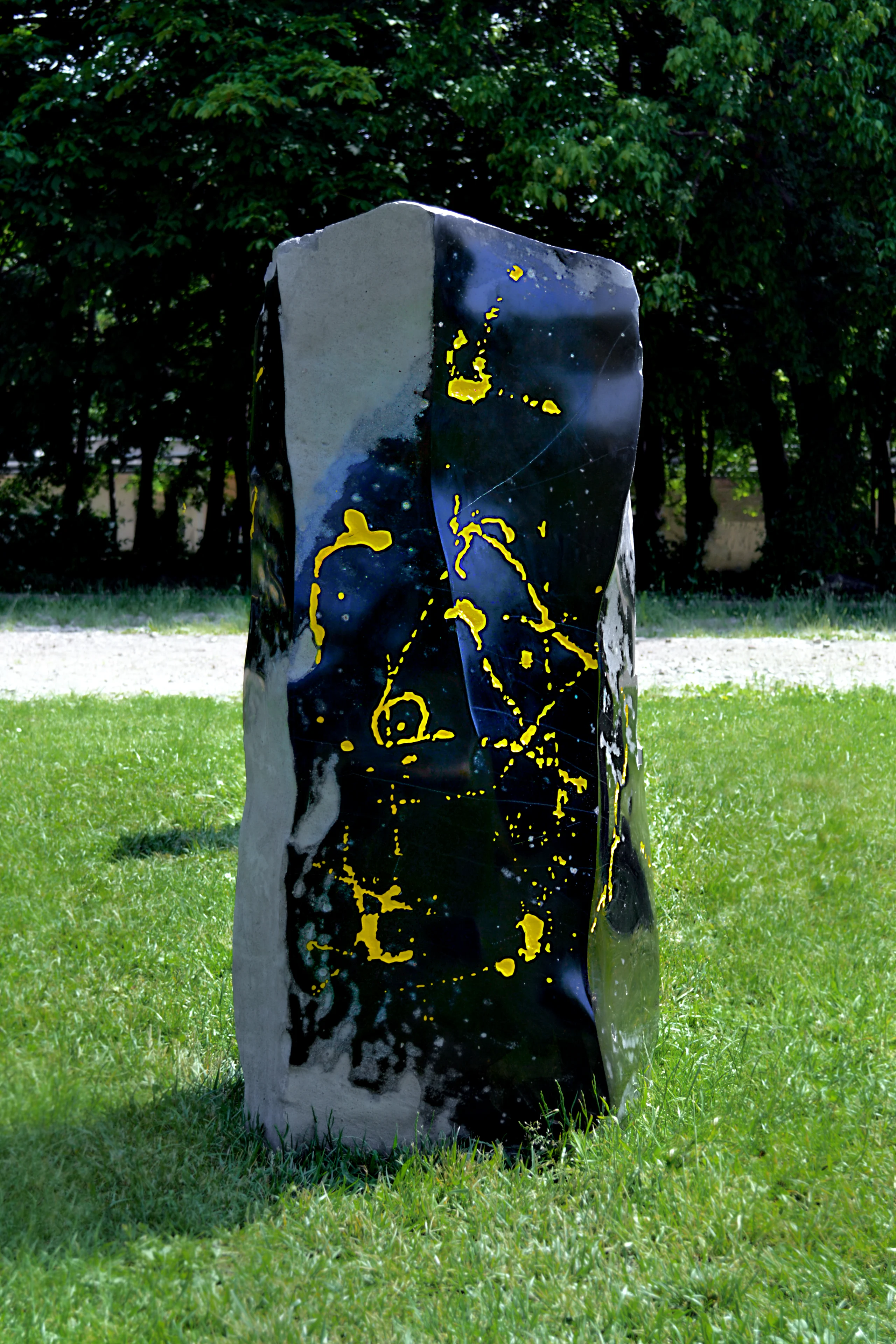
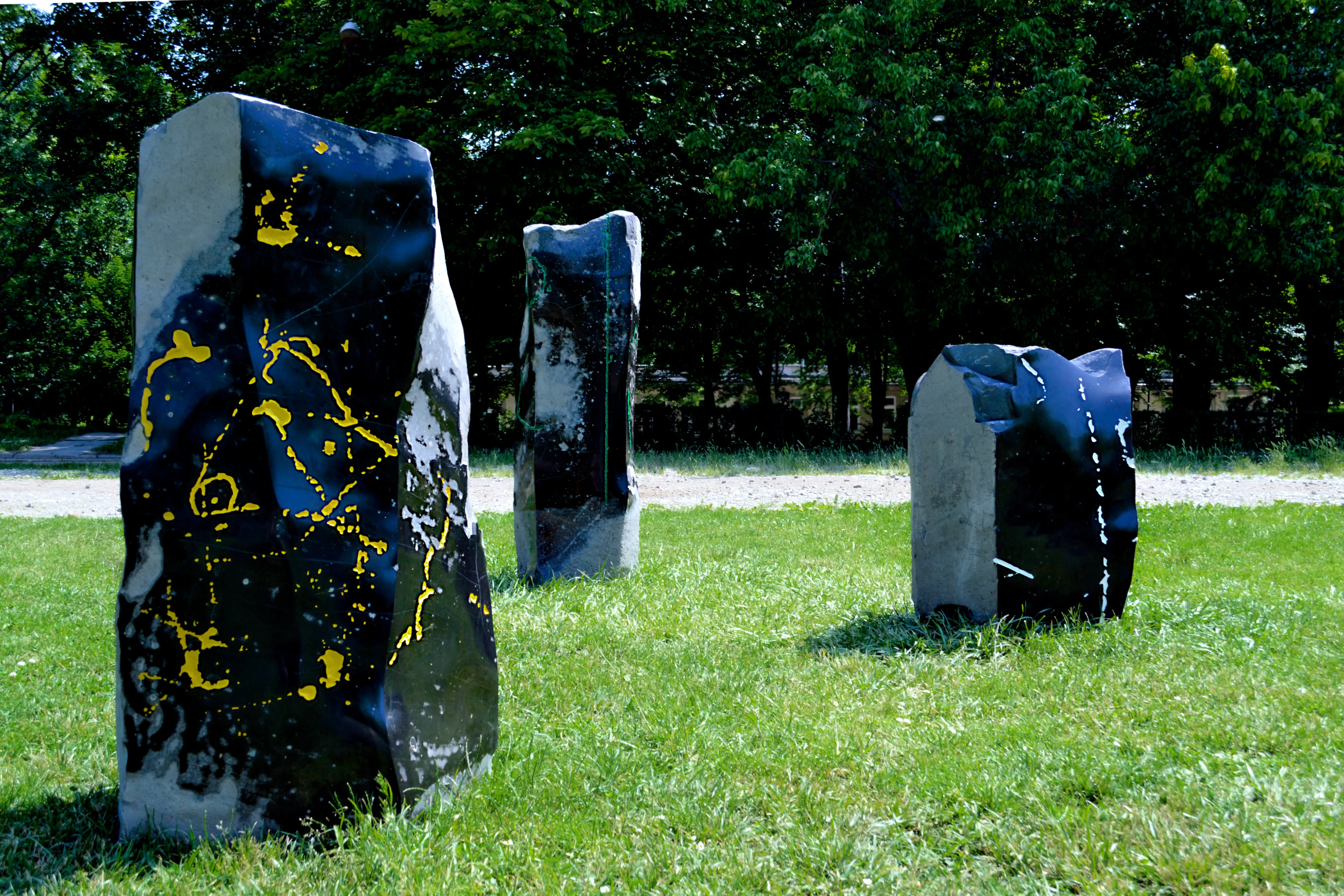
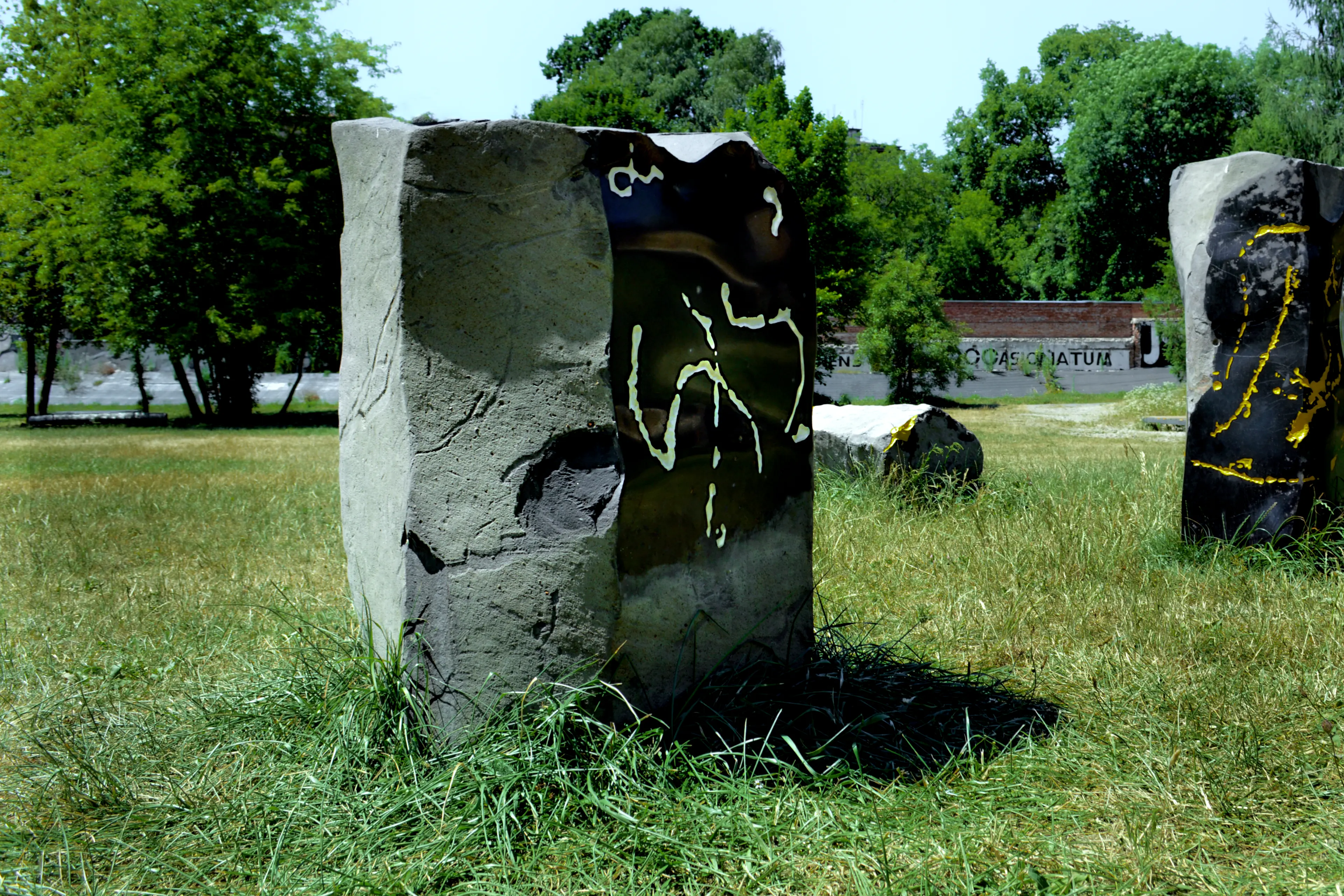
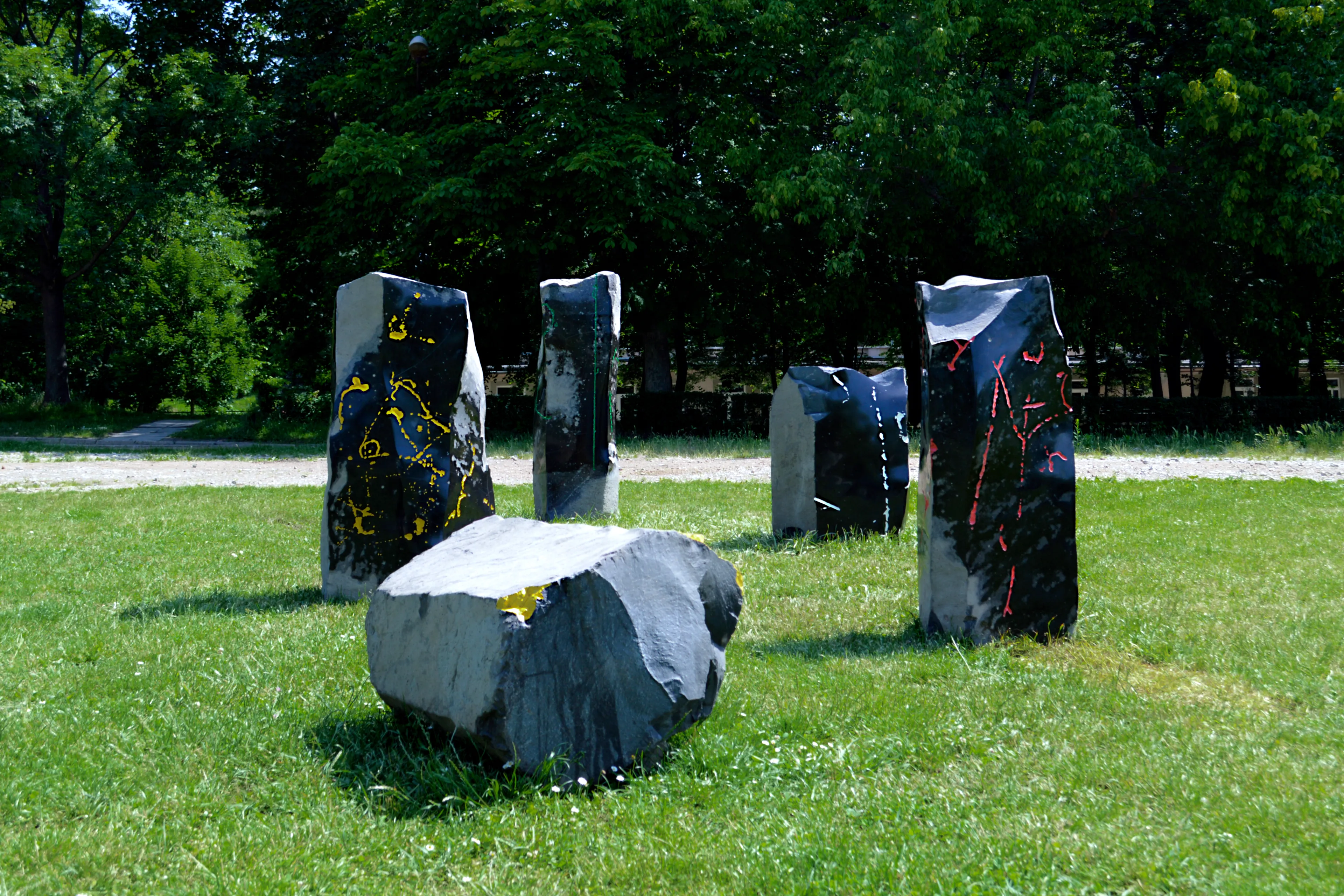
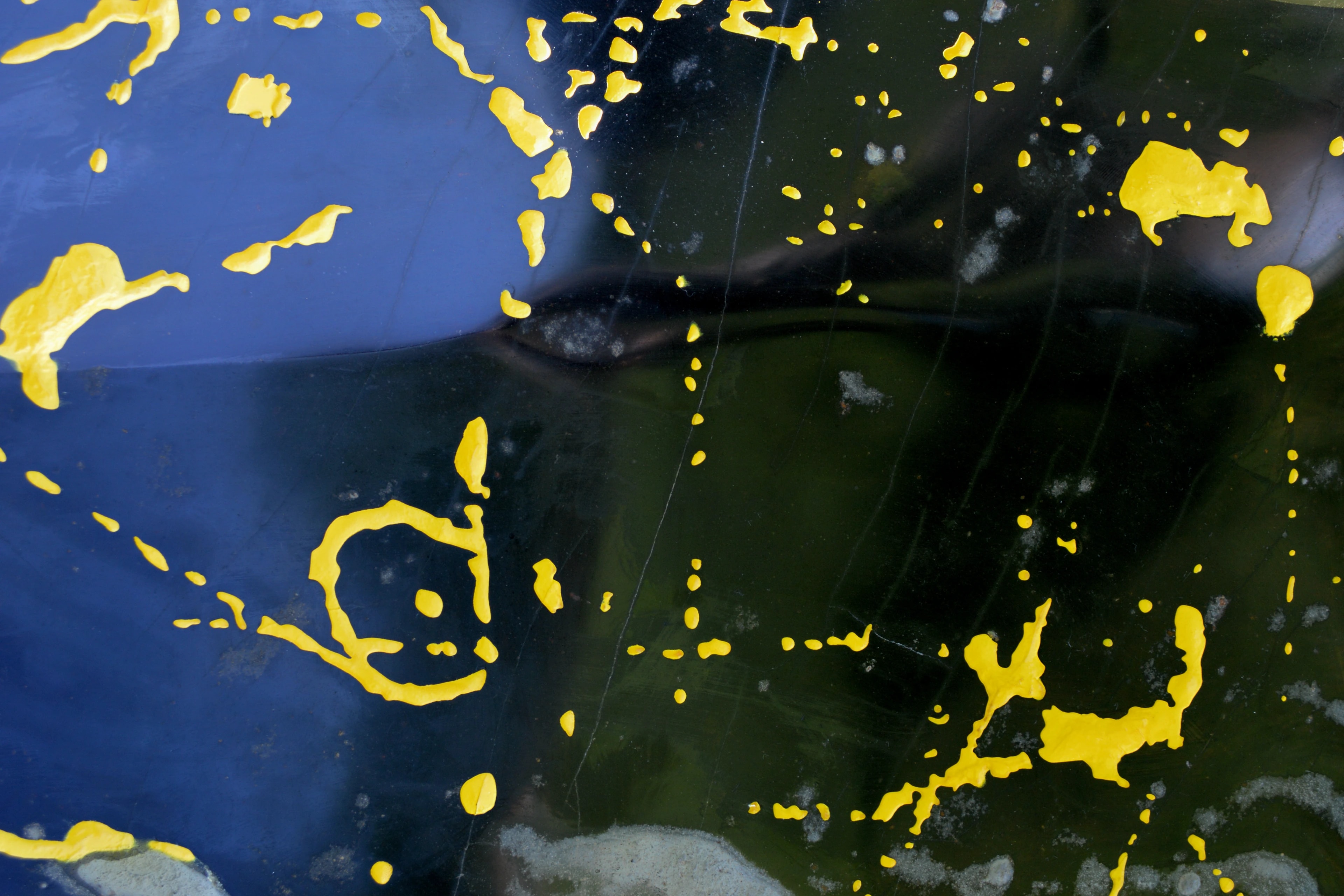
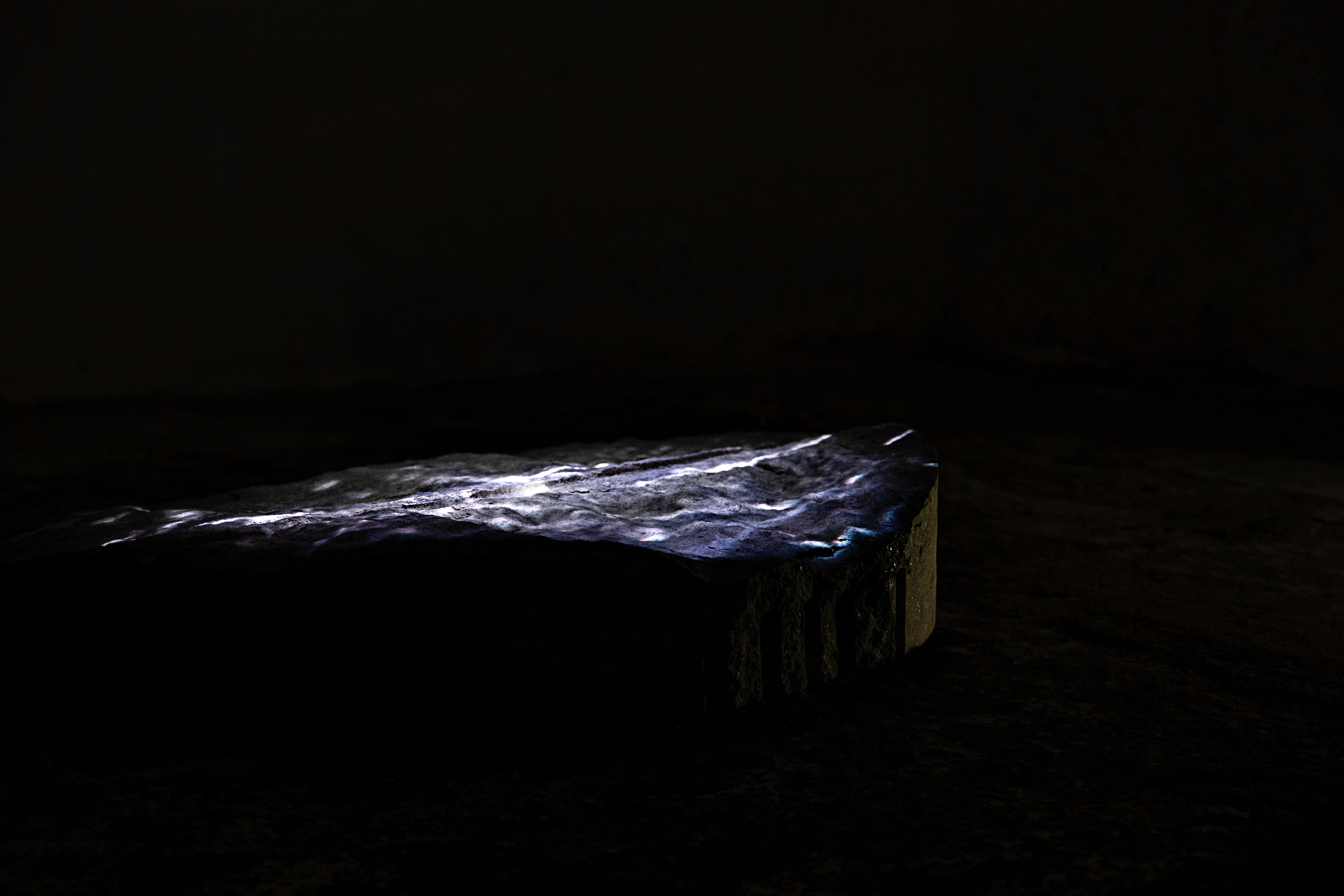
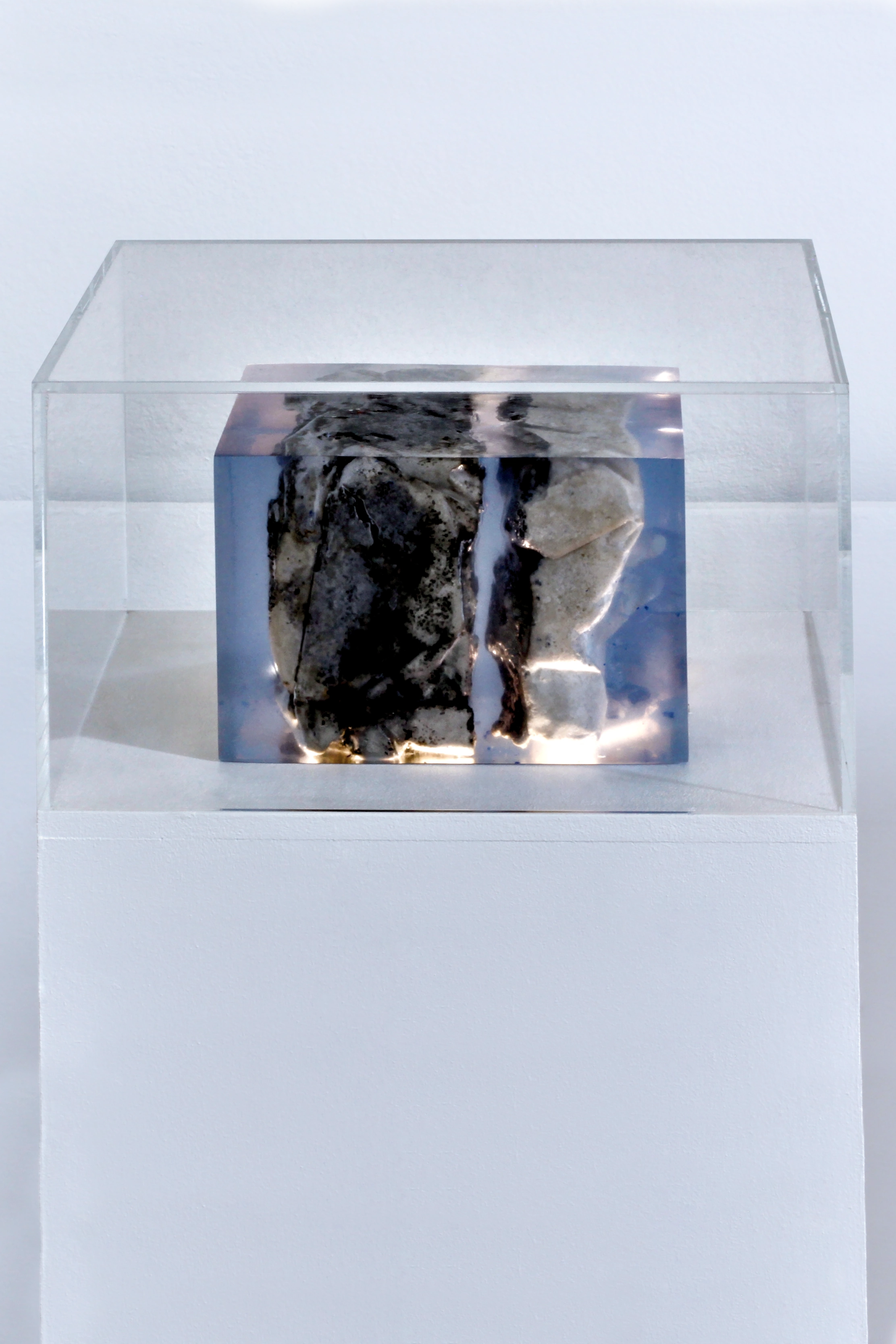
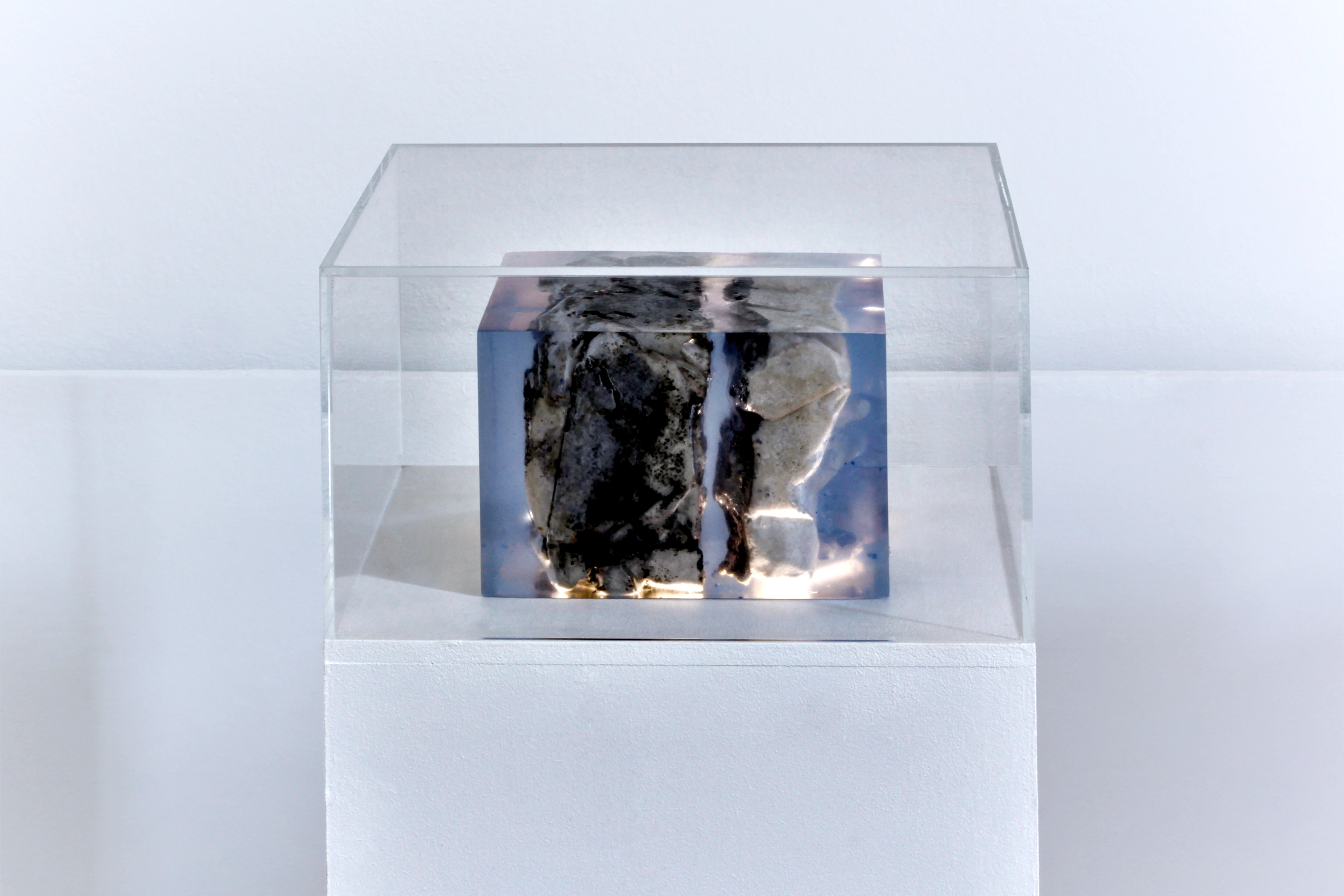
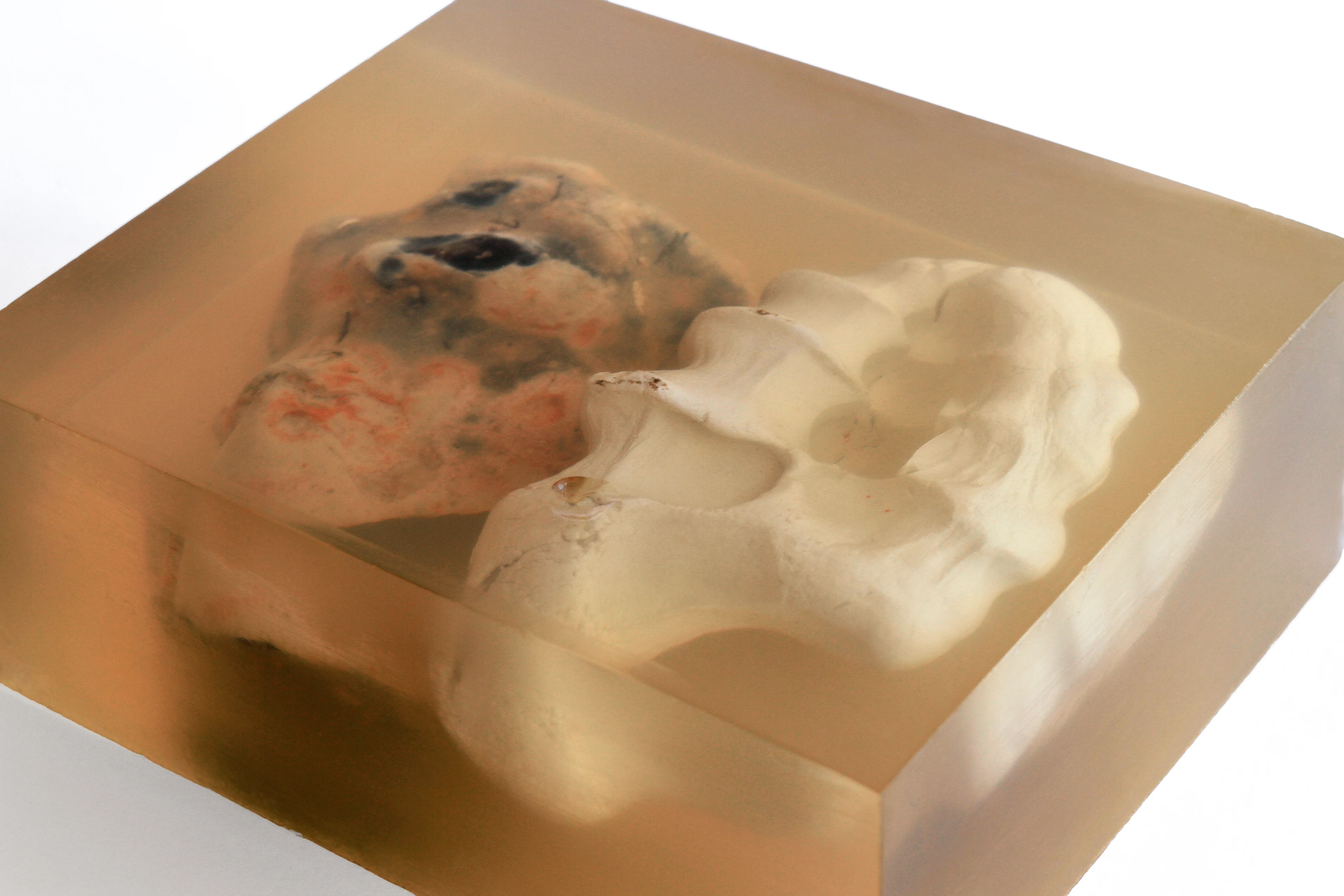
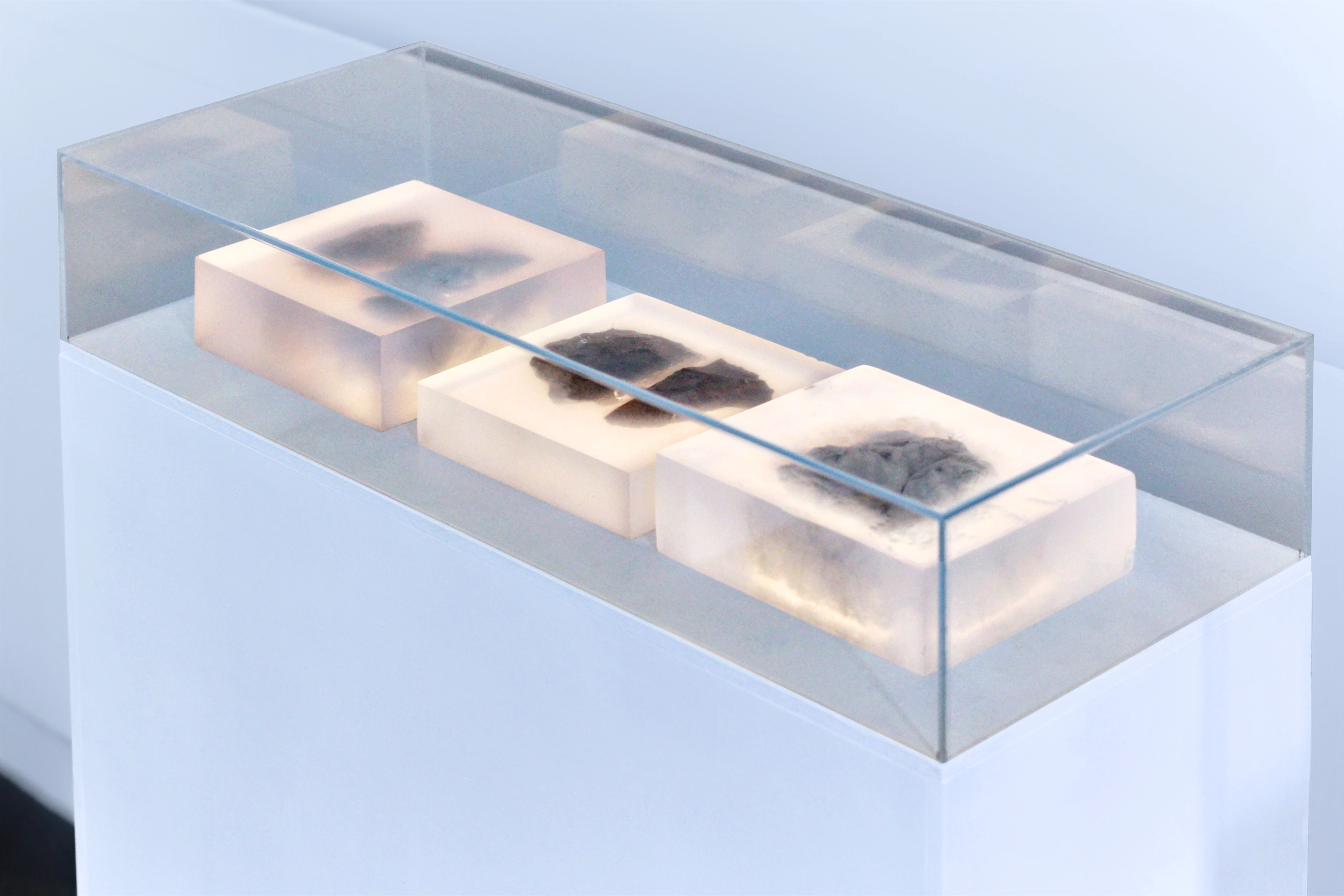
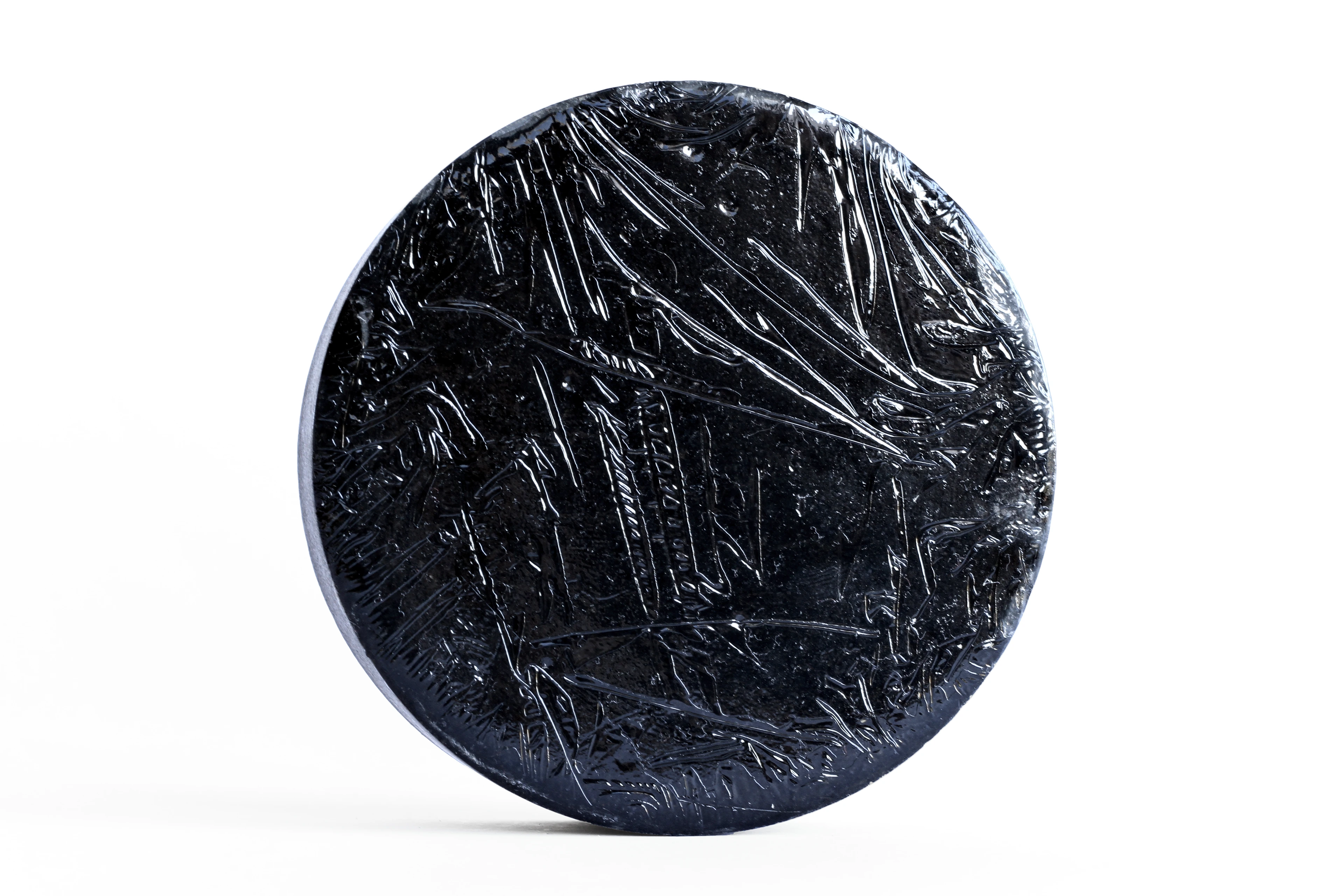
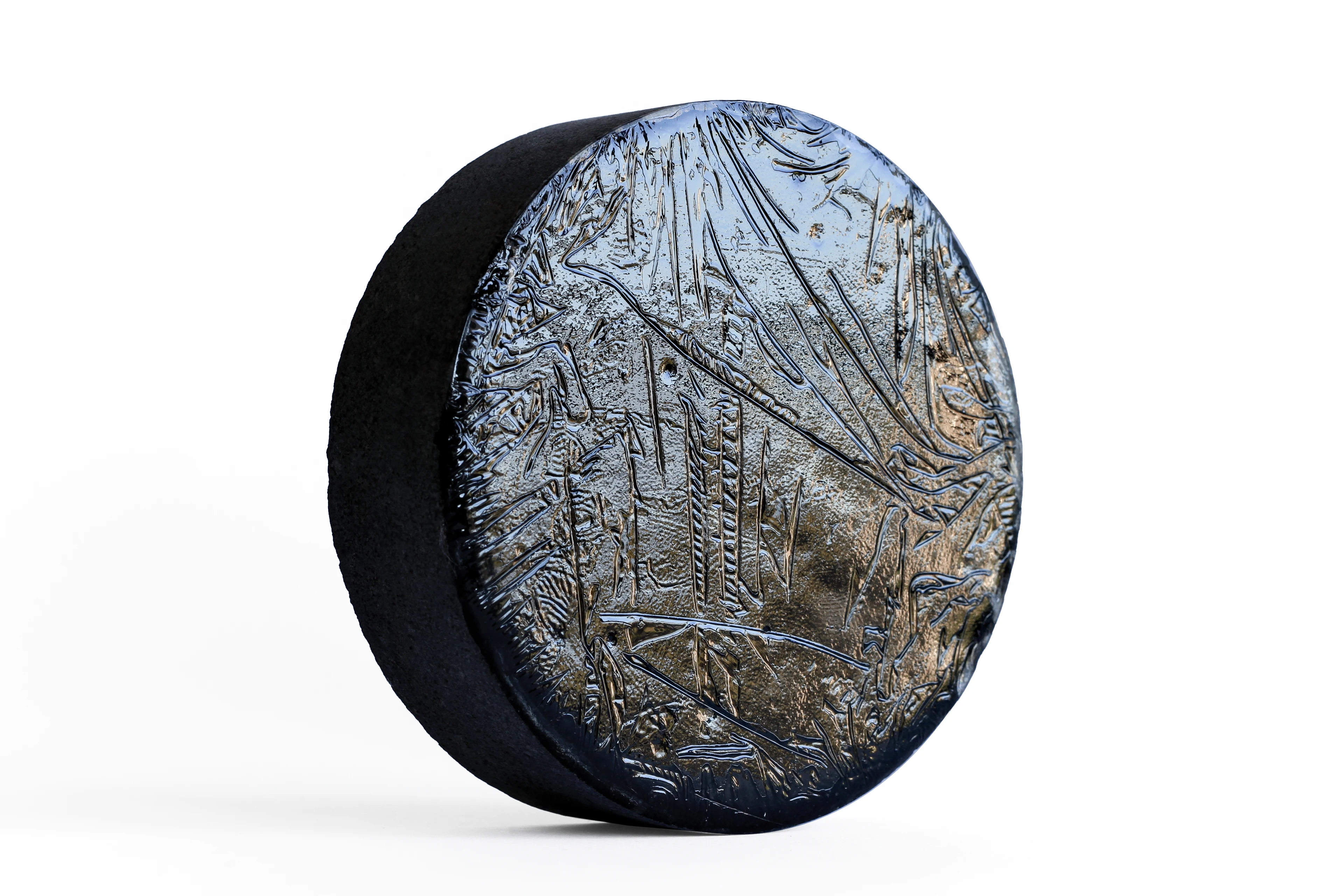
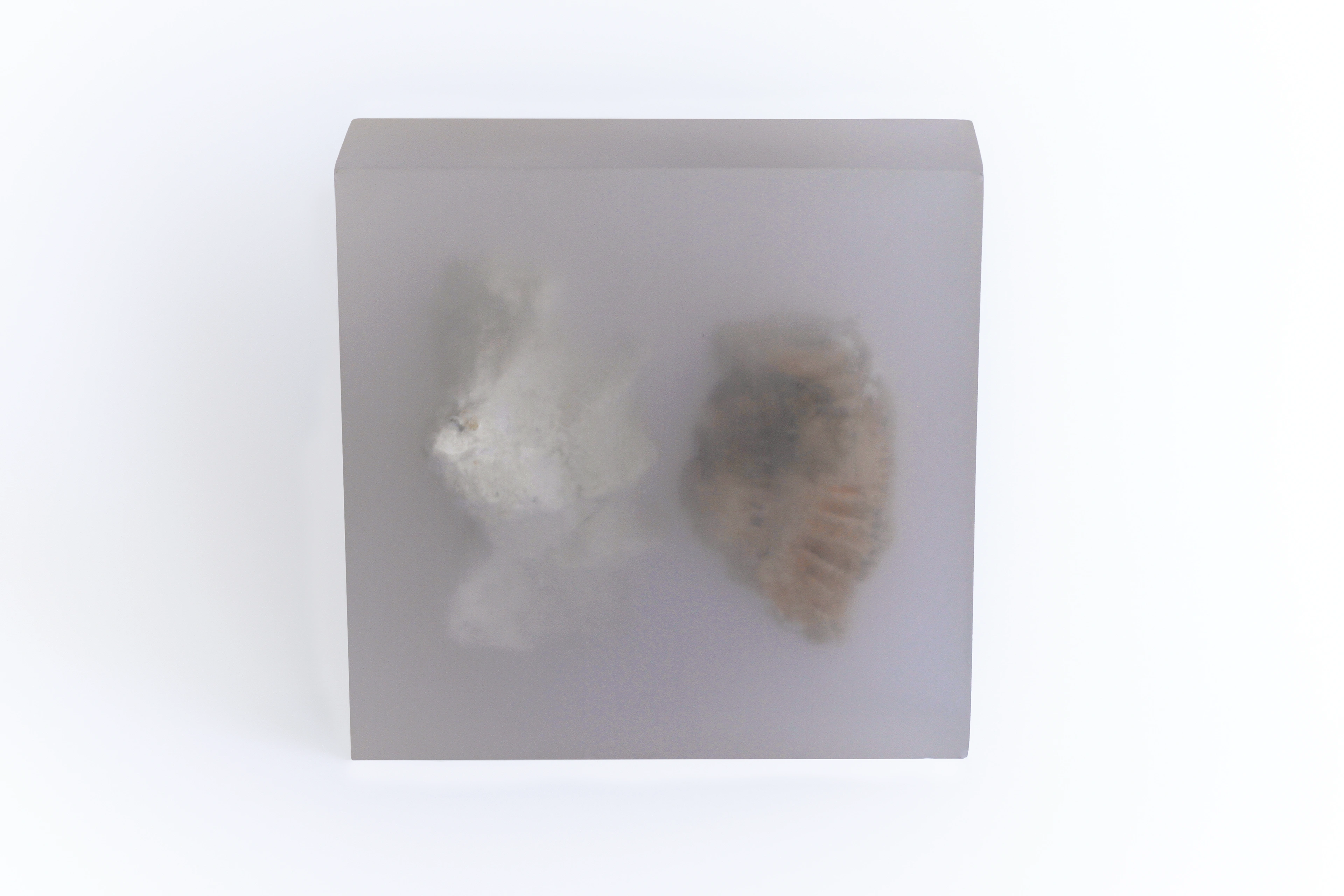
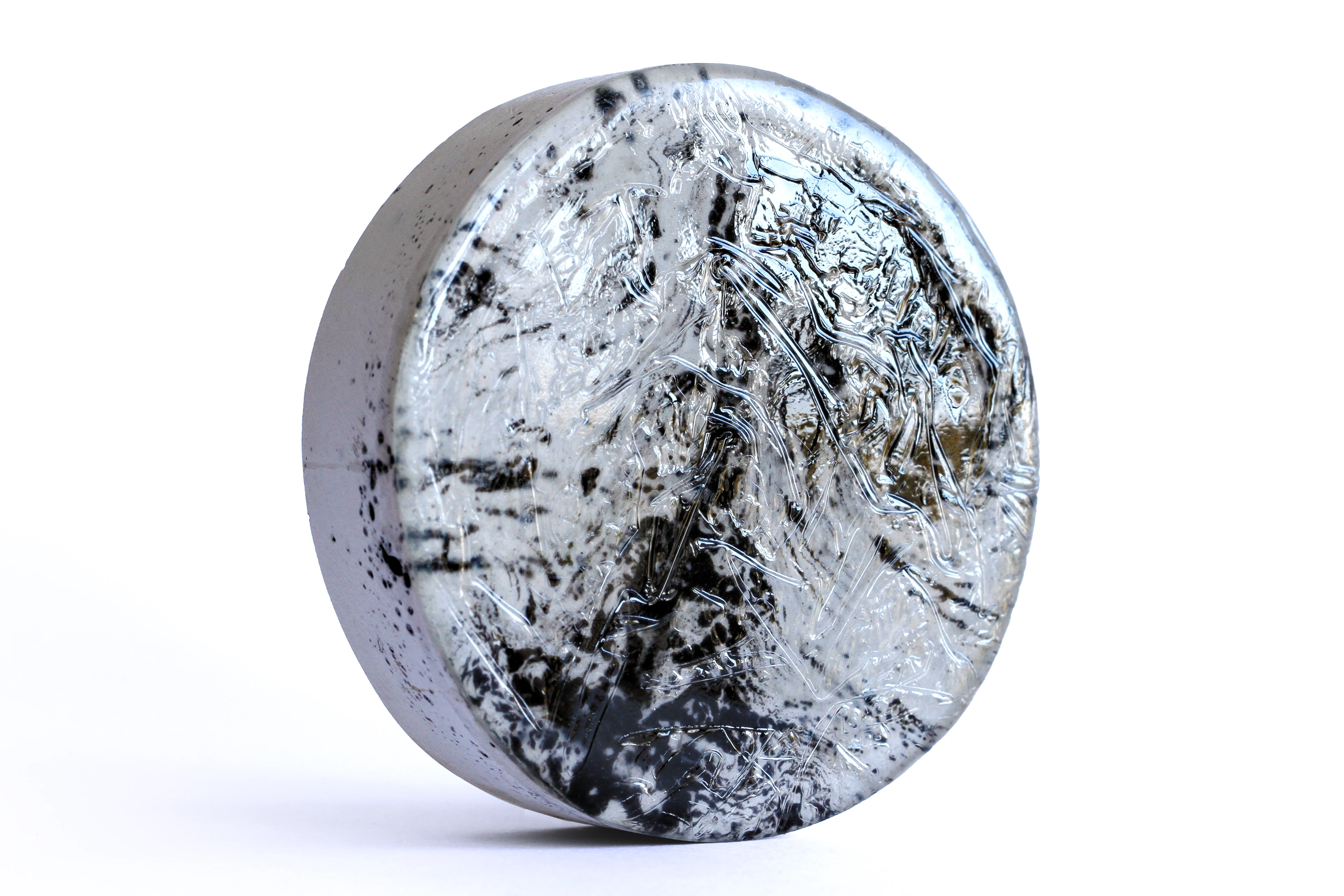
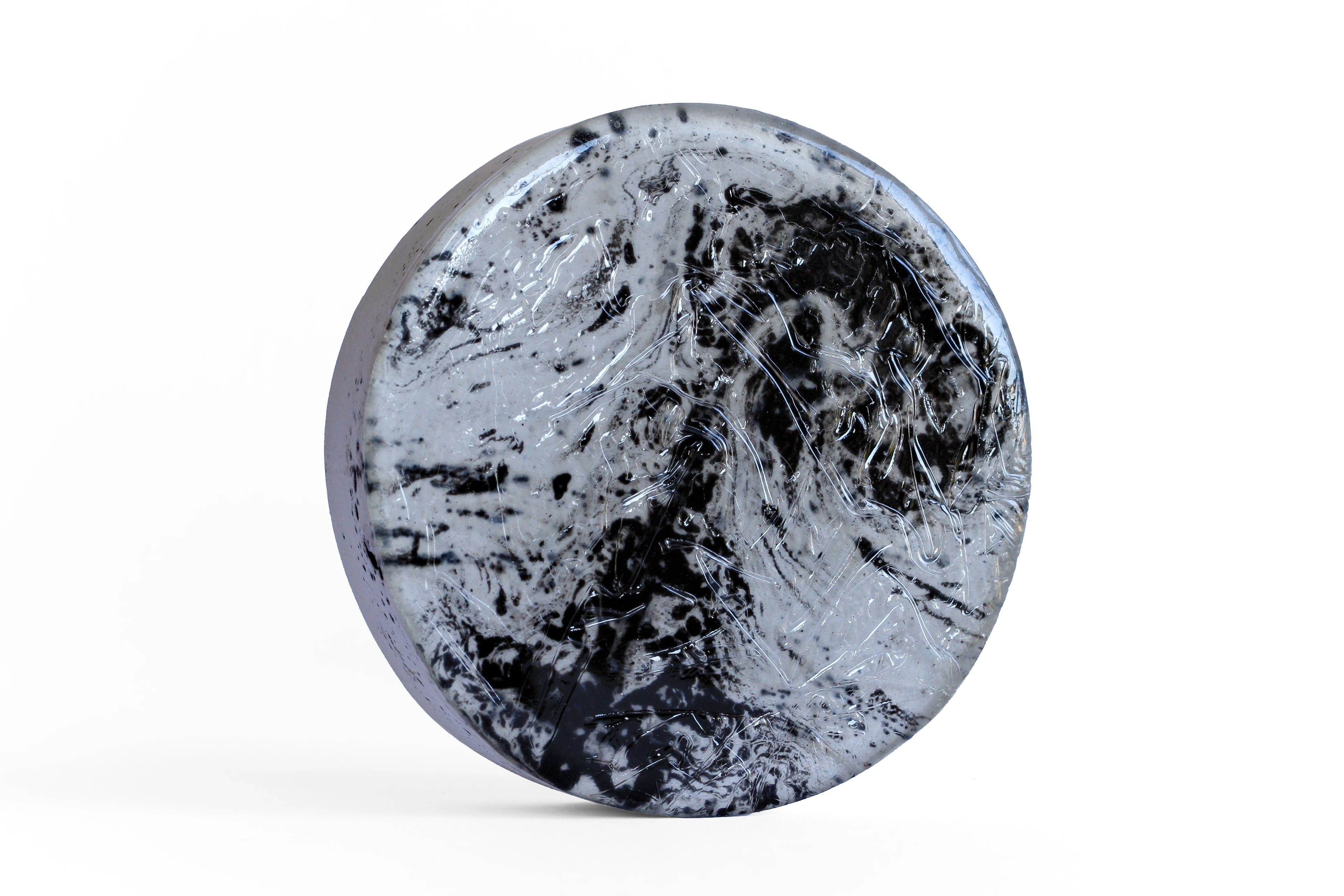
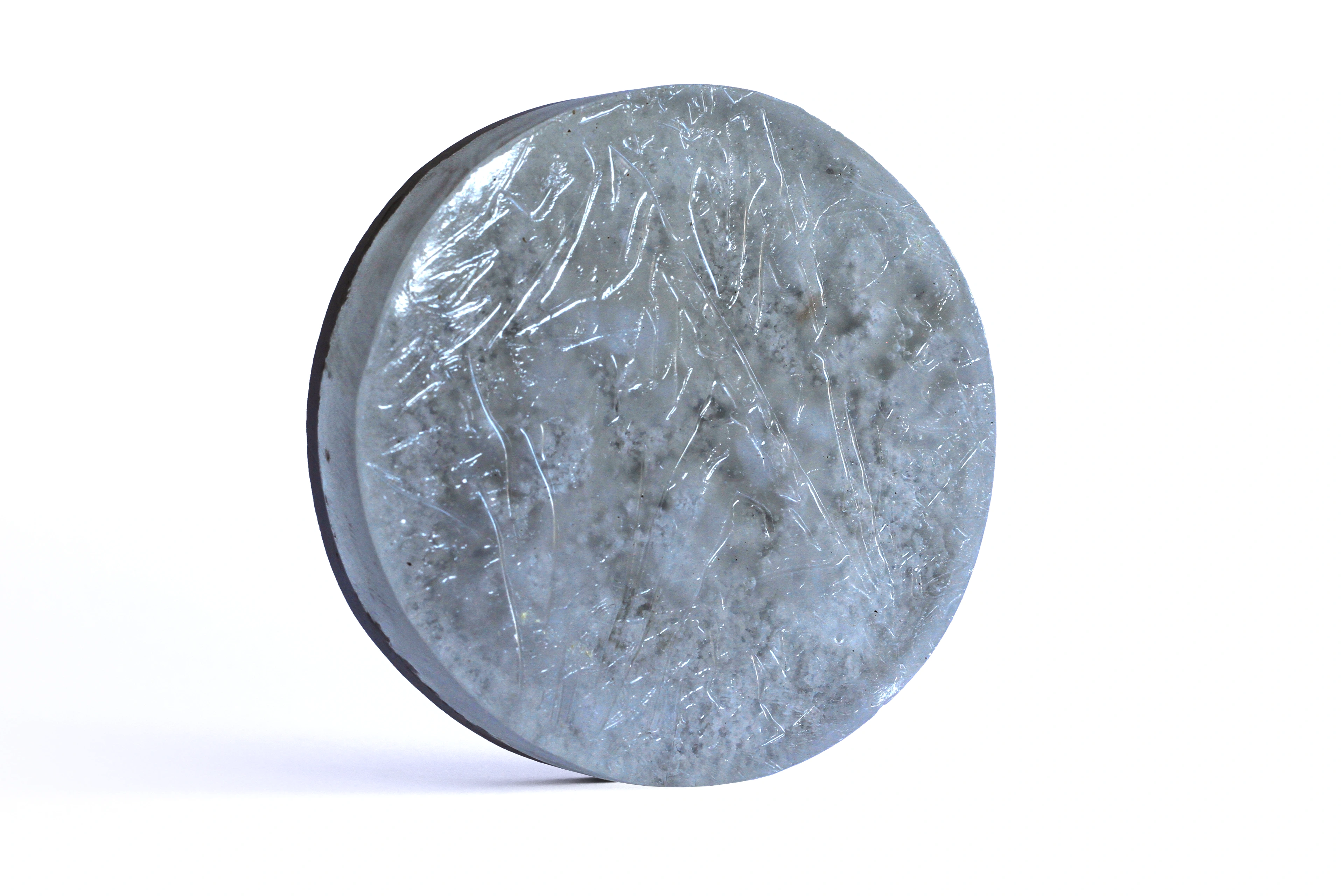
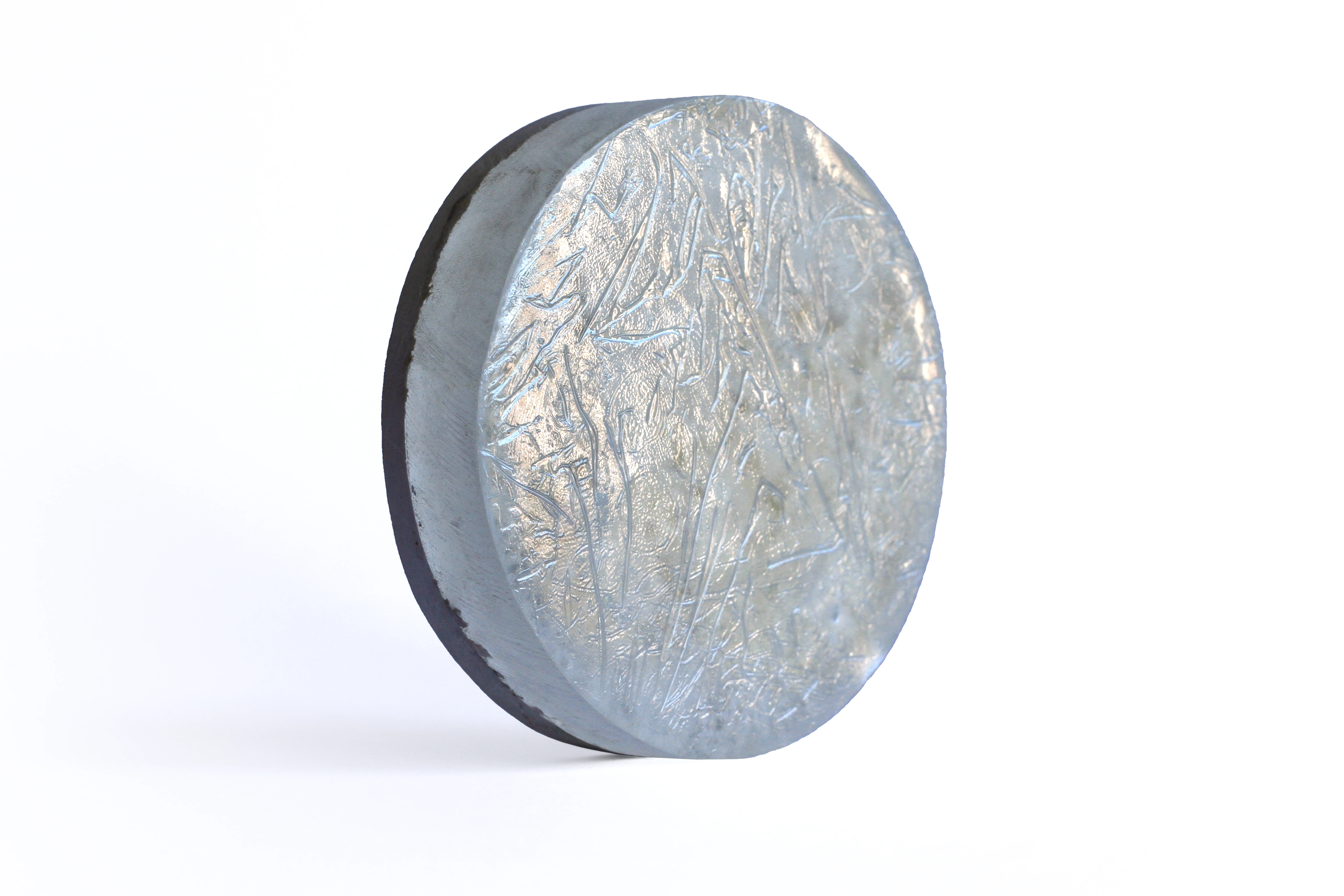
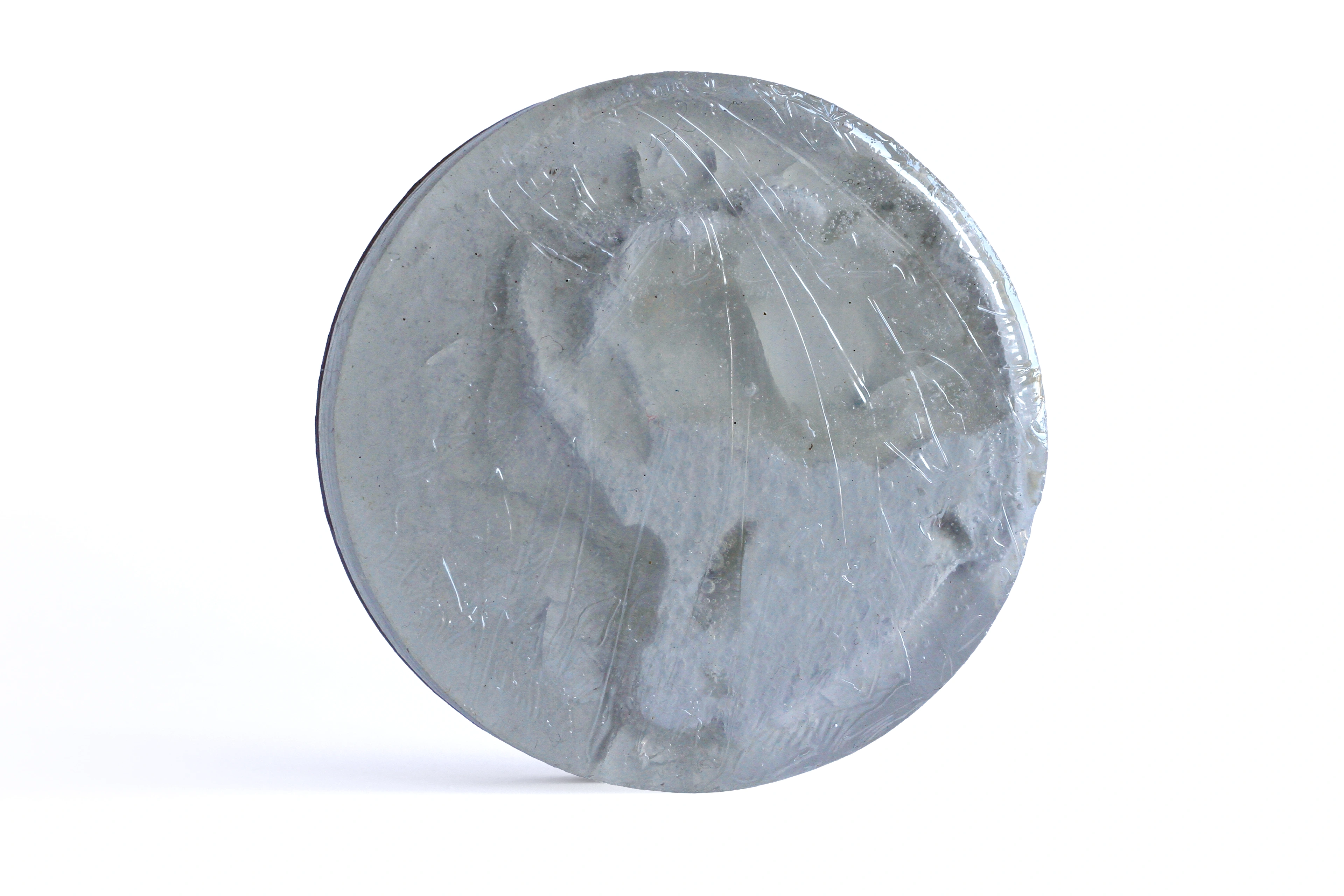
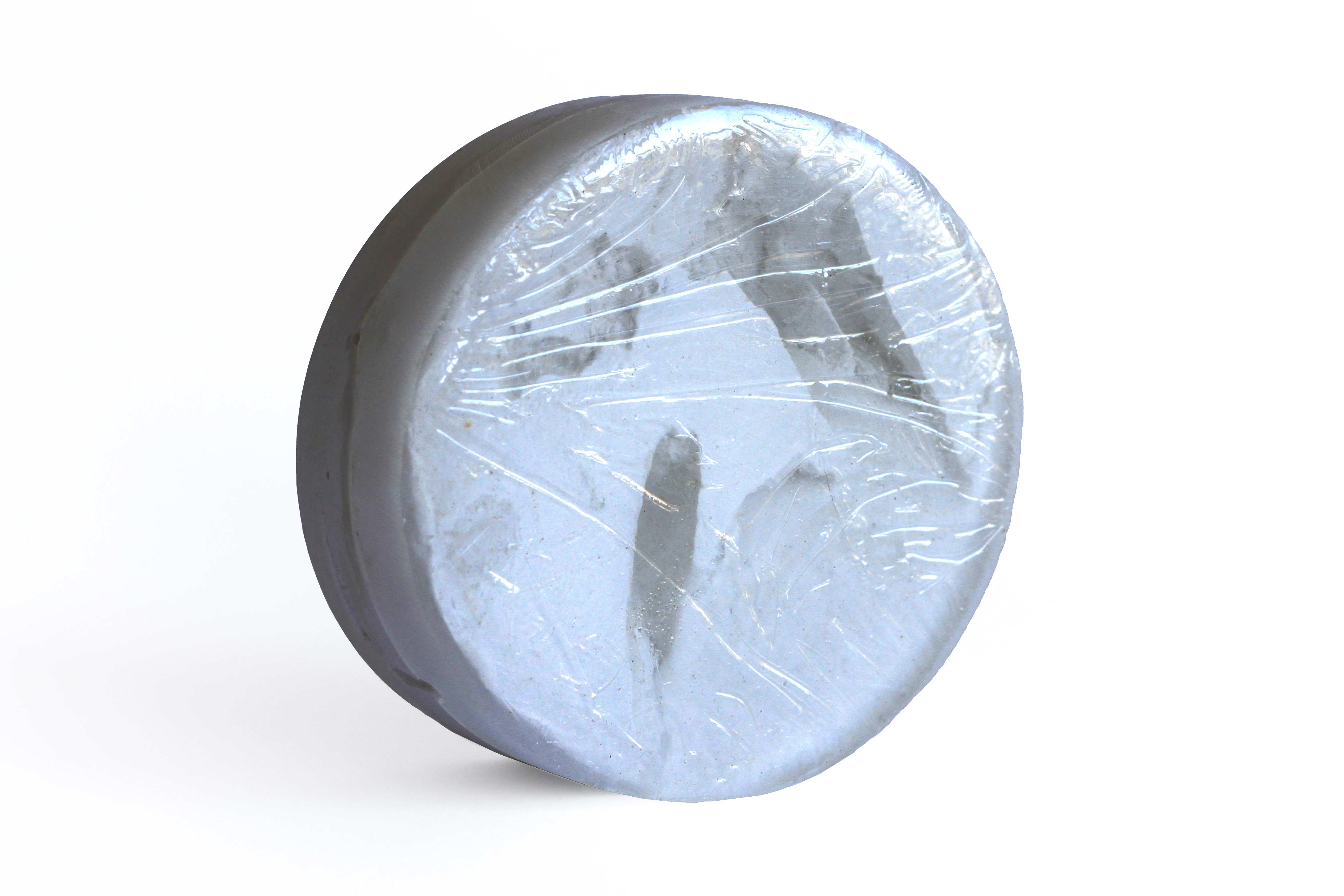
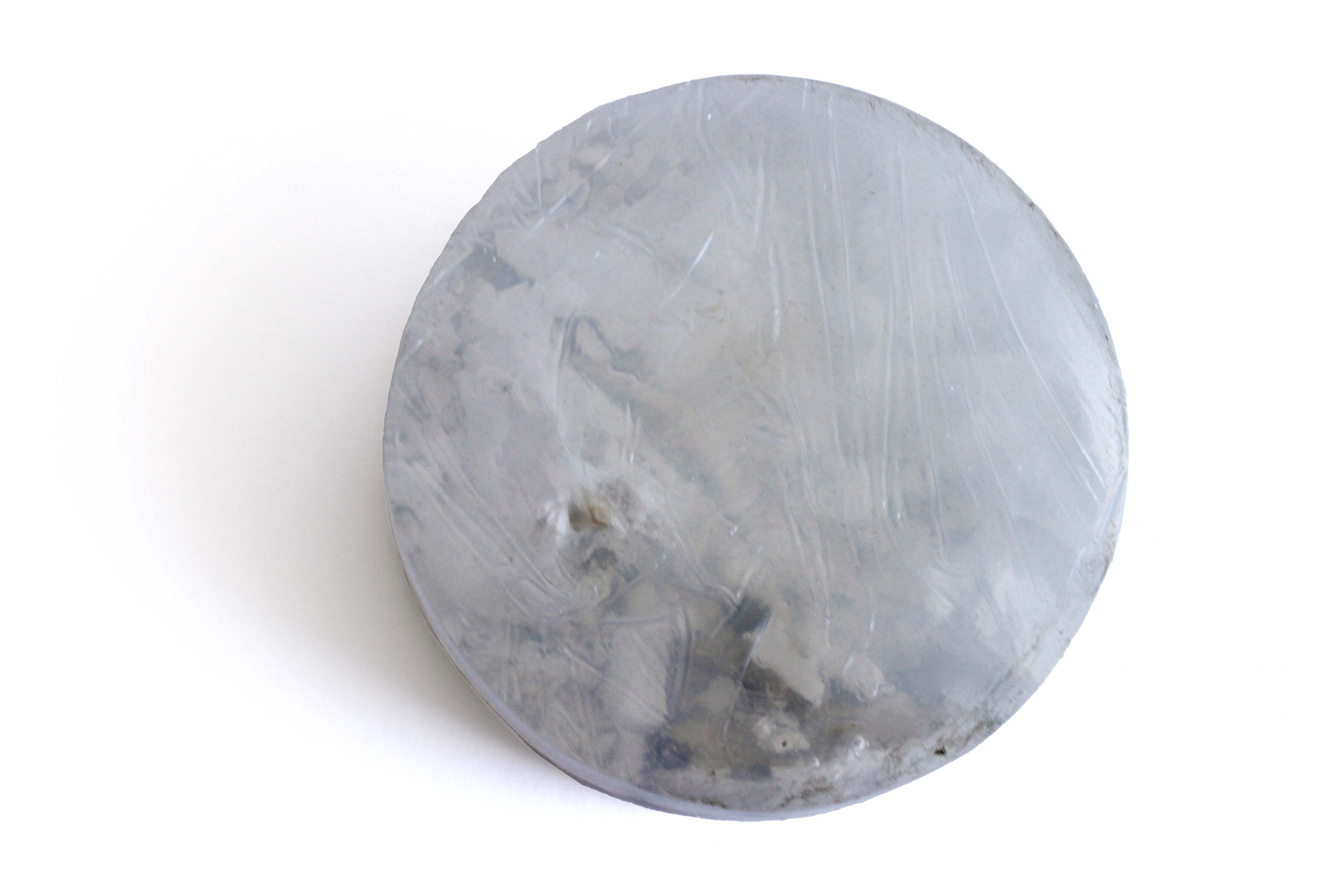
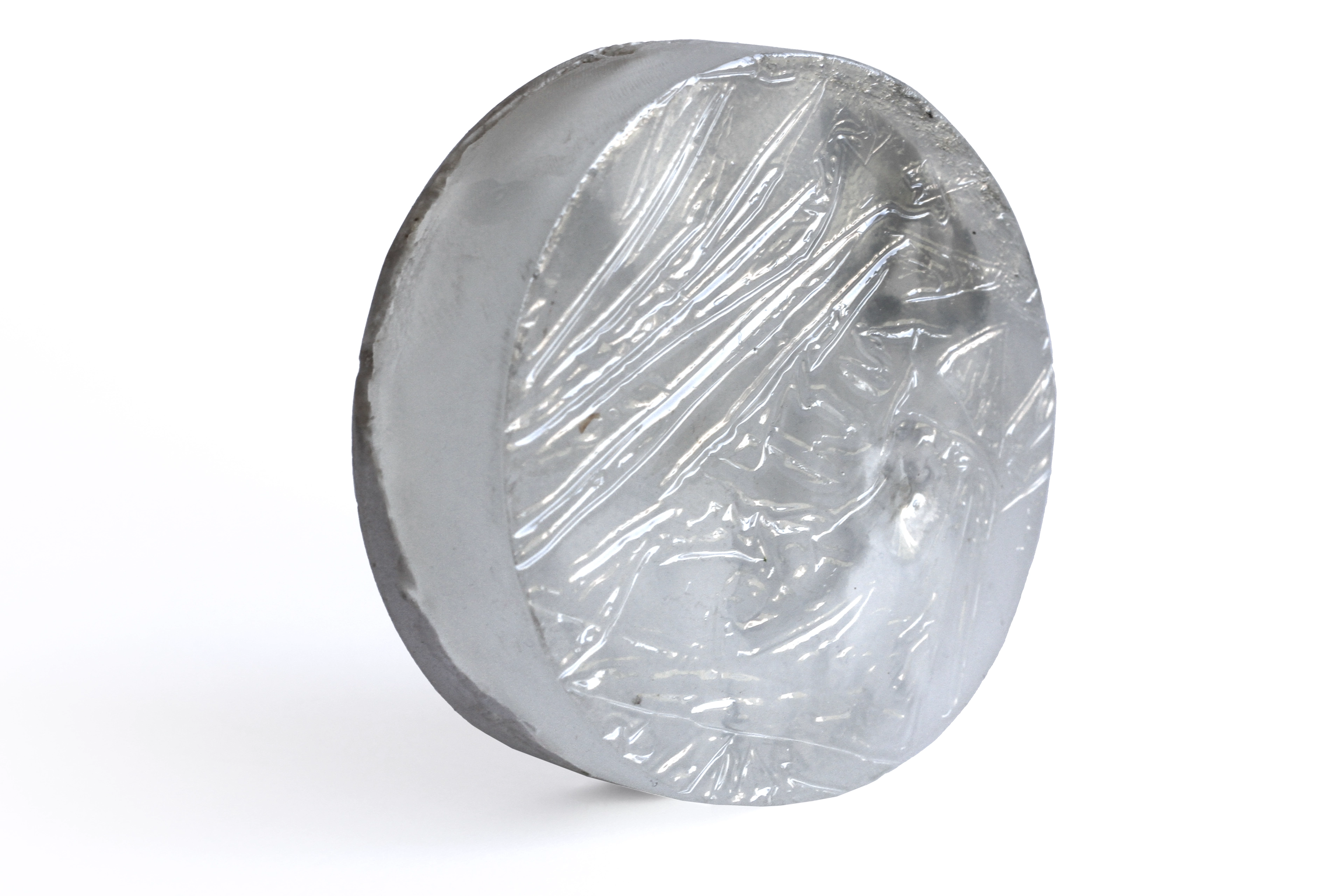
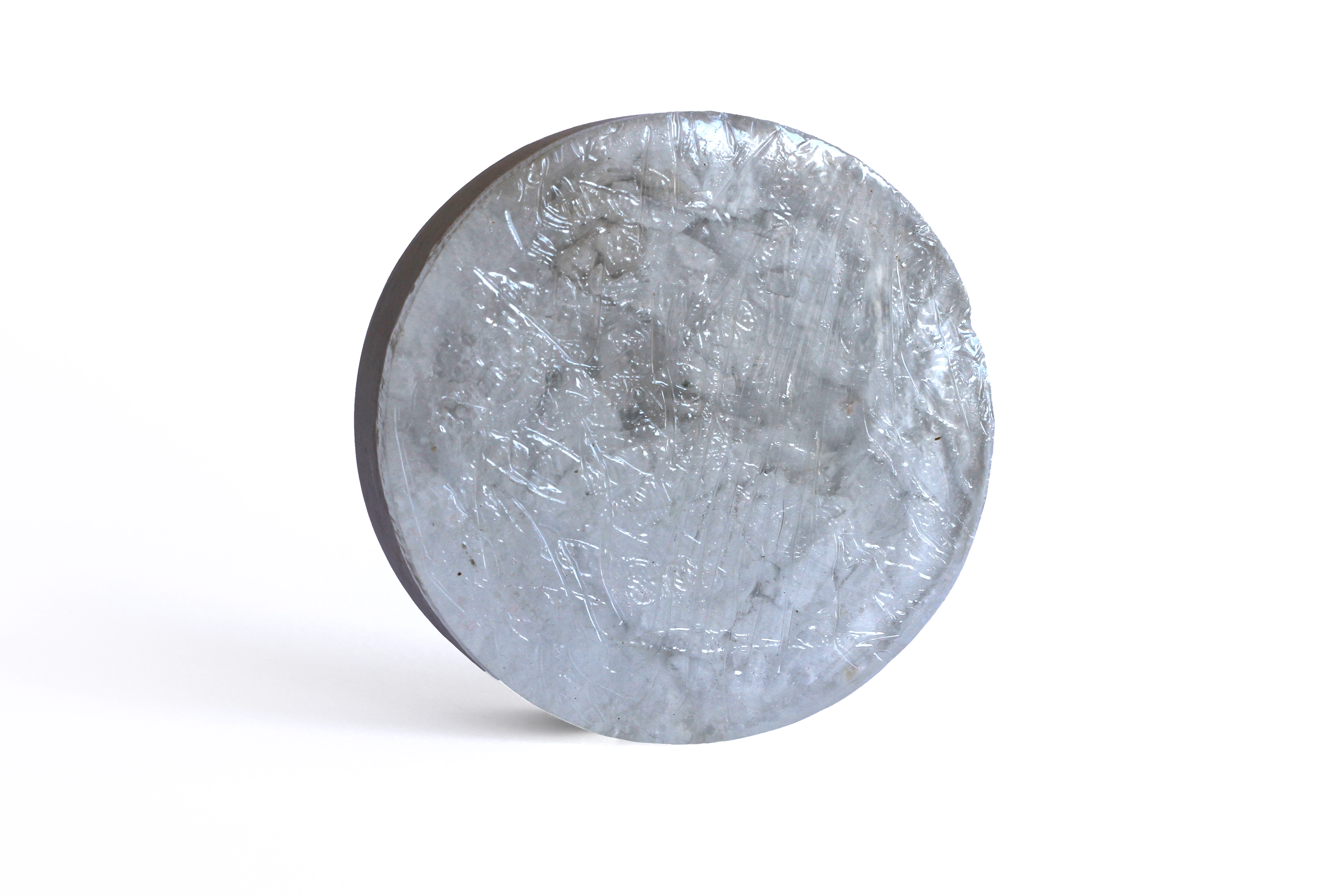
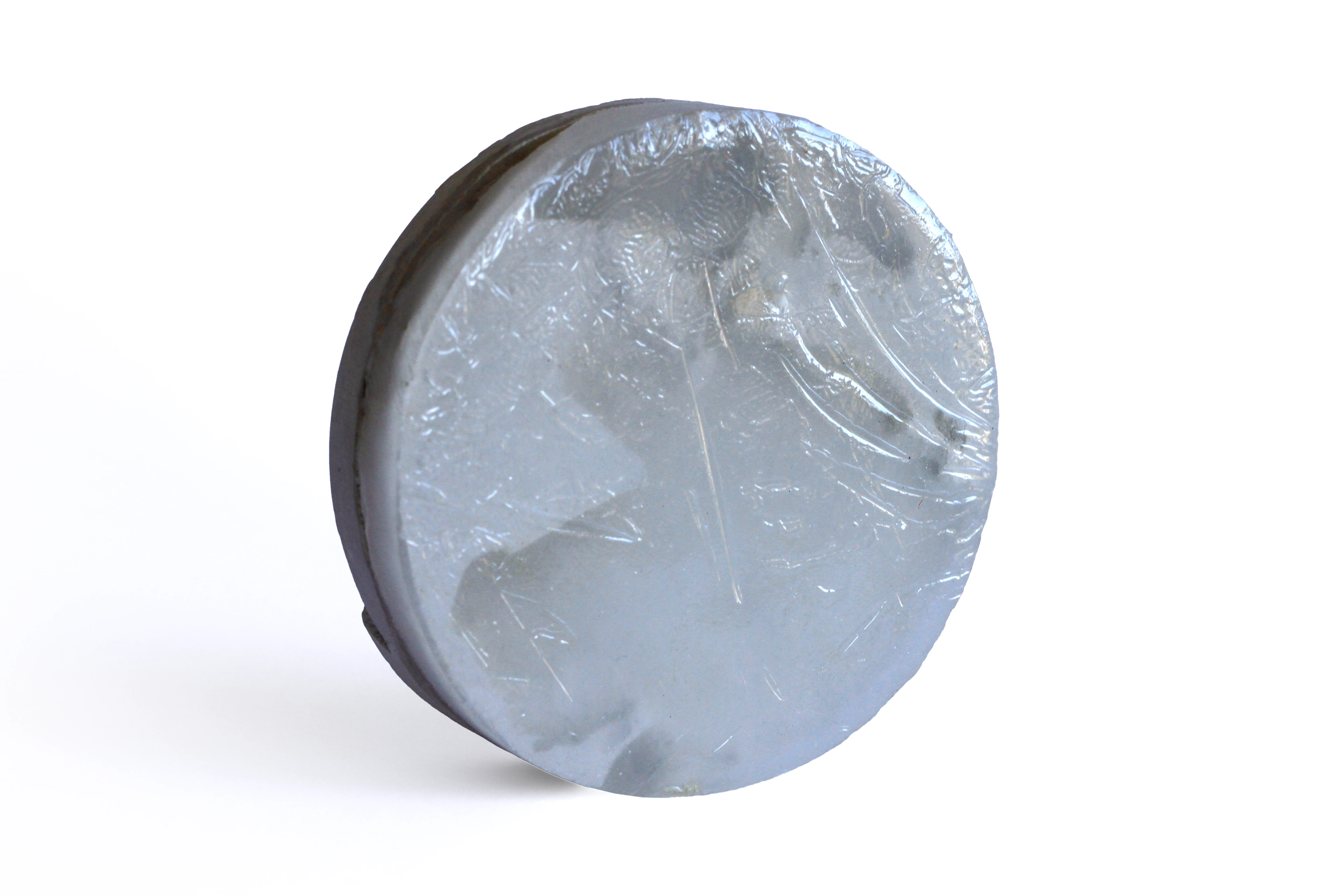
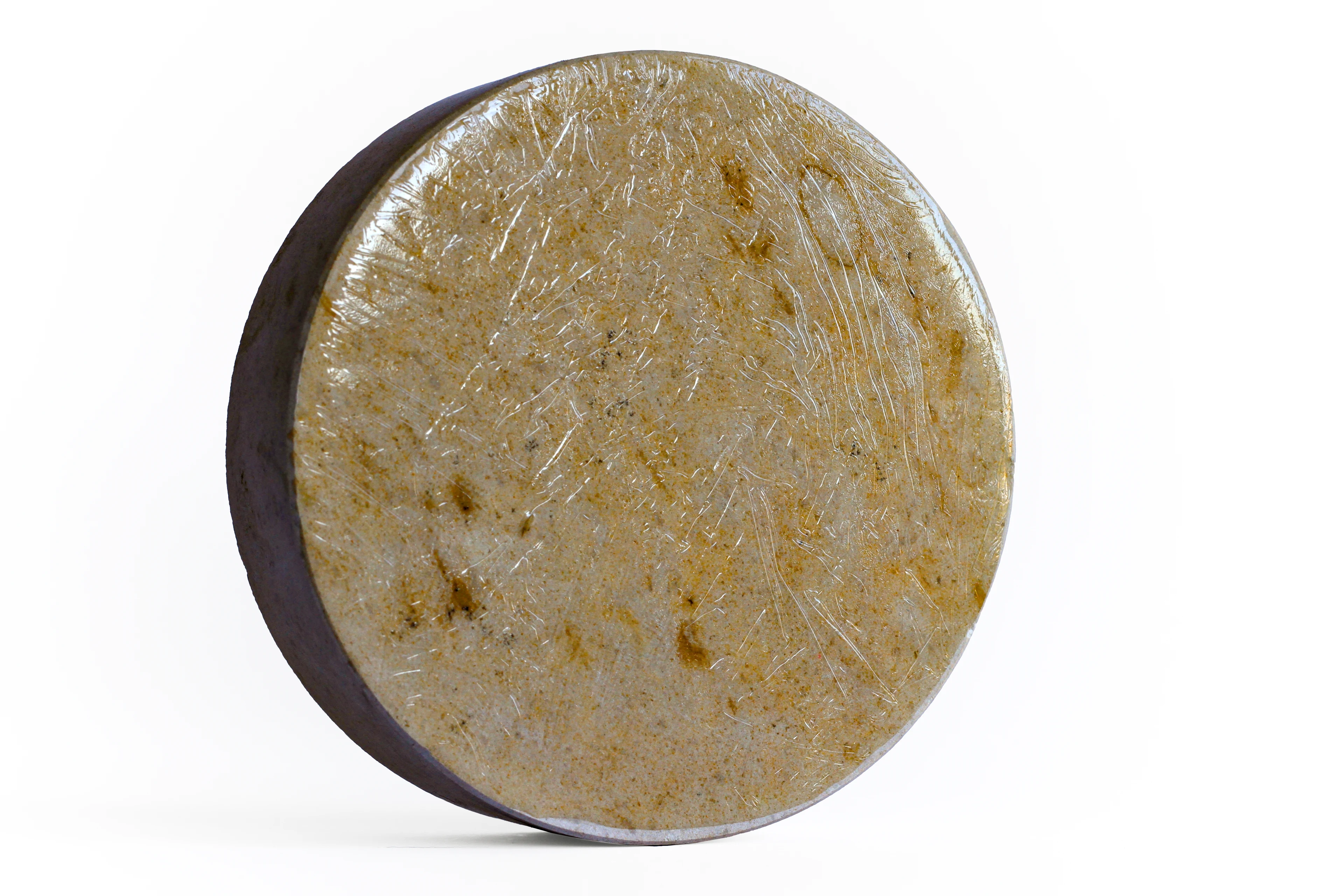
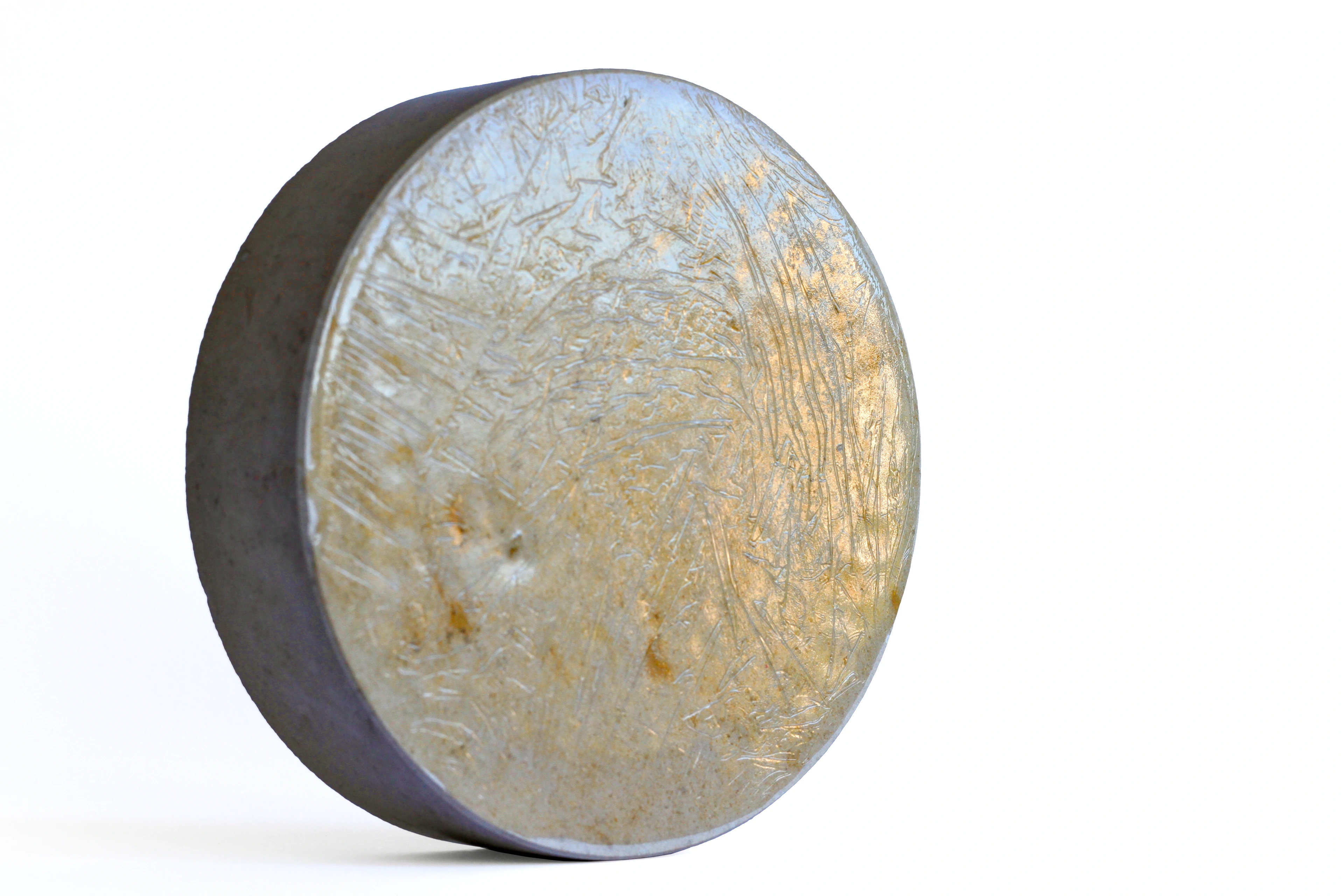
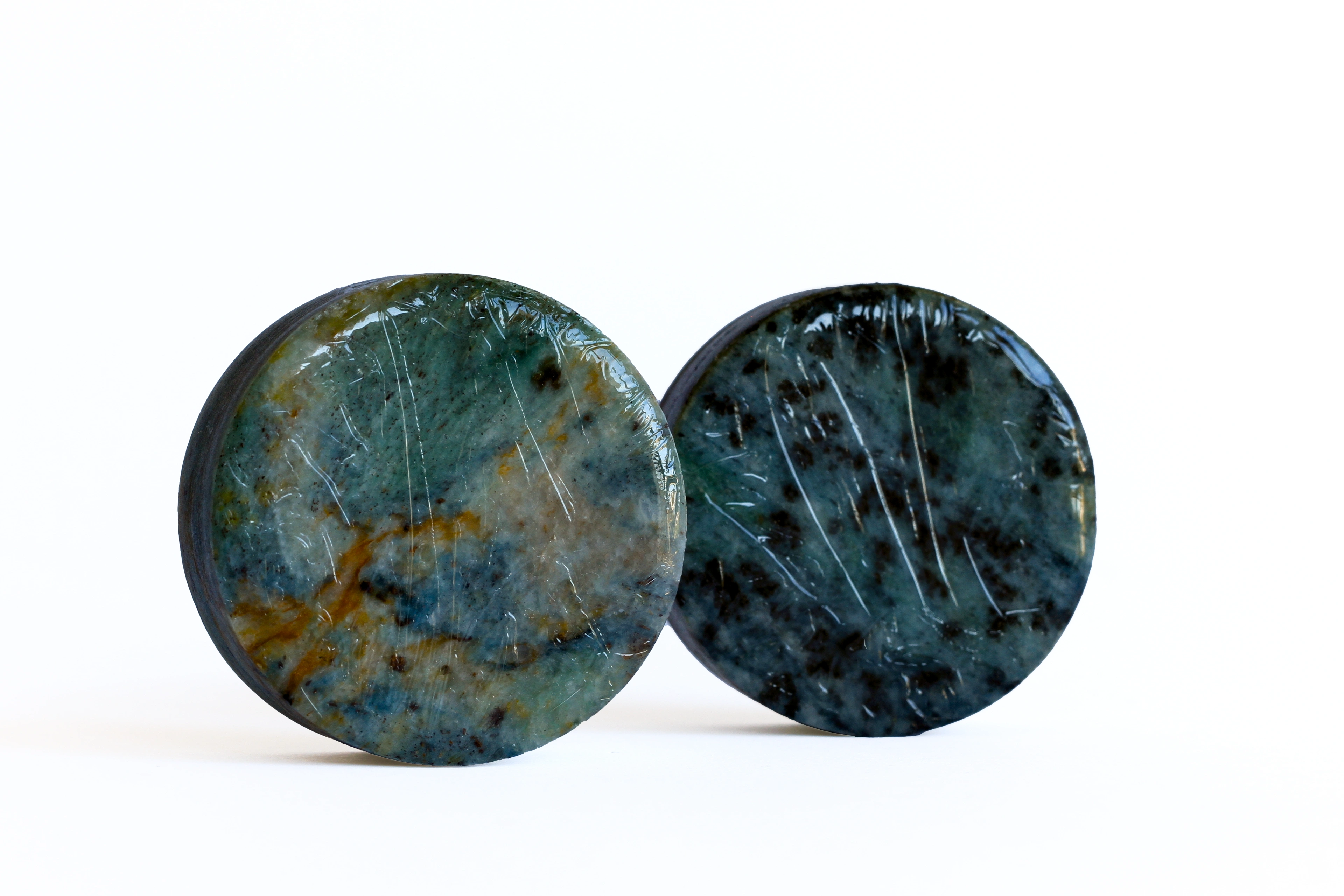
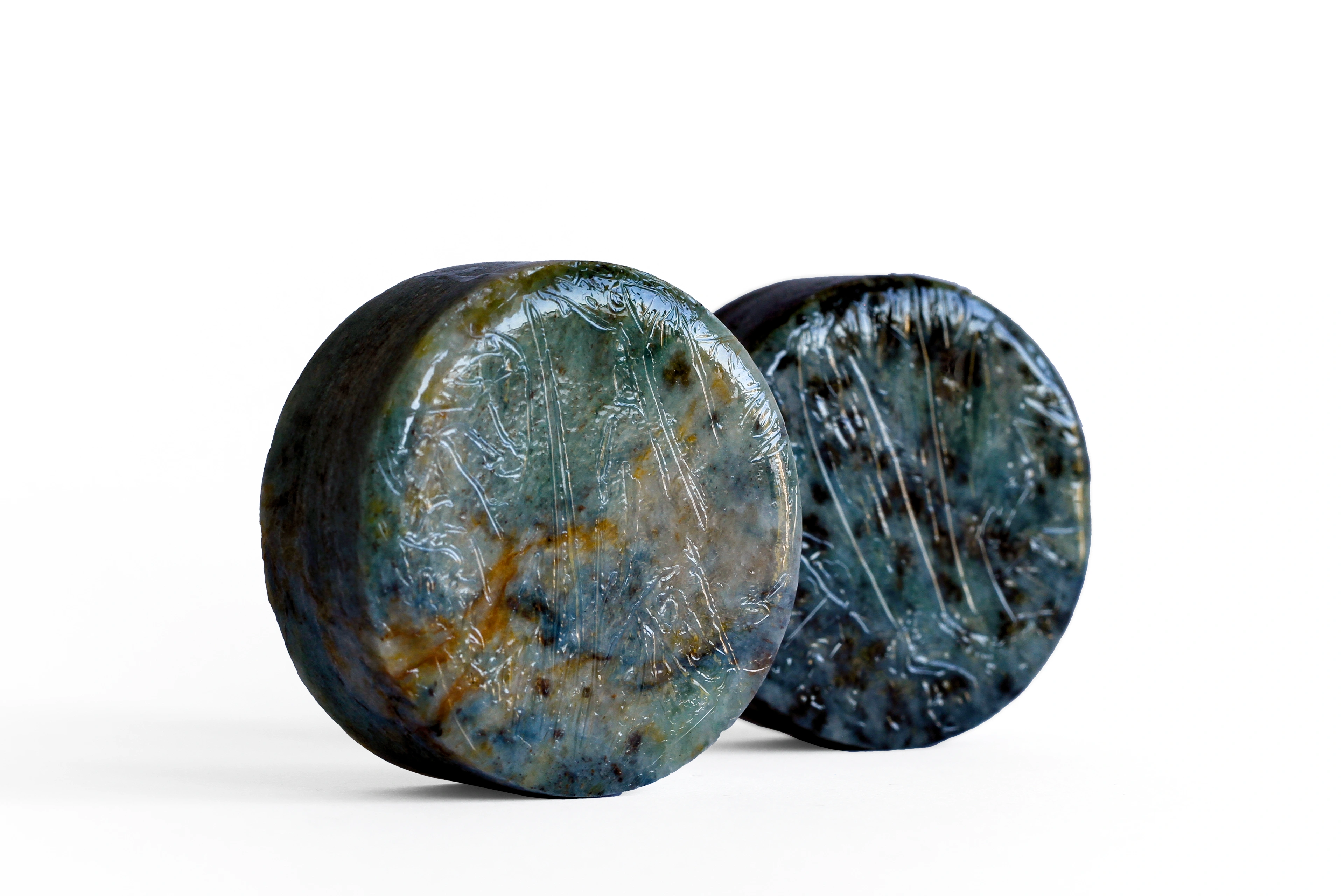
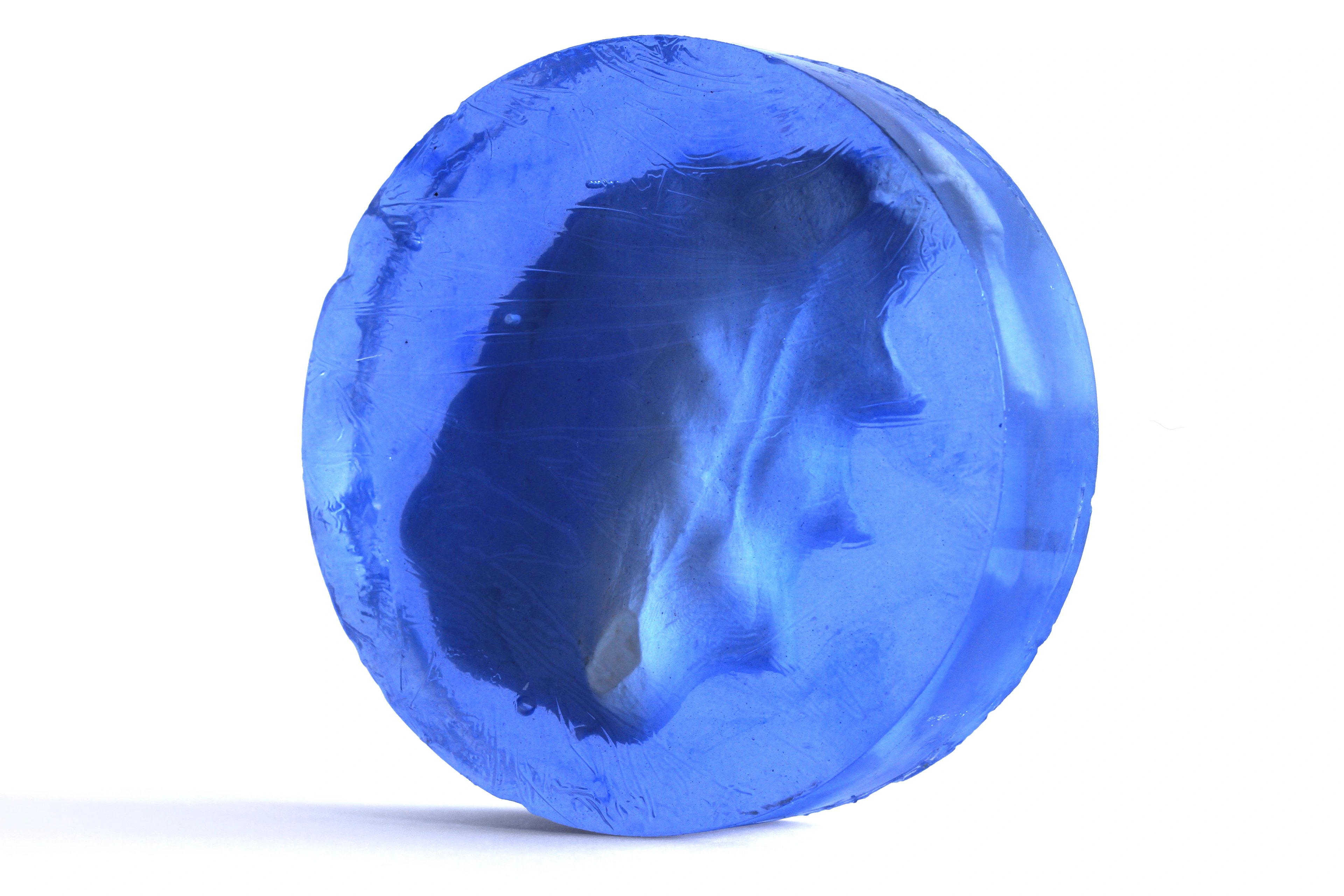
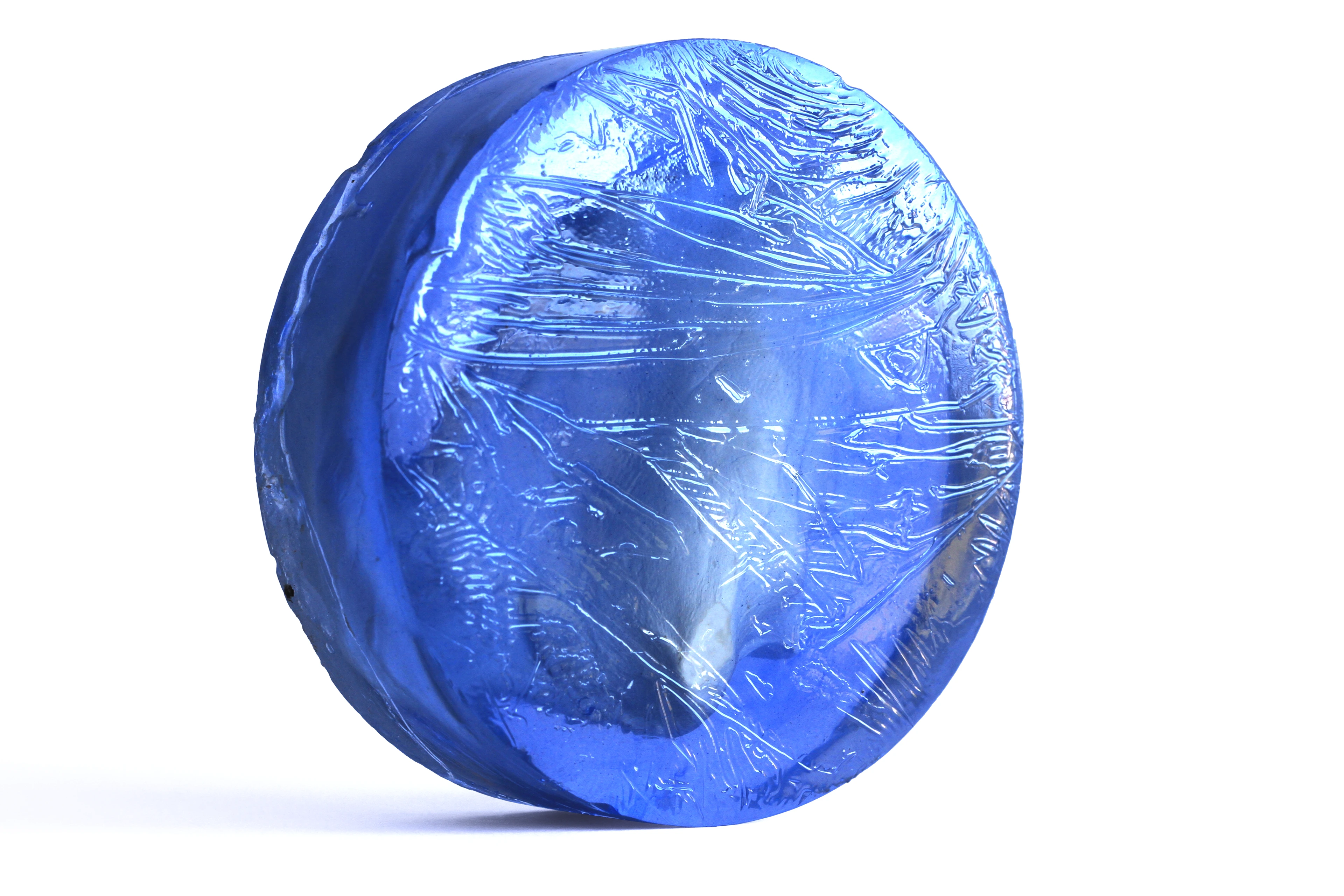
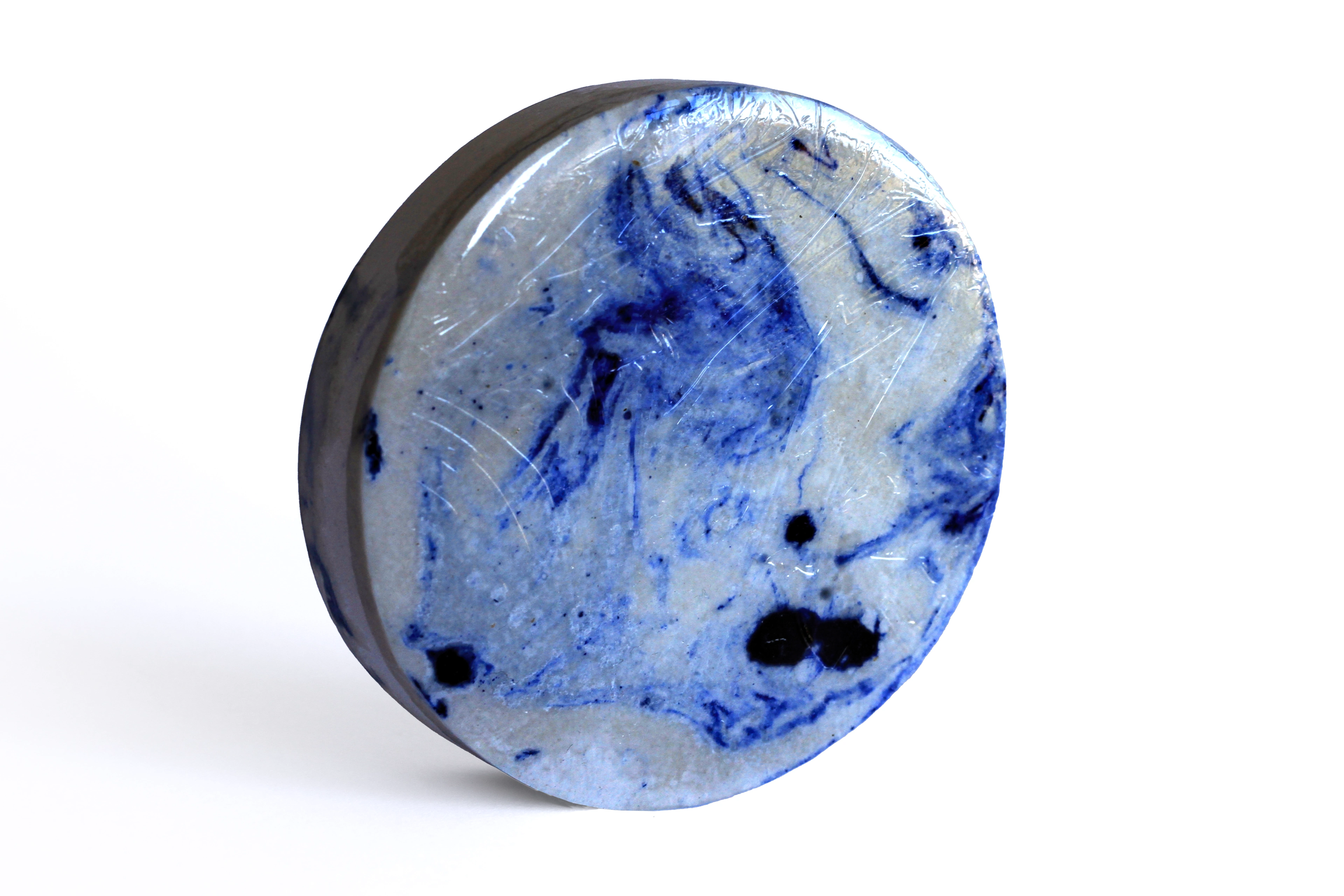
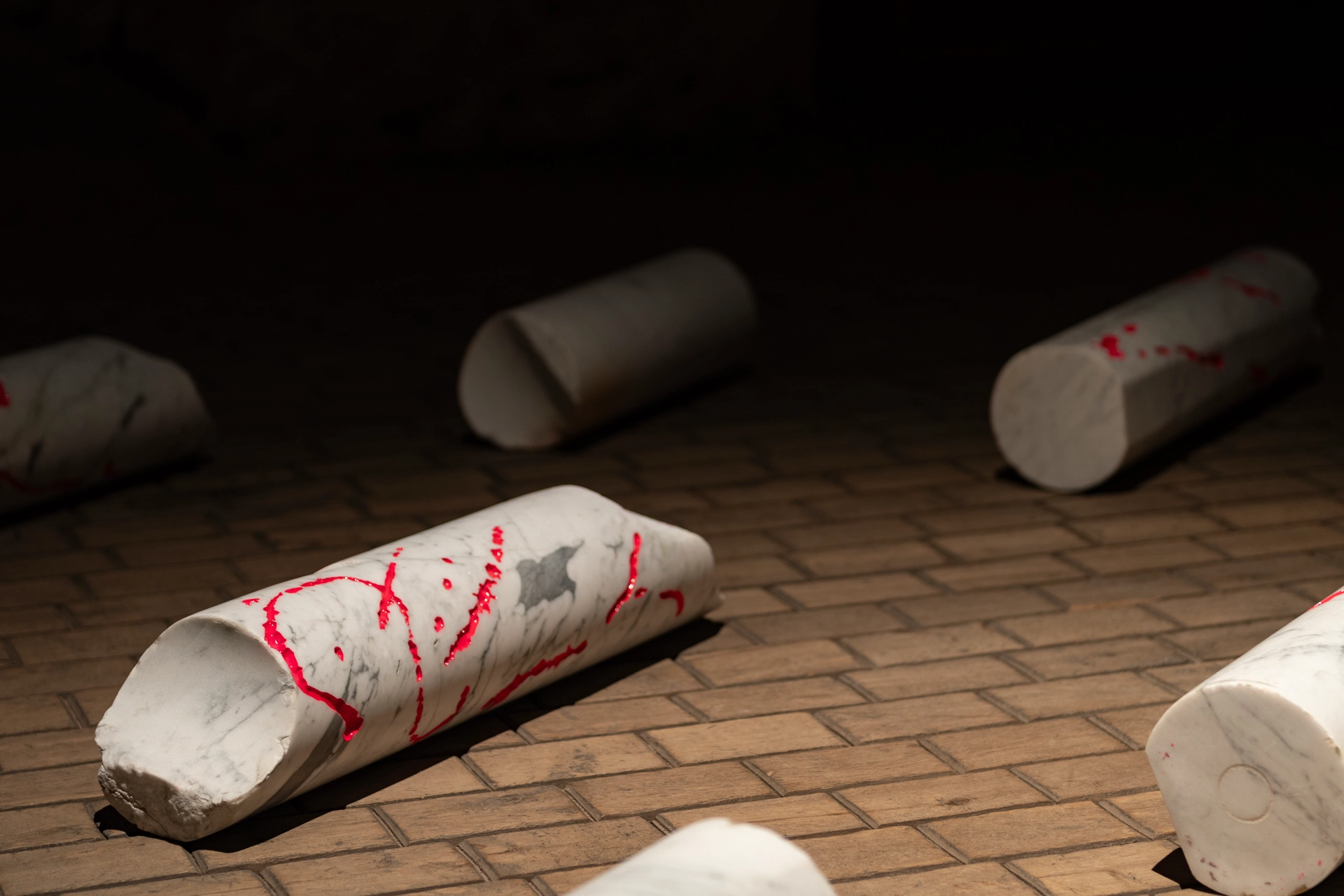
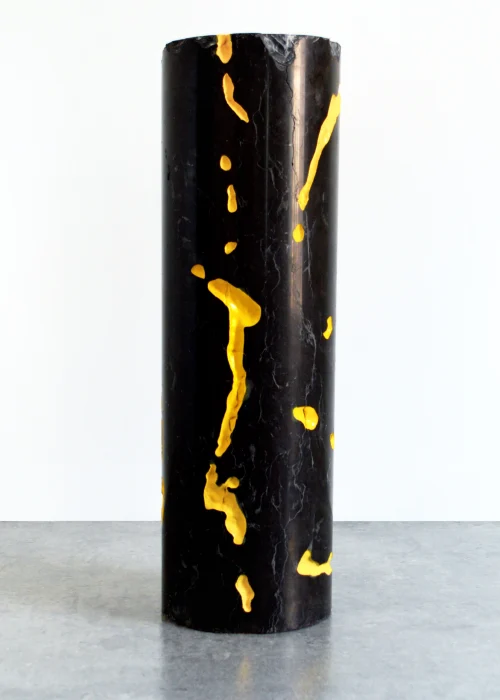
Series of sculptures engraved with traces derived from still frames of recordings of a Wilson cloud chamber [an observational device in which the trajectories of subatomic particles become visible]. Selected particle tracks are transferred and carved into stone by hand with high precision. Carved trails are filled with pigments and sealed with resin, stabilizing the engraved shapes into inscriptions in stone – permanent material traces.

9192631770
INSCRIPTIONS series 2025

Each basalt sculpture contains inscriptions based on particle tracks selected from a second of observation in a Wilson cloud chamber.

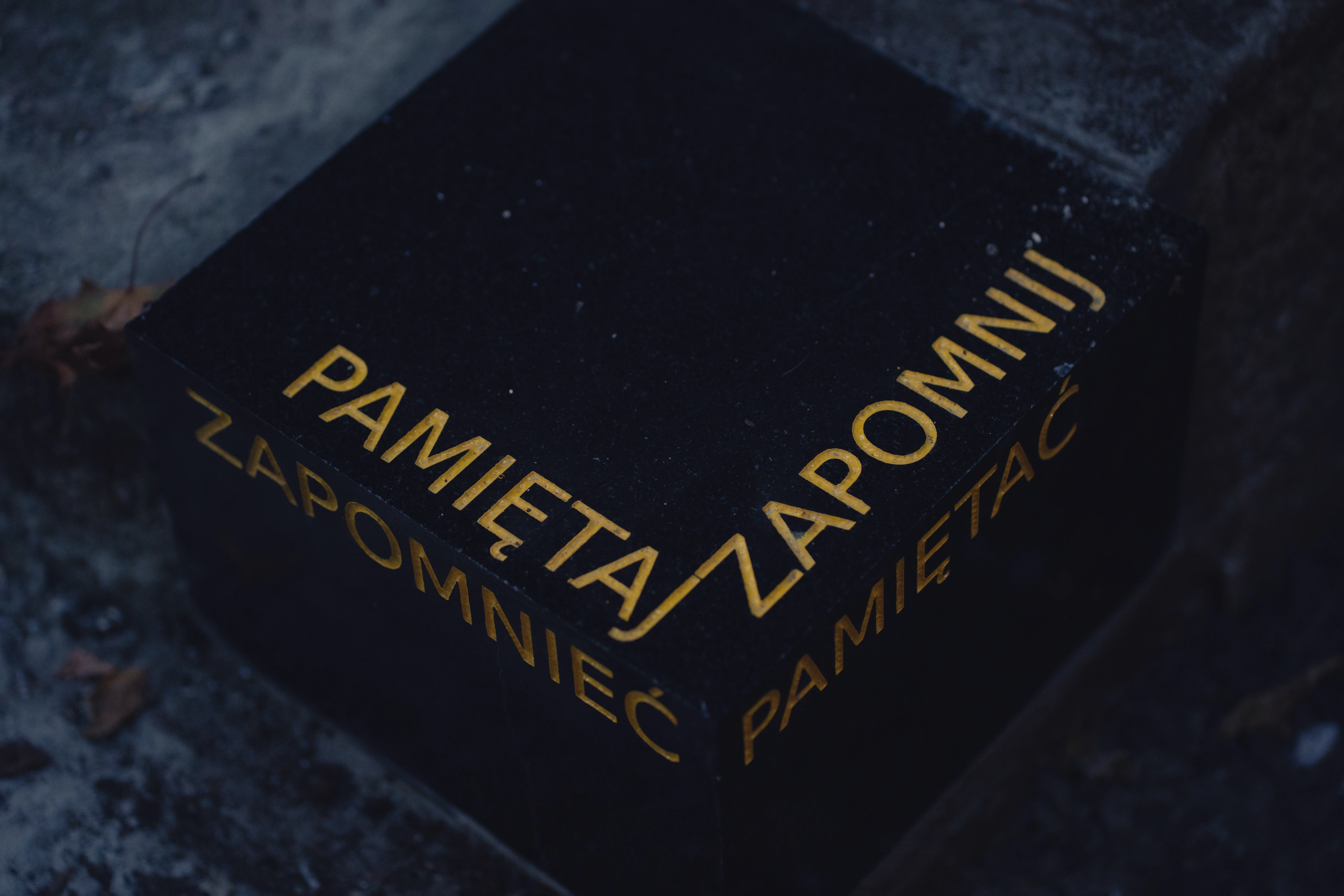
PAMIĘTAJ ZAPOMNIJ
2025

INSCRIPTION in public space
Zwierzyniecka 4 street, Krakow

PRIMES
2022

4 granite circles ⌀ 1,1 – 1,3m
4 mapped video projections of a Wilson cloud chamber

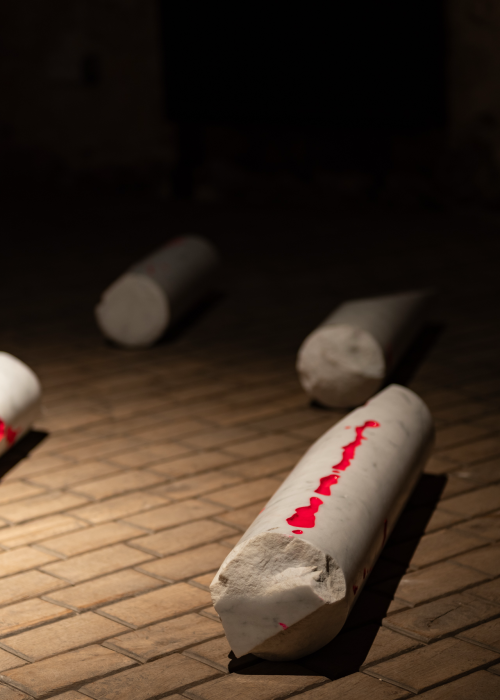
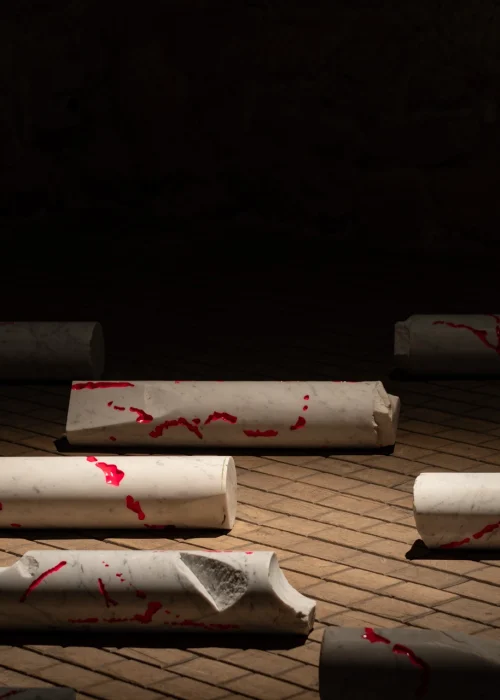
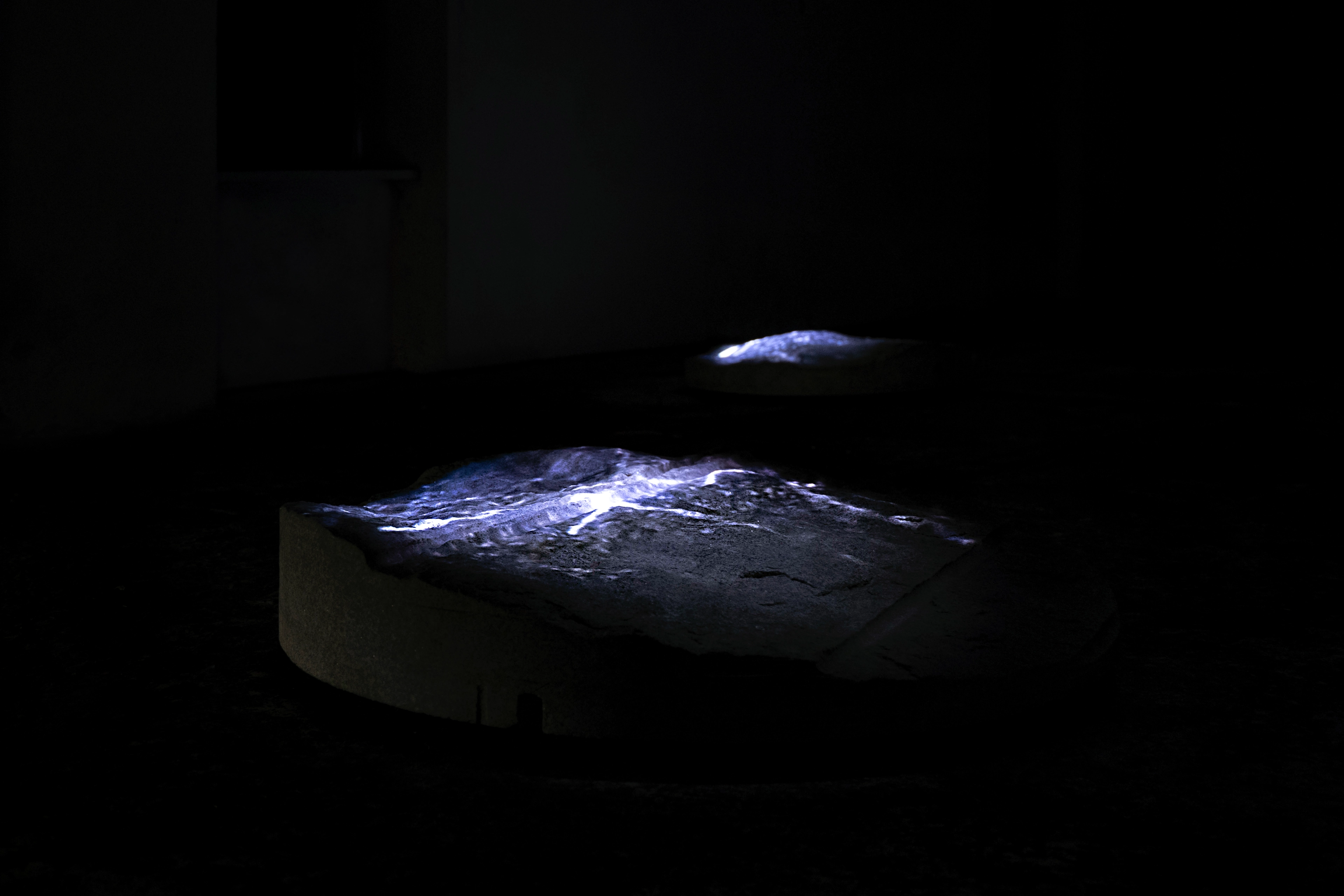
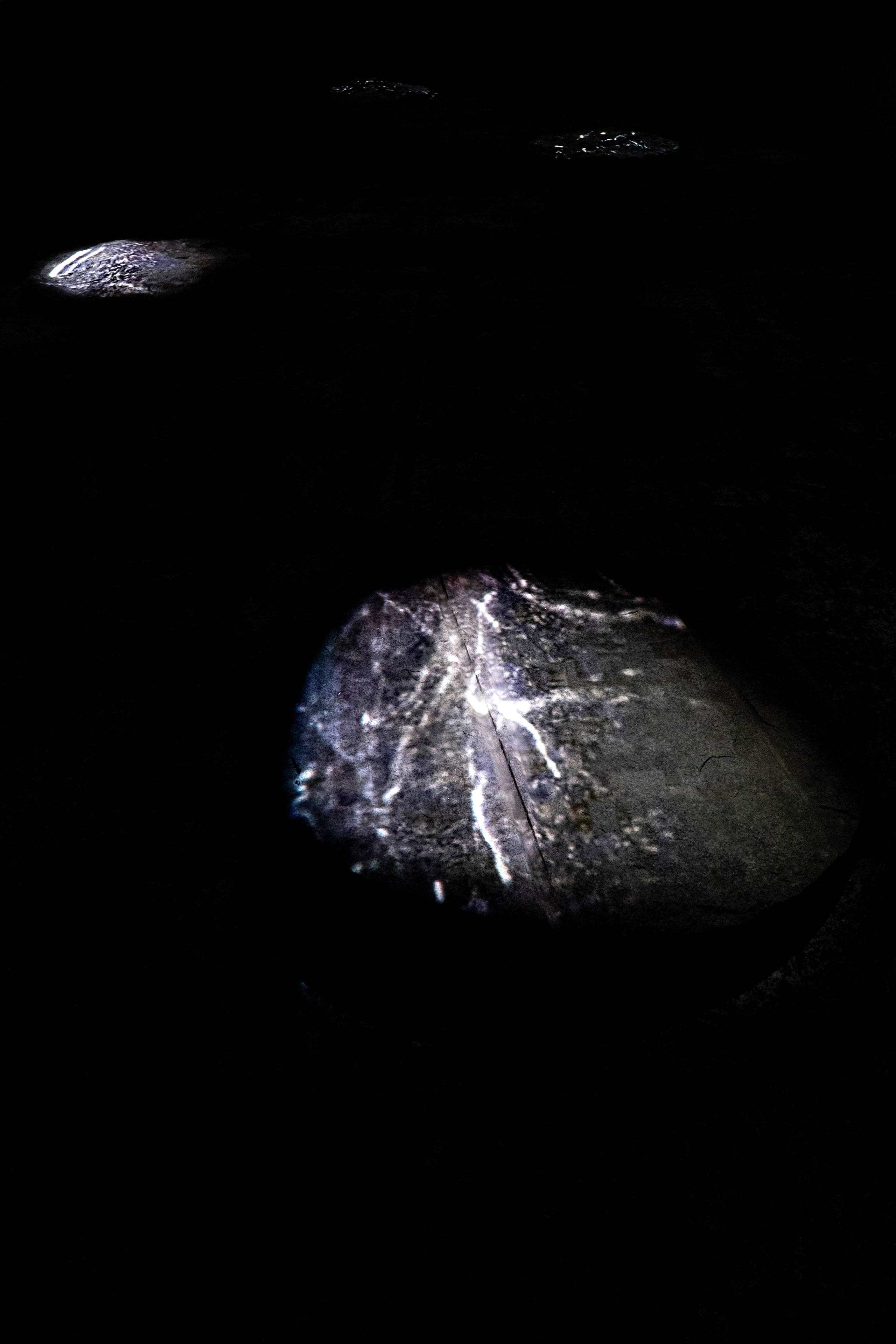
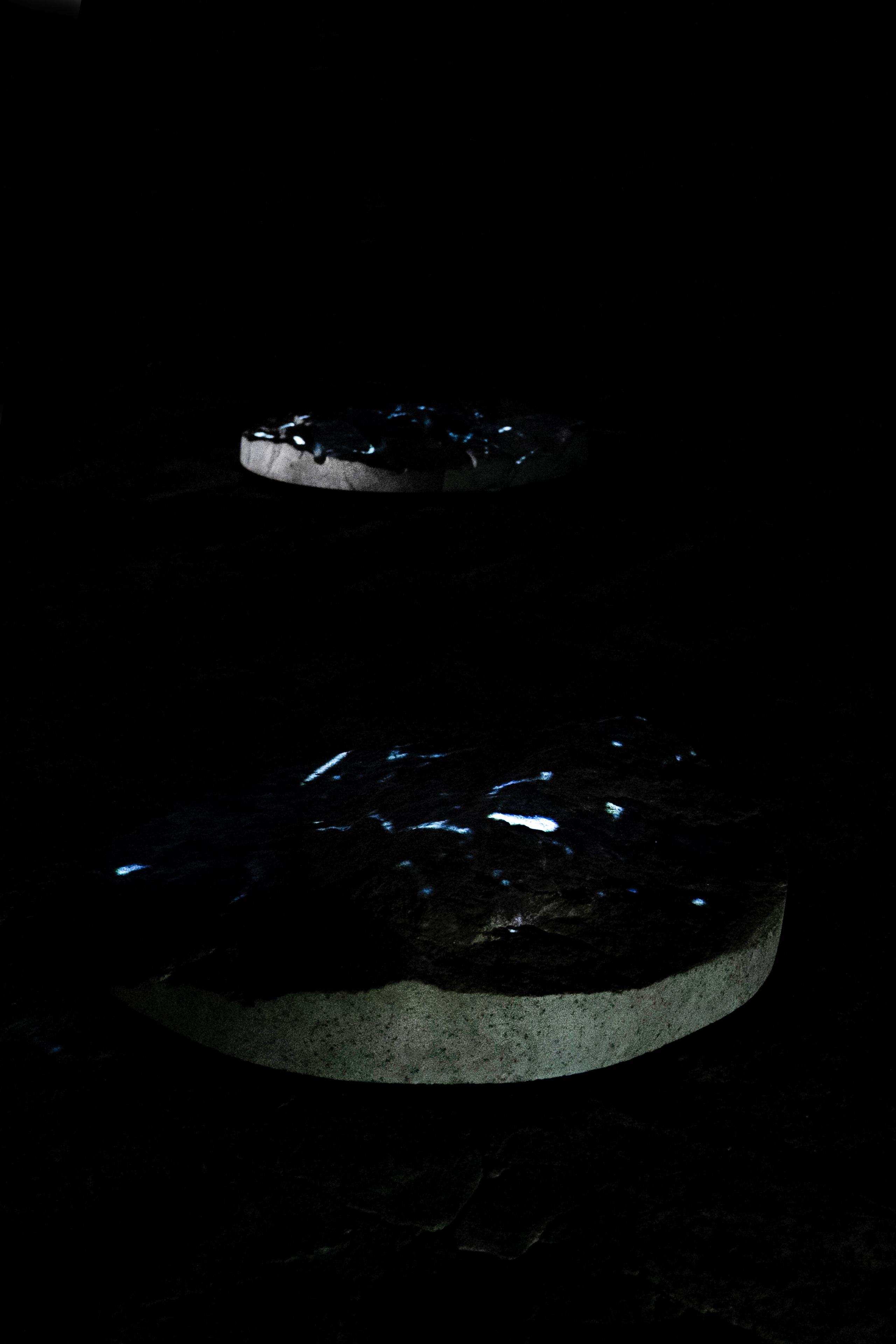
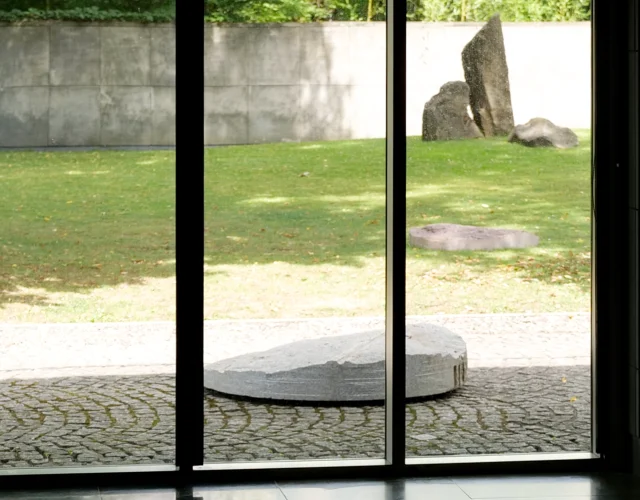
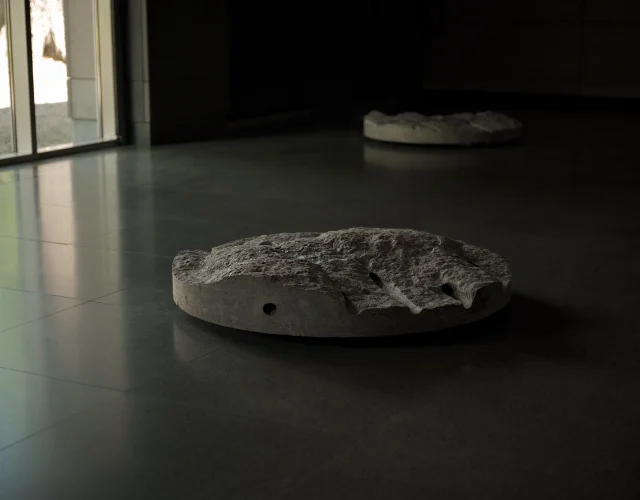
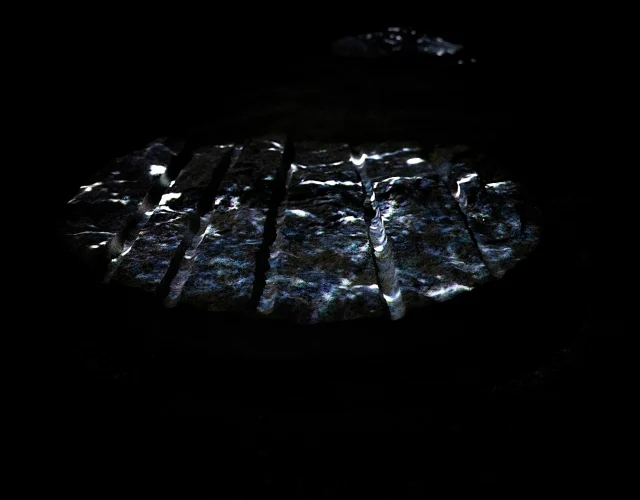
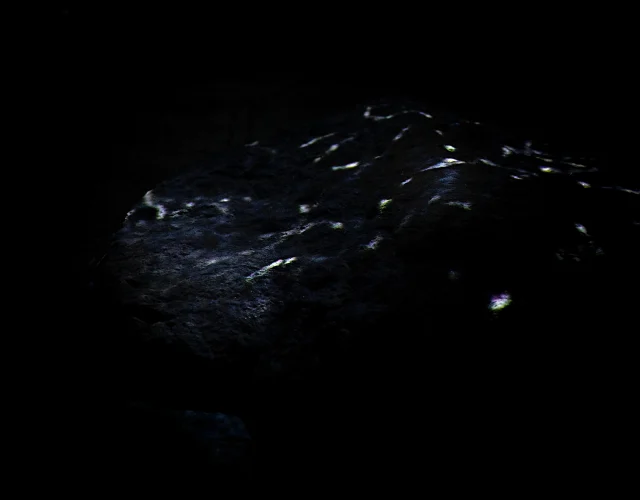
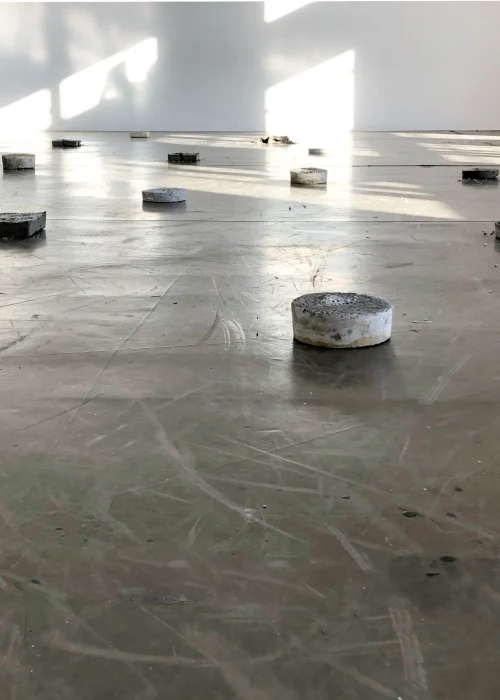
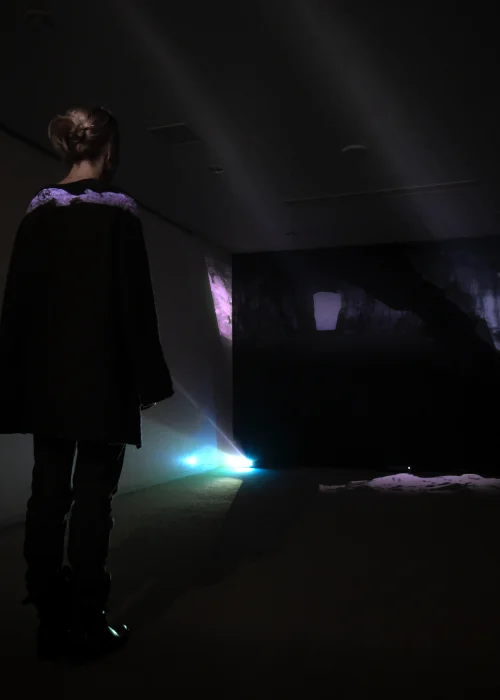
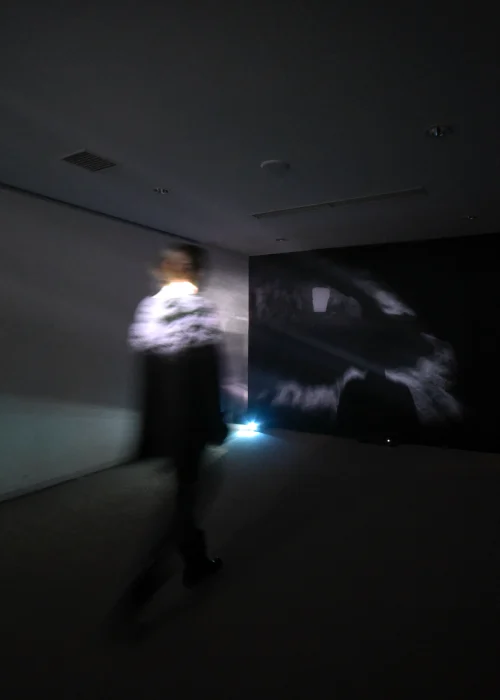
PRIMES is an installation composed of four circular granite objects and video projections derived from recordings of a Wilson cloud chamber. Objects retain marks generated by stone-working processes functioning as material records embedded in the stone. Particle trajectories recorded in the cloud chamber are mapped directly onto them. The work consists of four related elements presented as a single installation.

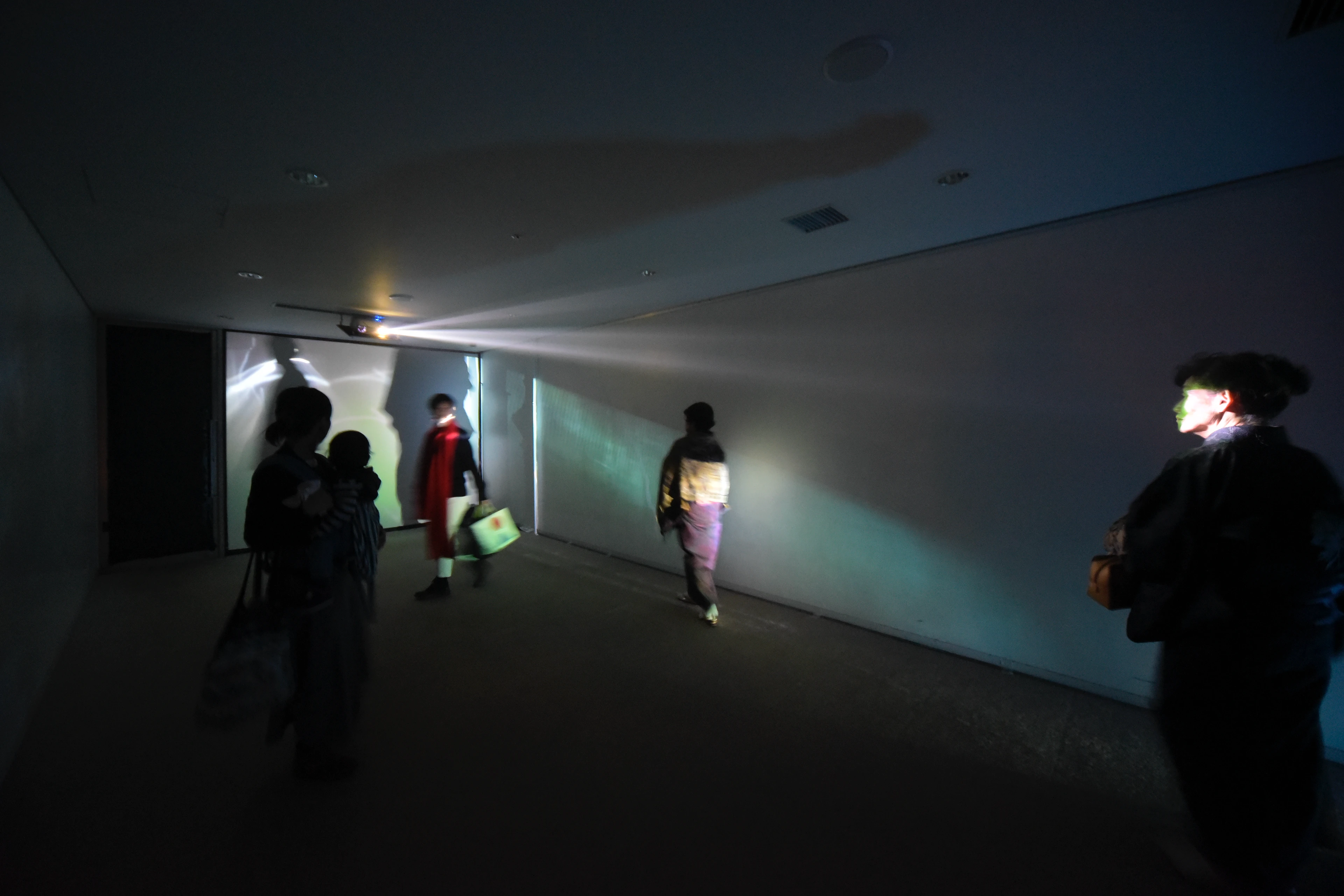
At Otwarta Pracownia, four granite objects were presented together in a darkened interior space, with video projections mapped onto all four surfaces. One had to move through the darkness between the elements.

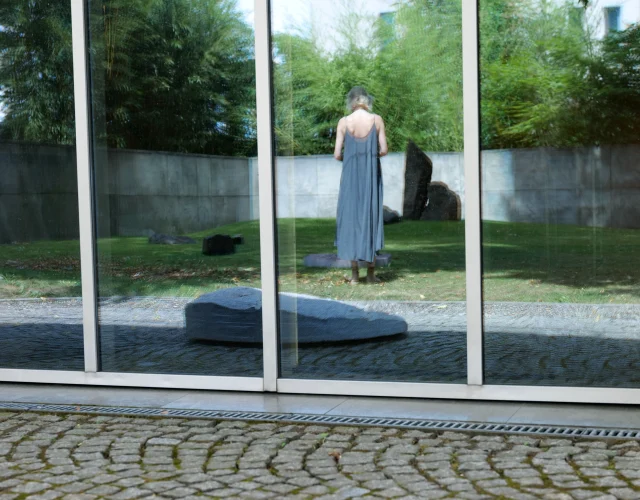
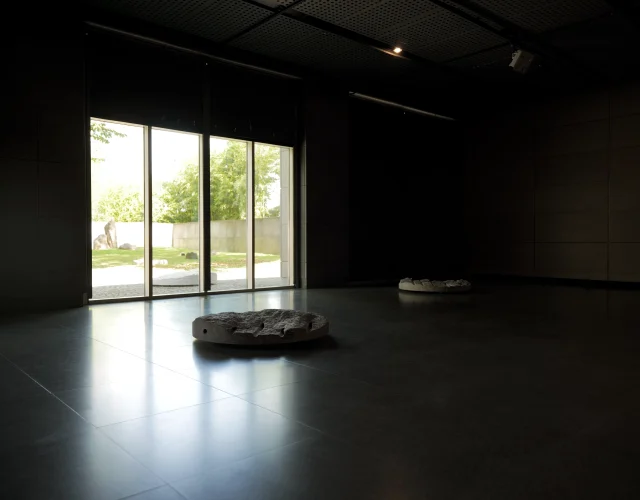
At Manggha Museum, the installation was dispersed between the gallery interior and the Japanese garden. Two granite objects carrying video projections were placed inside the museum, while two others were positioned outdoors. The placement allowed all four objects to remain simultaneously visible across the two spaces.

LIMINALITY
2022

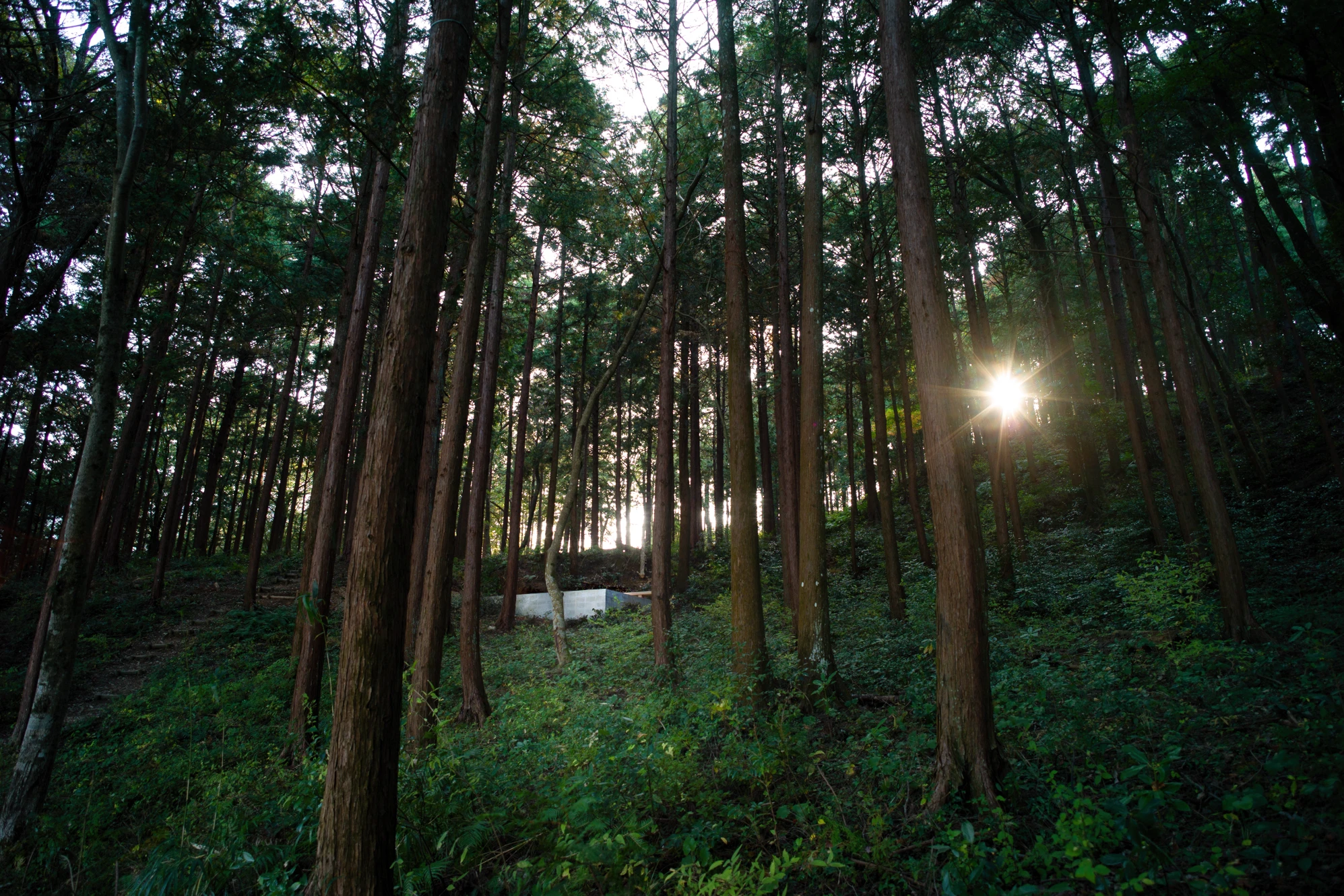
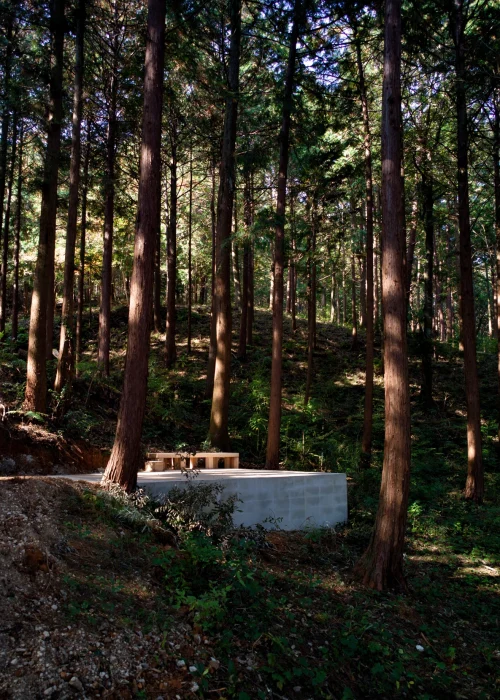
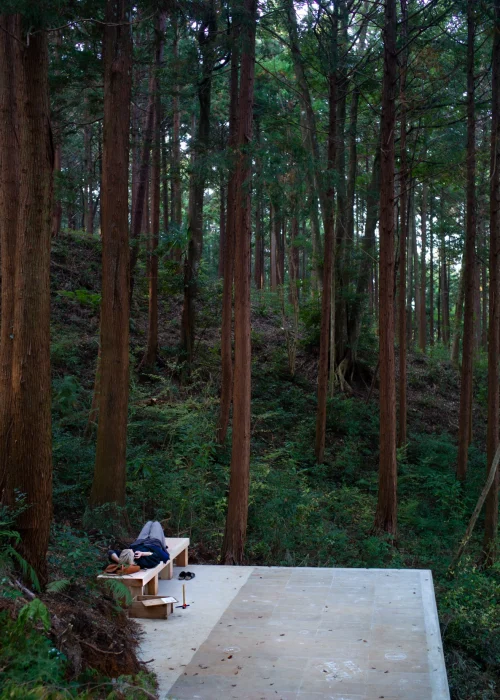
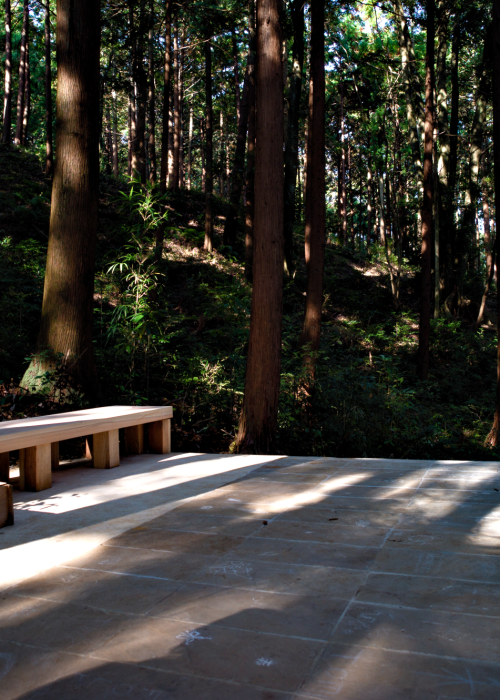
Oawa Mountain, Kamiyama, Tokushima, Japan google maps

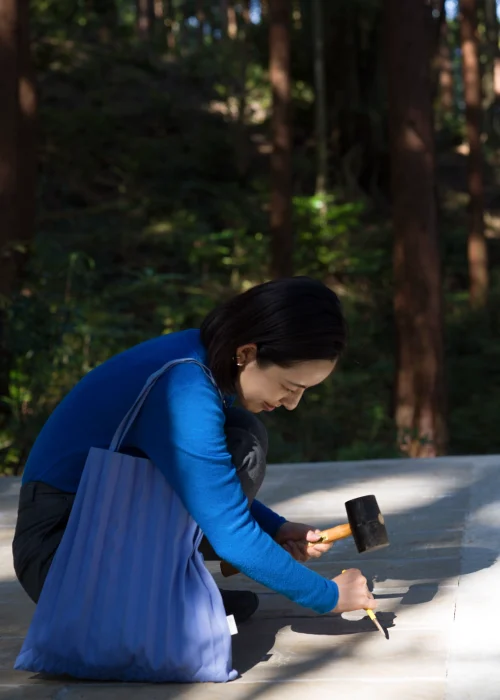
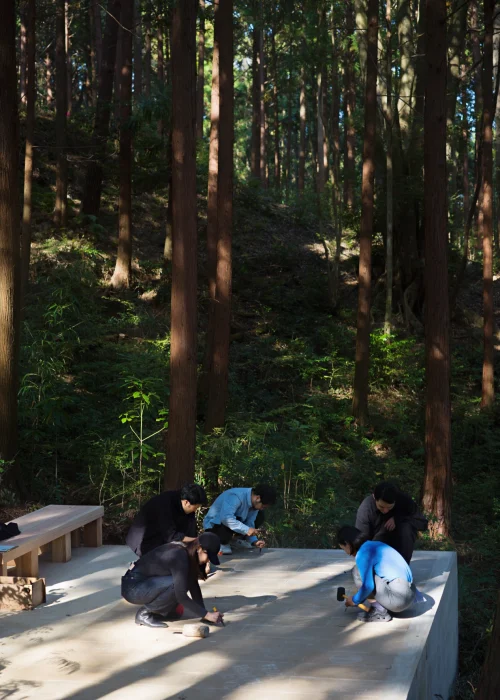
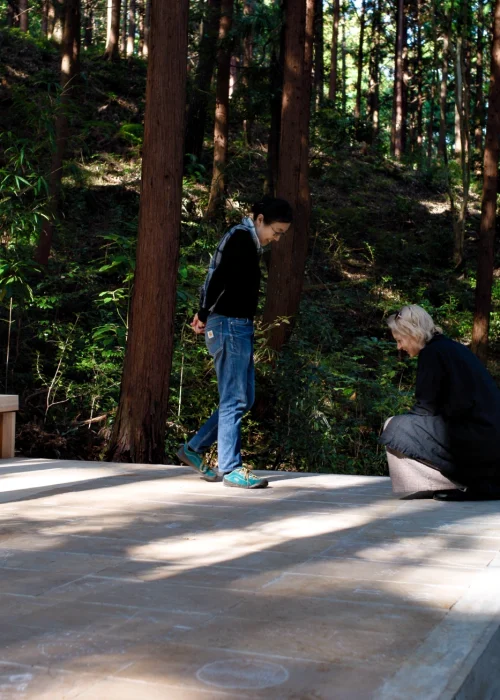
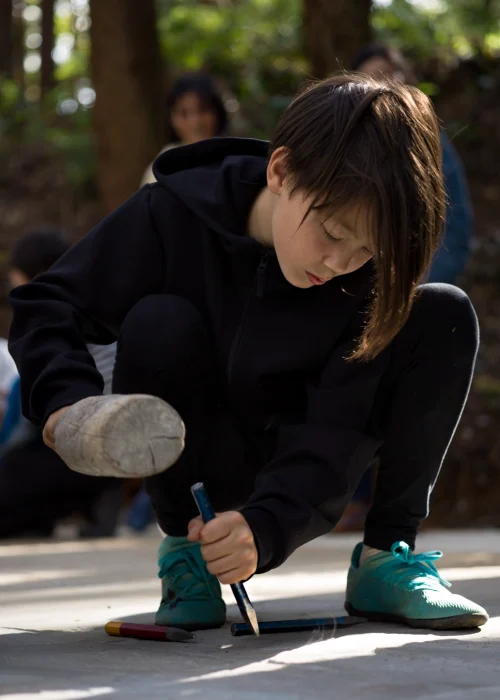
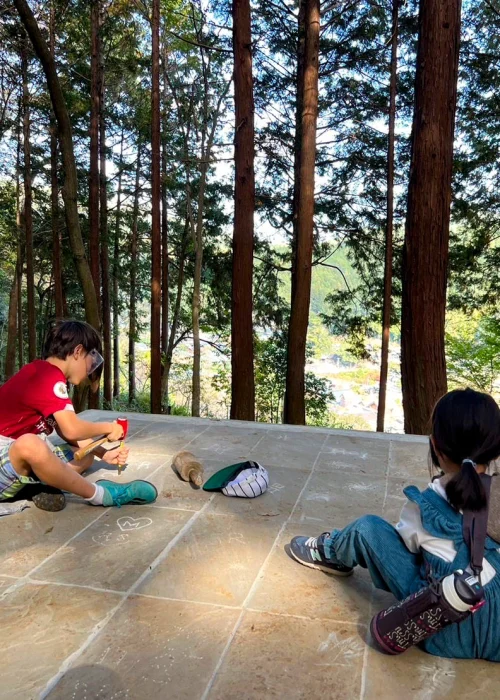
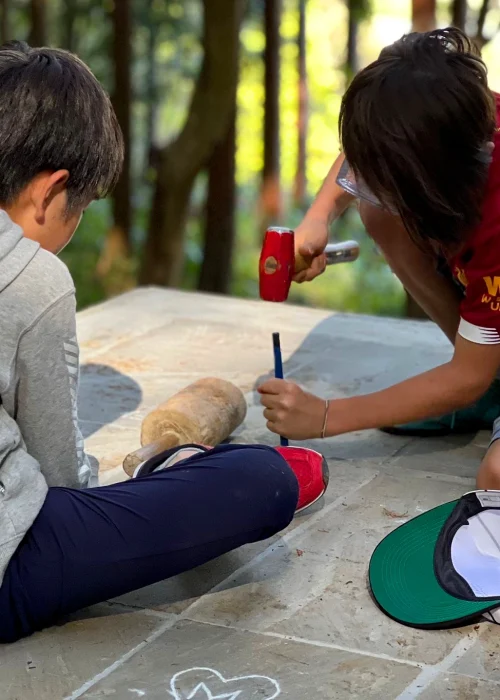
Concrete platform: 8x4m, stone surface: 5.5x2m, timber bench, tool box with carving chisels

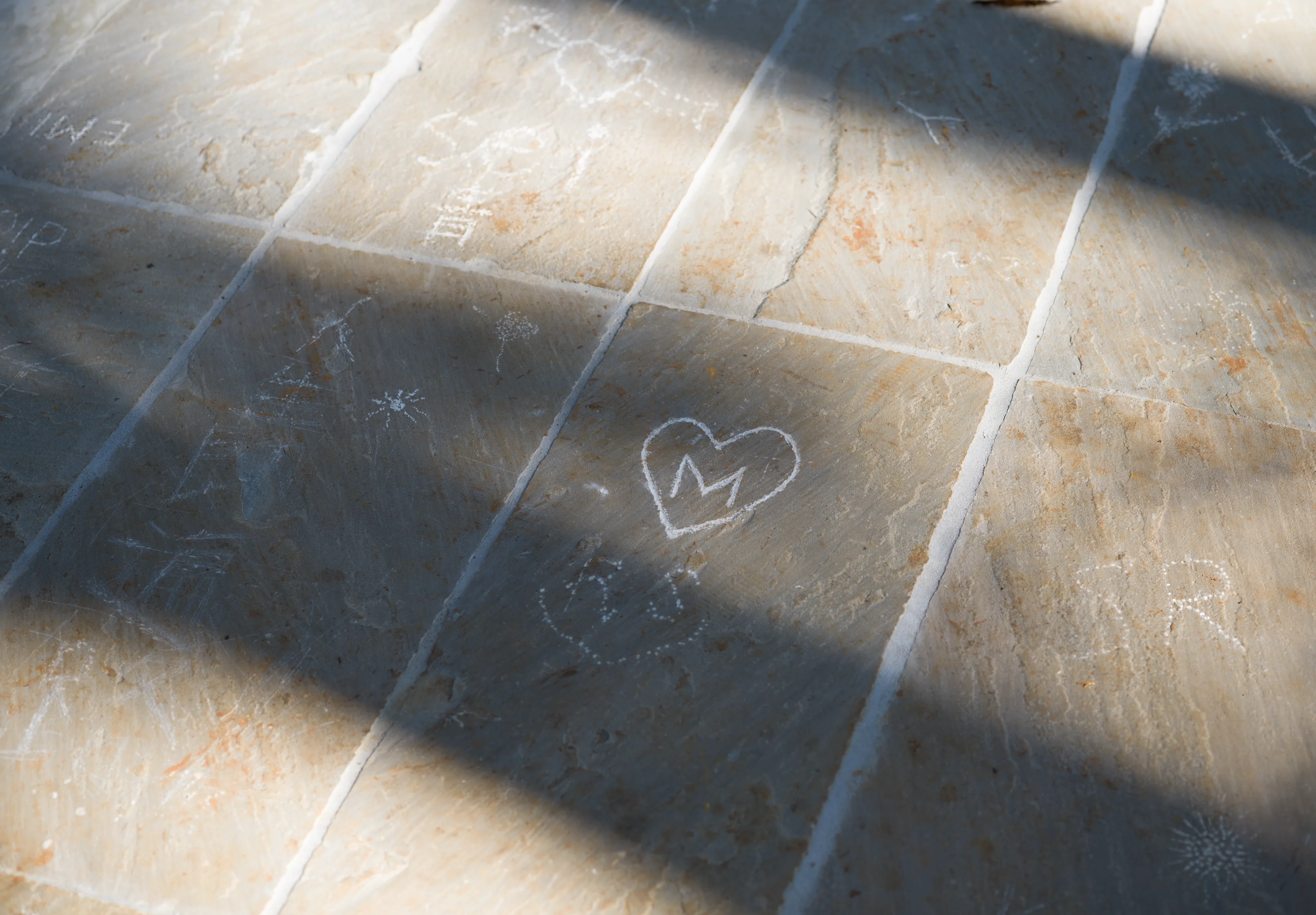
Liminality in Kamiyama is a place abstracted from its surroundings — an in between space, out of context, and without inherent meaning. It is a transitional, empty, liminal space — a non place waiting for people to project their own meaning onto it. It alludes to the human desire to leave traces of presence, a sentiment often felt when visiting new environments manifested in carving marks on trees, throwing coins into fountains, and hoping to return someday.

Liminality includes a toolbox with carving tools and a bench offering a beautiful view of Kamiyama Onsen. It serves as an open invitation — free of any pressure to participate — to spend time in the peaceful surroundings of the Kamiyama forest at Oawa Mountain and, if inspired, leave traces of presence set in stone.

The term liminality describes the psychological process of crossing boundaries and traversing borders. It is a state of in-betweenness, characterized by a sense of uncertainty and possibility that arises when we have left behind one state but have not yet fully established ourselves in another. The term was coined by Arnold Van Gennep in 1908, in his seminal work “Rites of Passage,” in which he observed that many rituals across cultures serve to move individuals from one status or social circumstance to another. Van Gennep was the first anthropologist to identify the regularity of rituals associated with transitional stages in human life. He delineated four key types of liminal experiences: physical movements, changes in social status, changes in situations, and the passage of time, which accompany every change of place, social position, state, and age. He noted that ritual ceremonies associated with life’s landmarks differ only in detail from one culture to another and are, essentially, universal. Liminality can refer to the physical, emotional, and metaphorical transitions that occur throughout life. The liminal period is a time of passage from what an individual (or entity) was to what they will become. It is a transformative and often challenging period of ambiguity, marking a critical juncture in personal development and cultural evolution.

Further Reading and context:
Marc Augé Non-places: introduction to an Anthropology of Supermodernity
Arnold Van Gennep Rits of Passage
Michel de Certeau The Practice of Everyday Life, Michel de Certeau Walking in the City

REMEMBER TO FORGET TO REMEMBER
2021–ongoing

ongoing art in public initiated in 2021
Stamps with red ink

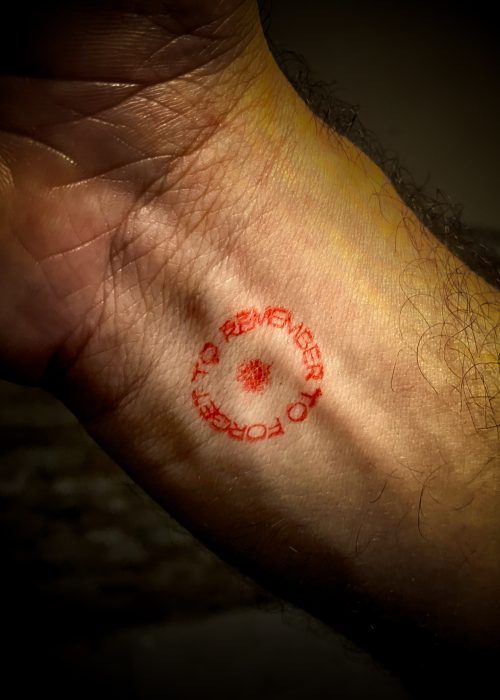
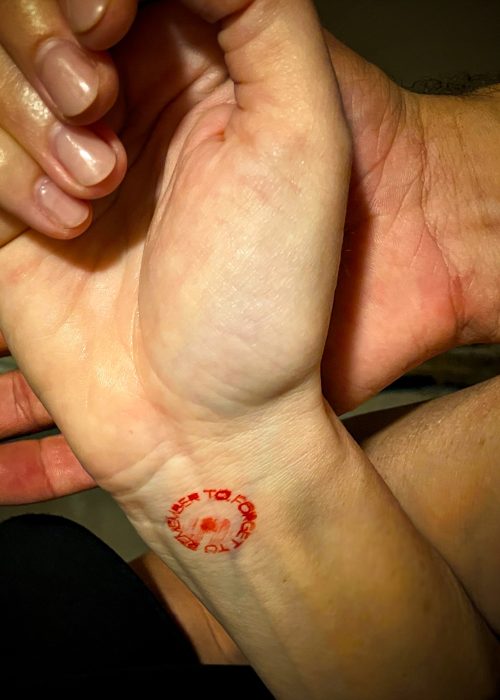
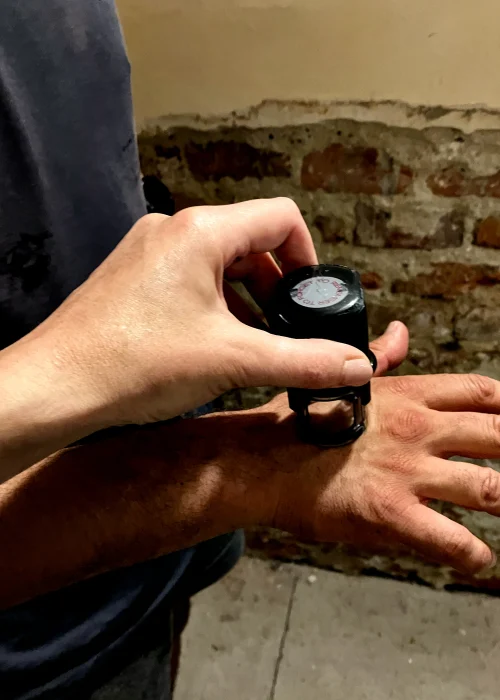
Remember to forget to remember was launched in Berlin in 2021, during the period between successive pandemic-related lockdowns. Stamps bearing the looped phrase which can be read as “remember to forget” or “forget to remember” are applied to the wrists of participants at events in public spaces. The temporary red ink mark, which remains on the skin for a short time, functions as an ephemeral record: an inscription that appears and disappears, remaining dependent on duration and daily circulation. The project continues as an ongoing series of interventions carried out during events and public gatherings.

BLÜHENDE ÖDE – Urban Identities In Transition
WES+HEID collaboration
2021

Interventions at 5 locations in Neukölln, Berlin

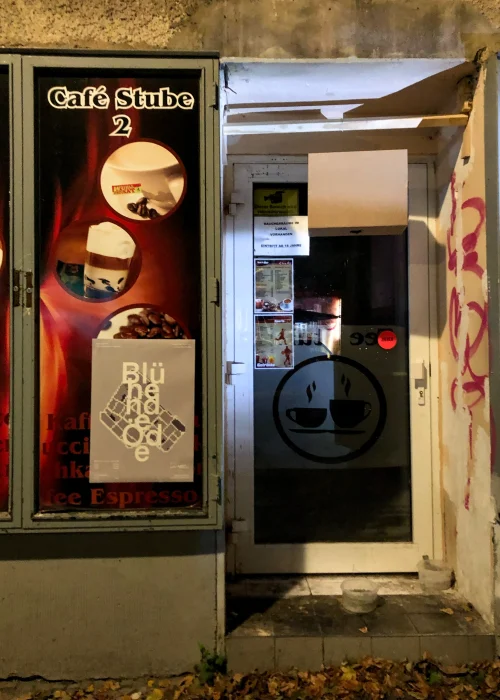
Spanning four days and multiple locations in Neukölln, Berlin, the project explored the potential of overlooked and unused urban spaces within the district, highlighted during the pandemic. These sites, all within walking distance of each other, formed an alternative map that emphasized vacancies often invisible in the urban fabric.

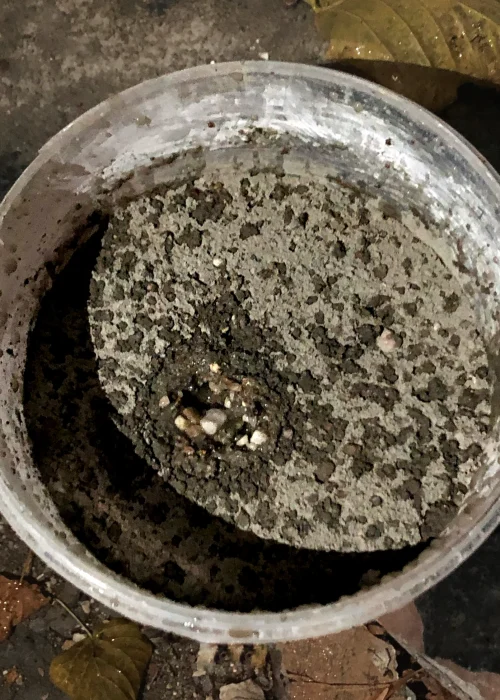
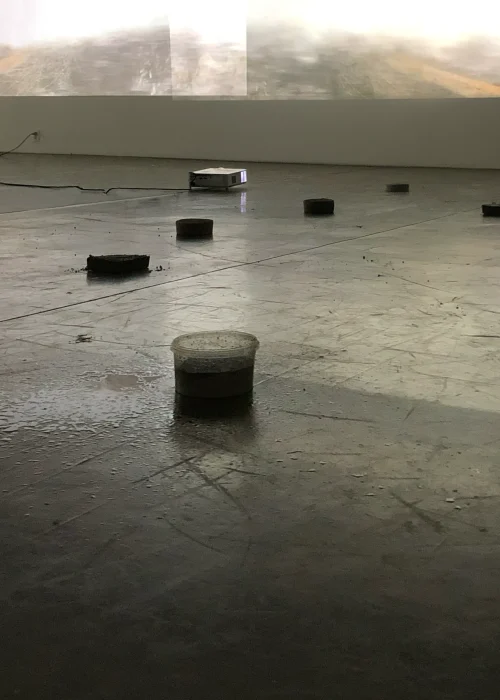
Across five locations, the project unfolded through a set of coordinated interventions structured by repetition and duration. Video projections were mapped onto building façades, registering opposing flows of water as continuous, time-based inscriptions marking each site. The projections did not establish narrative links between locations; instead, they functioned as recurring signals, situating each place within a shared temporal structure. In the doorframes of empty commercial premises, suspended constructions released single droplets of water onto containers filled with powdered material. Over the course of the project, this slow and uninterrupted process caused the material to consolidate into concrete forms. The objects did not result from a decisive gesture but from sustained accumulation, registering time through gradual transformation. Each site produced its own set of objects, linked by procedure rather than by form. The project did not activate the sites through symbolic representation or programmatic reuse. It operated through minimal interventions that redistributed attention toward processes already present: exposure, erosion, persistence. The exhibition at Am Flutgraben 3 presented the objects formed during the interventions alongside documentation and projections, holding together the dispersed actions as a single system of records developed across the city.

Solo exhibition curated by Marla Heid followed the interventions in a public space. All objects and mechanisms realising drops of water, alontogether with new forming objects, were presented at Am Flutgraben 3.

DID JUST HAPPEN
2018

Sound installation

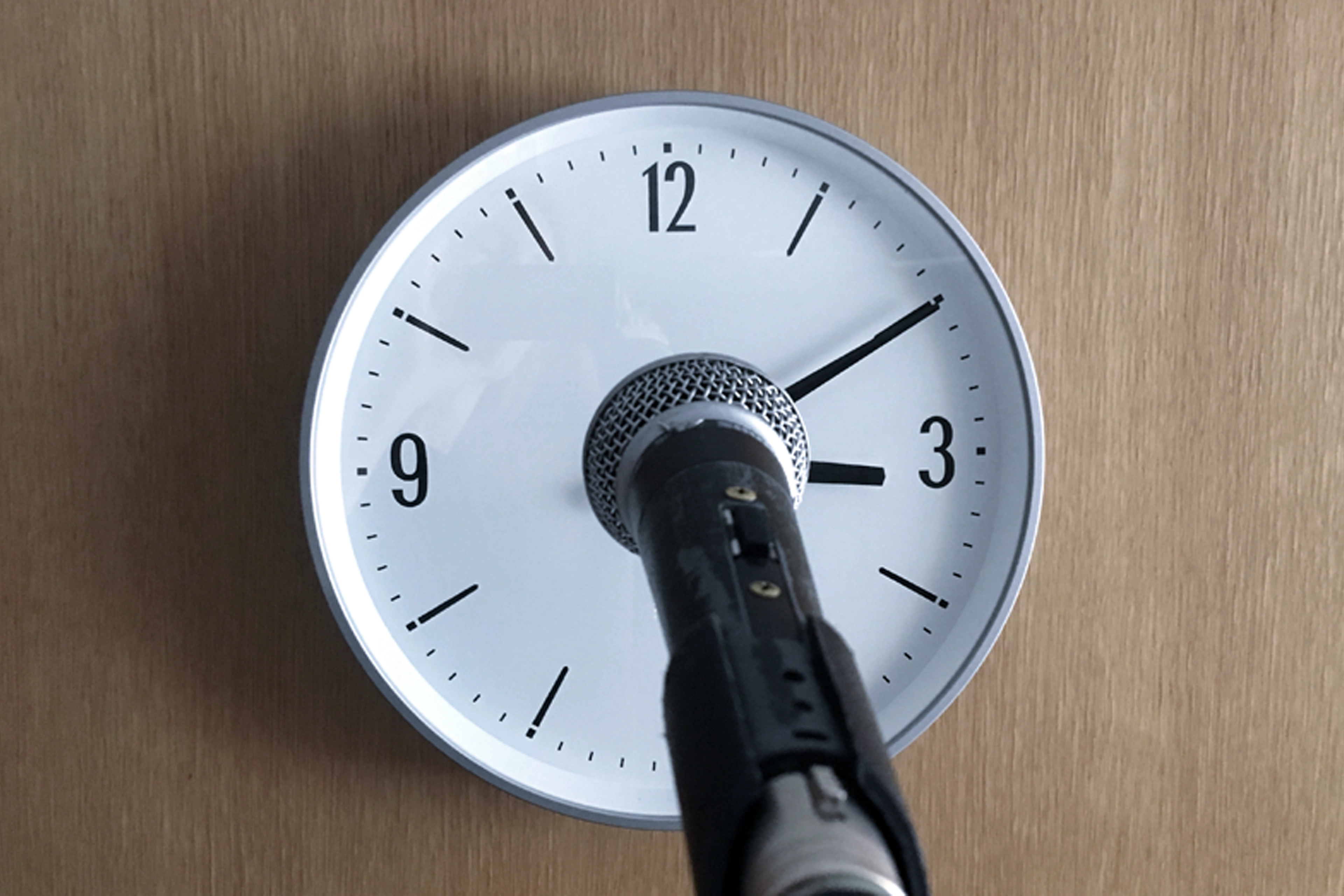
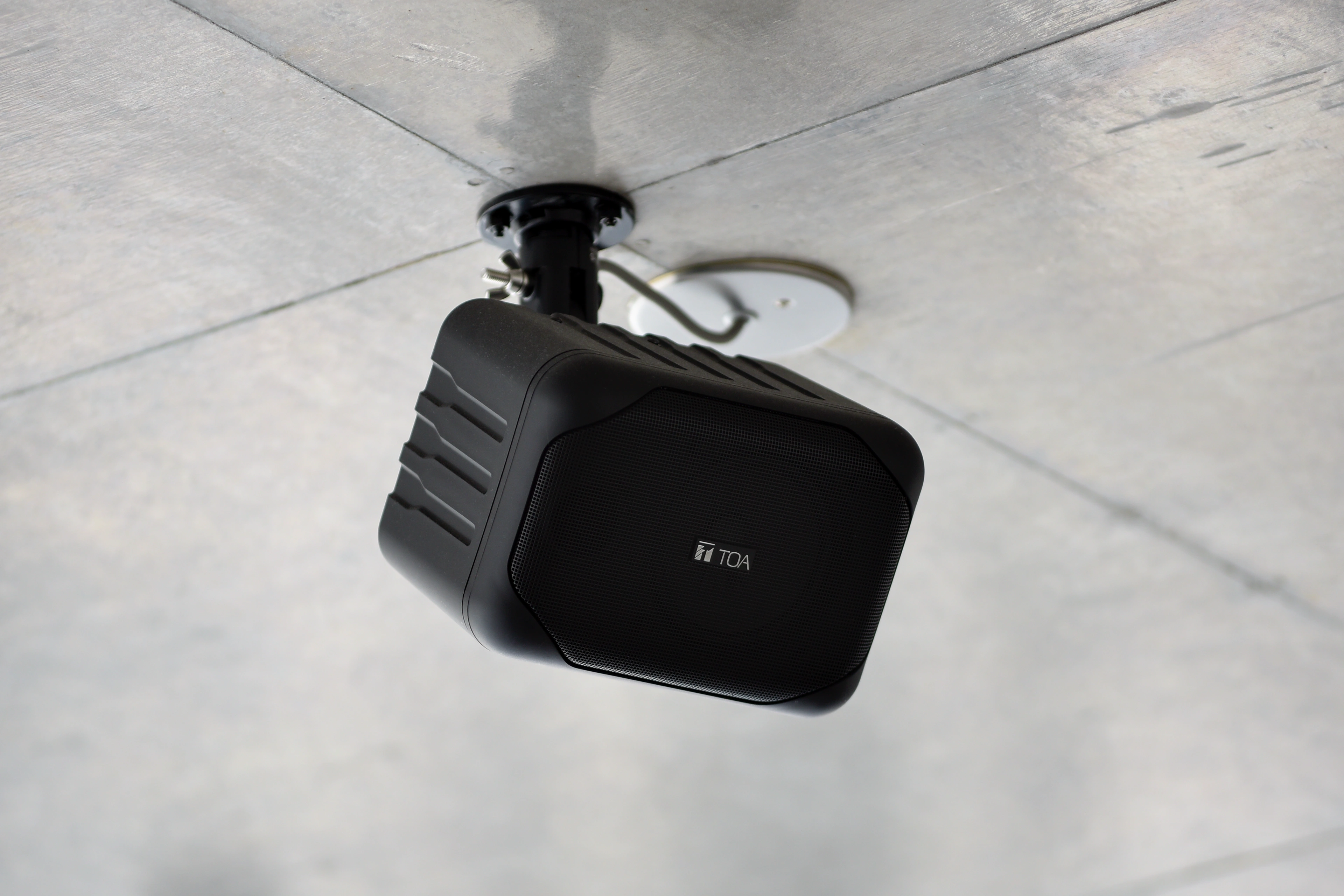
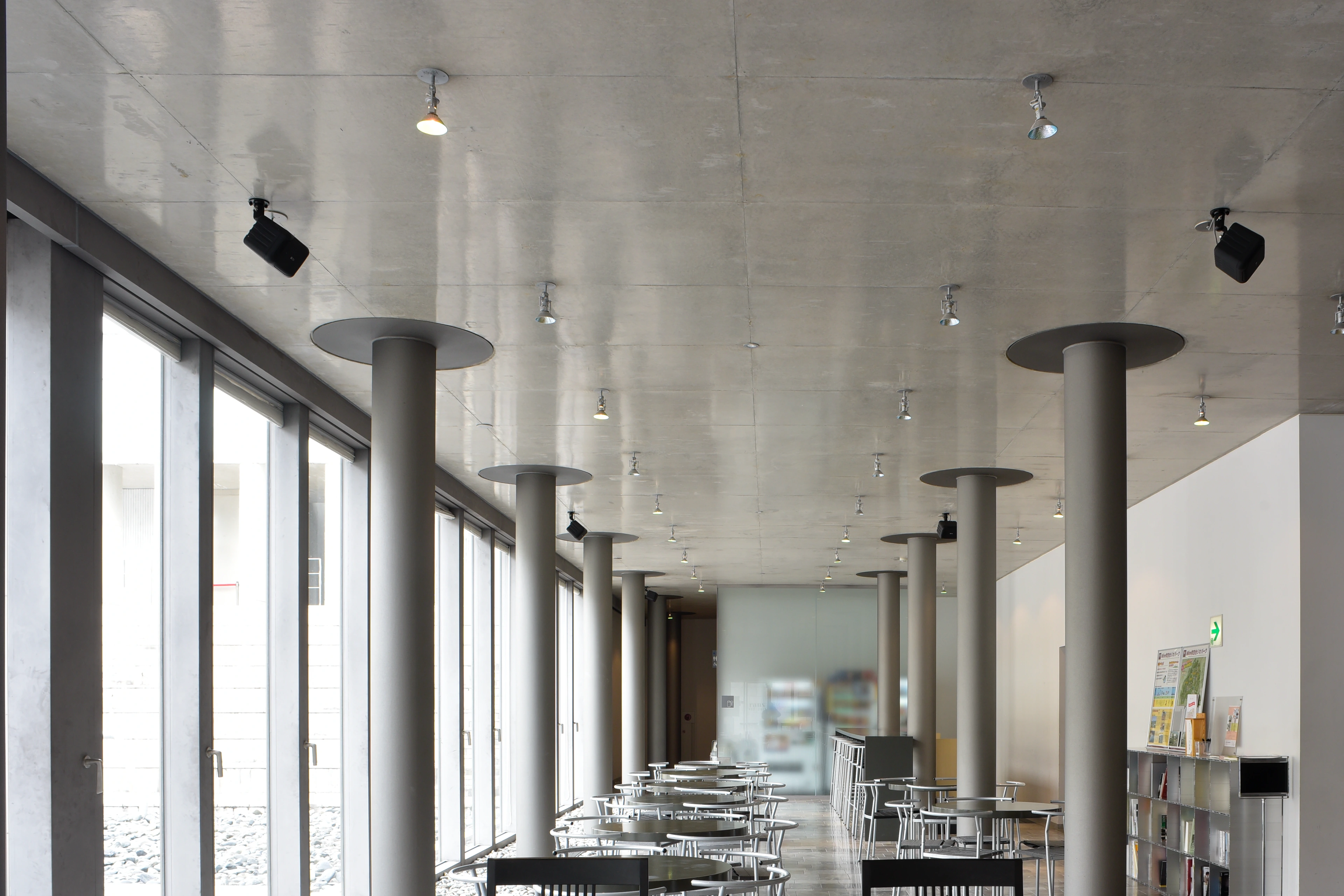
The installation originated from the distinct loud clicks of clocks hanging in the public areas of the Akiyoshidai International Art Village. Those characteristic every-minute clicks were recorded, altered in frequency, and replayed throughout the corridors, social spaces, and gallery areas of the AIAV. As part of the Future of This Land group show, the installation accompanied visitors as they were moving between exhibitions, encouraging them to attune to the subtle yet pervasive passage of time. By slowing down or speeding up the familiar ticking, the work disrupted the rhythm of timekeeping. Filling transitional spaces, Did Just Happen explored the interplay between time and movement, amplifying the fleeting nature of often-overlooked moments.

AKIYOSHI SINELLA
2018

Interactive installation: video projection, fog

An interactive video projection inspired by the Yamaguchi Cave (the longest limestone cave in Japan, measuring 11 kilometers). The video depicted an image of an unreachable end of the path. The cave passage with its exit was shrinking as visitors tried to approach it, and expanding as they stepped back. The exhibition space was slightly filled with fog, making the exit path appearing extended into the air, producing a beam of light following the visitor like a spotlight.

Akioshi Sinella was presented at the Future of This Land group exhibition, addressing the depopulation of Akiyoshi and Yamaguchi prefectures. Known for their limestone deposits, these areas are now facing the depletion of quarry resources, prompting critical conversations about the region’s future development.

Title references Sinella Akiyoshiana, a translucent organism endemic to the Akiyoshi Cave. As an endemic species, it can exclusively be found in a single, precisely defined geographic location (a species is designated as endemic only if it is not found anywhere else beyond the specified geographic boundaries).

Akiyoshi Sinella refers to the Japanese concept of MA, an in-between space that coexists with and challenges its surrounding framework. In contrast to Western thought, which is predicated on self-reference, Japanese culture values the concept of MA. Dutch philosopher Henk Oosterling illustrates this point with the example of an empty room: in Western culture, a room is considered empty until someone enters it, at which point a place centered on the person or object is produced. The moment another person enters the room, a relationship or interaction emerges between them, though this is viewed as secondary to identity. By contrast, the Japanese concept of MA regards the in-between space as more important, as it is where life is lived and movement from one place to another is organized. According to architect Arata Isozaki, the in-between space is key to sensing the moment of movement.

WHEN I STAND HERE I HEAR THE EARTH IS TURNING
2018

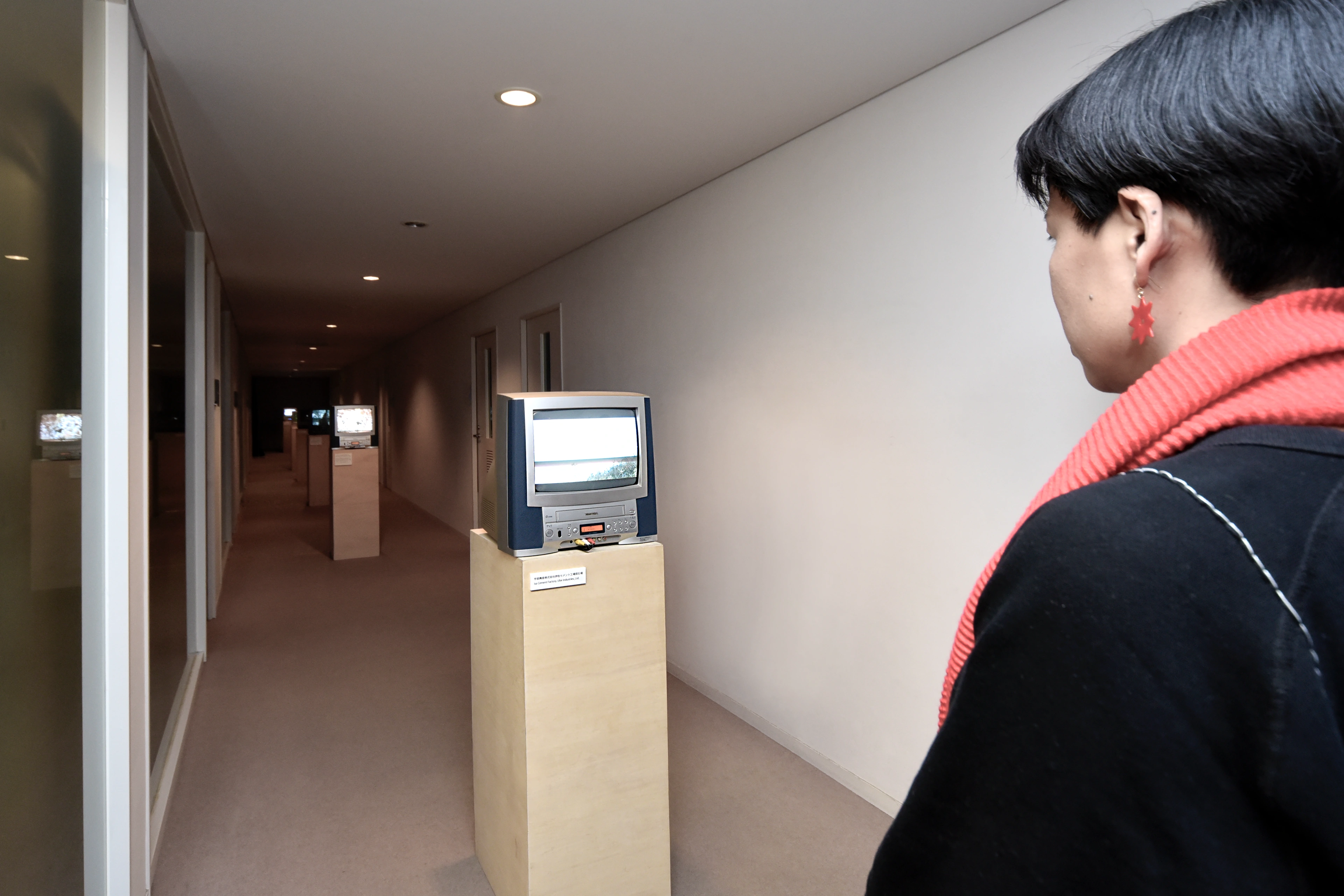
7 monitors with videos and sound

Seven monitors lined in a corridor connecting the galleries of the Akiyoshidai International Art Village, each displaying a video of passages through liminal spaces in Akiyoshi or repetitive sequences of choreographed movements.

The work was developed for The Future of This Land, a group exhibition reflecting on the depopulation and transformation of the Akiyoshi and Yamaguchi prefectures. Known for their limestone deposits and stone industry, these regions faced an uncertain future as resources dwindled, prompting critical discussions about political agendas and strategies for regional development.

When I stand here I hear the earth is turning was rooted in the Japanese concept of 間 (MA). MA represents an in-between space that coexists with and challenges its surrounding framework, emphasizing both the objective sense of place and the subjective experience of presence. Originating from Shinto’s harmony – focused philosophy and Buddhism’s emphasis on impermanence, MA contrasts with Western thought, which prioritizes self-reference and identity. The installation was presented in the building designed by Arata Isozaki, who introduced the concept of MA to Western audiences at the  MA – Space-Time in Japan exhibition at the Cooper-Hewitt Museum in New York, bringing MA to international attention.

IIT'S JUST A MATTER OF TIME
(Interactive tracebox)
2017

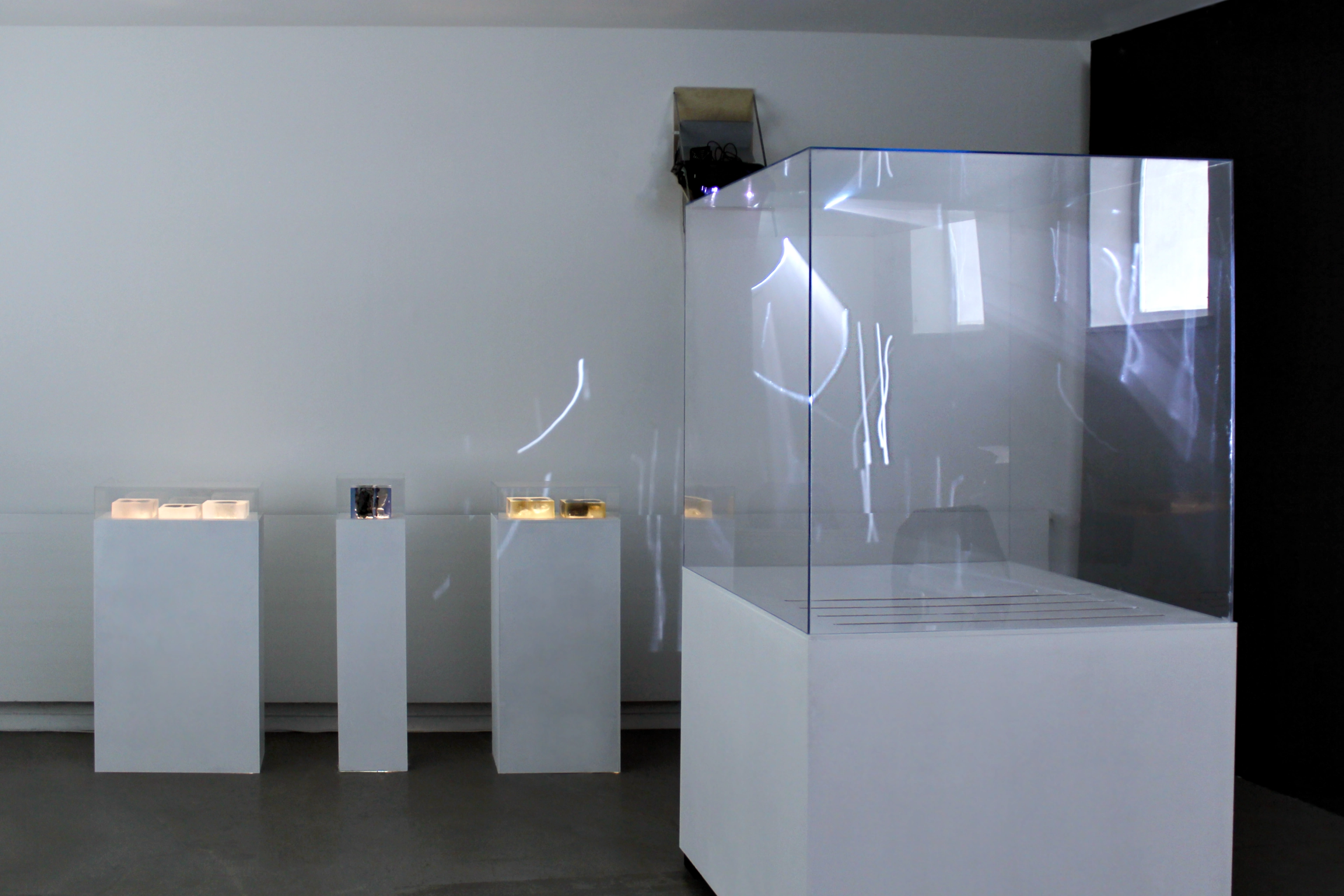
Box with fog and interactive video projection: 1x1x1.9m
wooden base: 1x1x0.9m
plexi cube 1x1x1m

It’s Just a Matter of Time – interactive object produces temporary visual traces in response to the presence and movement of viewers. The object is built out of a plexiglass cube filled with fog. It is placed on a wooden base that contains a projection system, motion detection, and airflow control. Movement near the object is registered by software that translates speed and direction into projected linear forms resembling particle trajectories. These forms appear inside the fog-filled cube and remain visible only for a short duration. Their legibility depends on the density of the fog, air circulation inside the cube, and the viewer’s position in relation to the object. A fan installed in the base introduces continuous variation, preventing the traces from stabilizing into a fixed image. The work does not accumulate records and produces no lasting output. Each trace appears, shifts, and disappears without repetition or storage. The object functions as a closed system in which presence is registered exclusively through transient visual phenomena. The piece situates time as duration rather than sequence. Traces are generated only in the moment of interaction and vanish immediately after, leaving no material residue. The work operates as a device that makes perceptible the instability of registration itself.

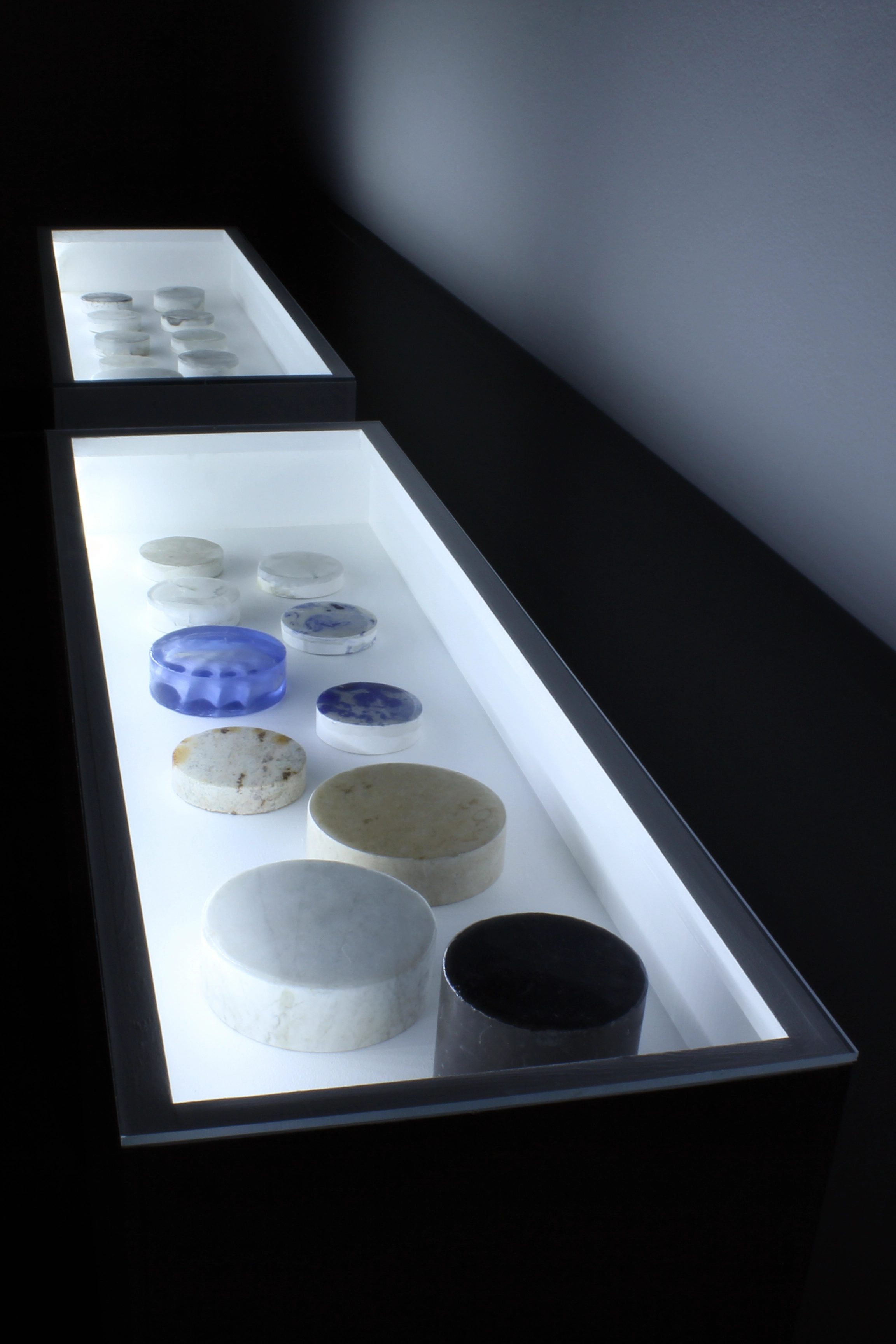
MATTER OF TIME
2017

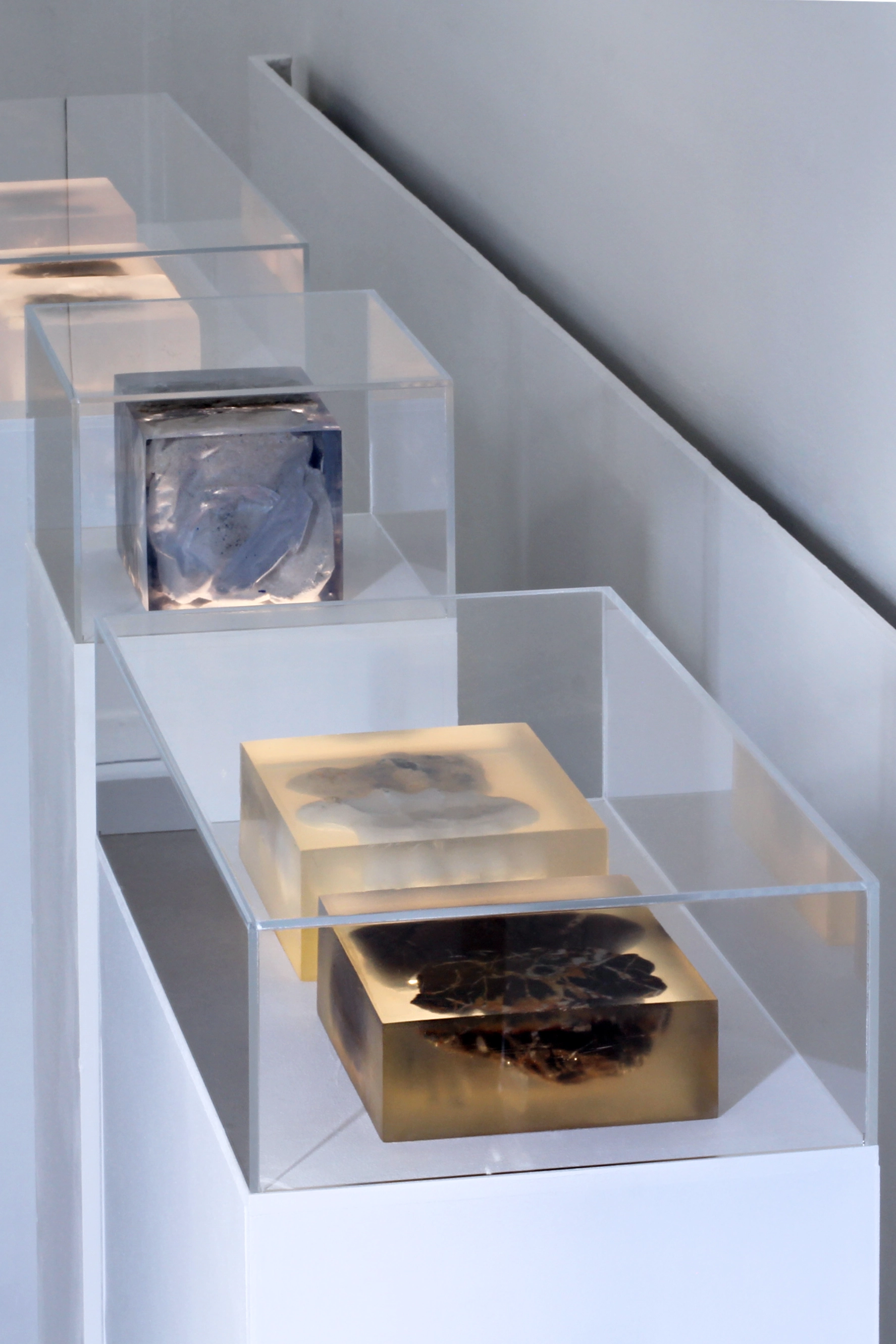
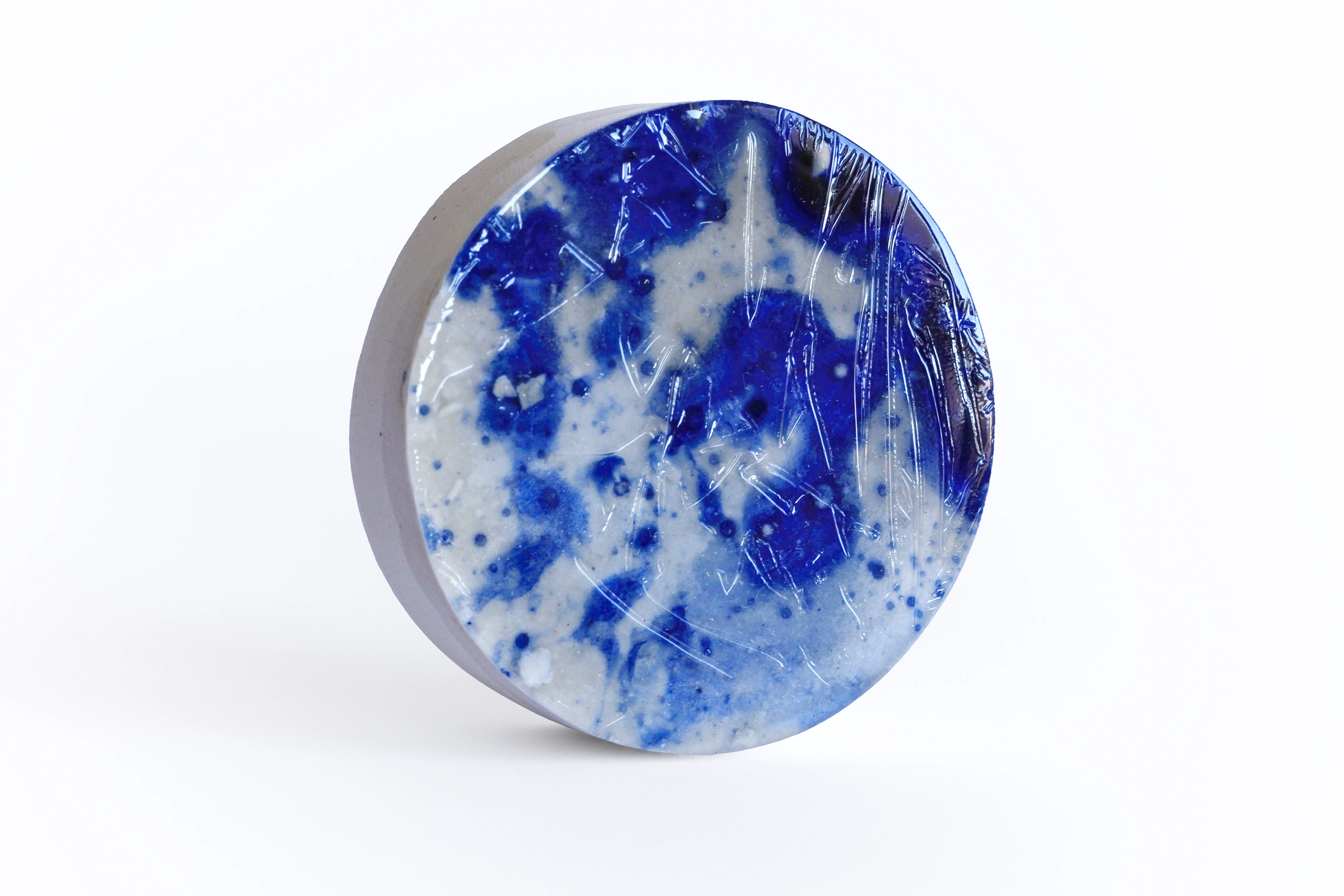
Series of sculpted objects displayed in illuminated display boxes
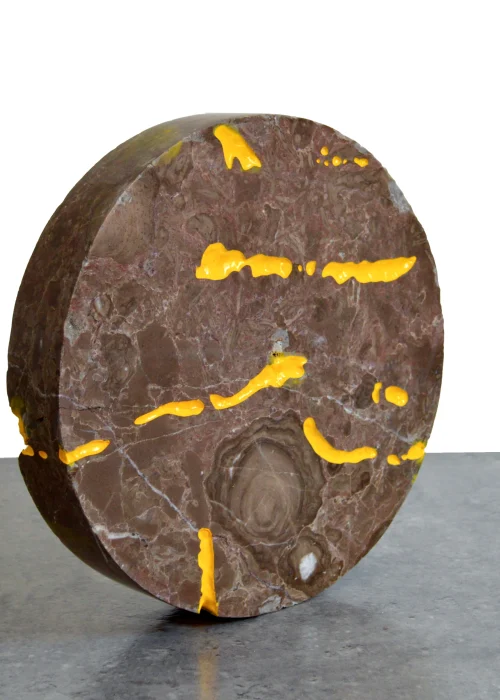
Granite, marble, granite powder, marble powder, pigmented resins

~
2016

Interactive installation
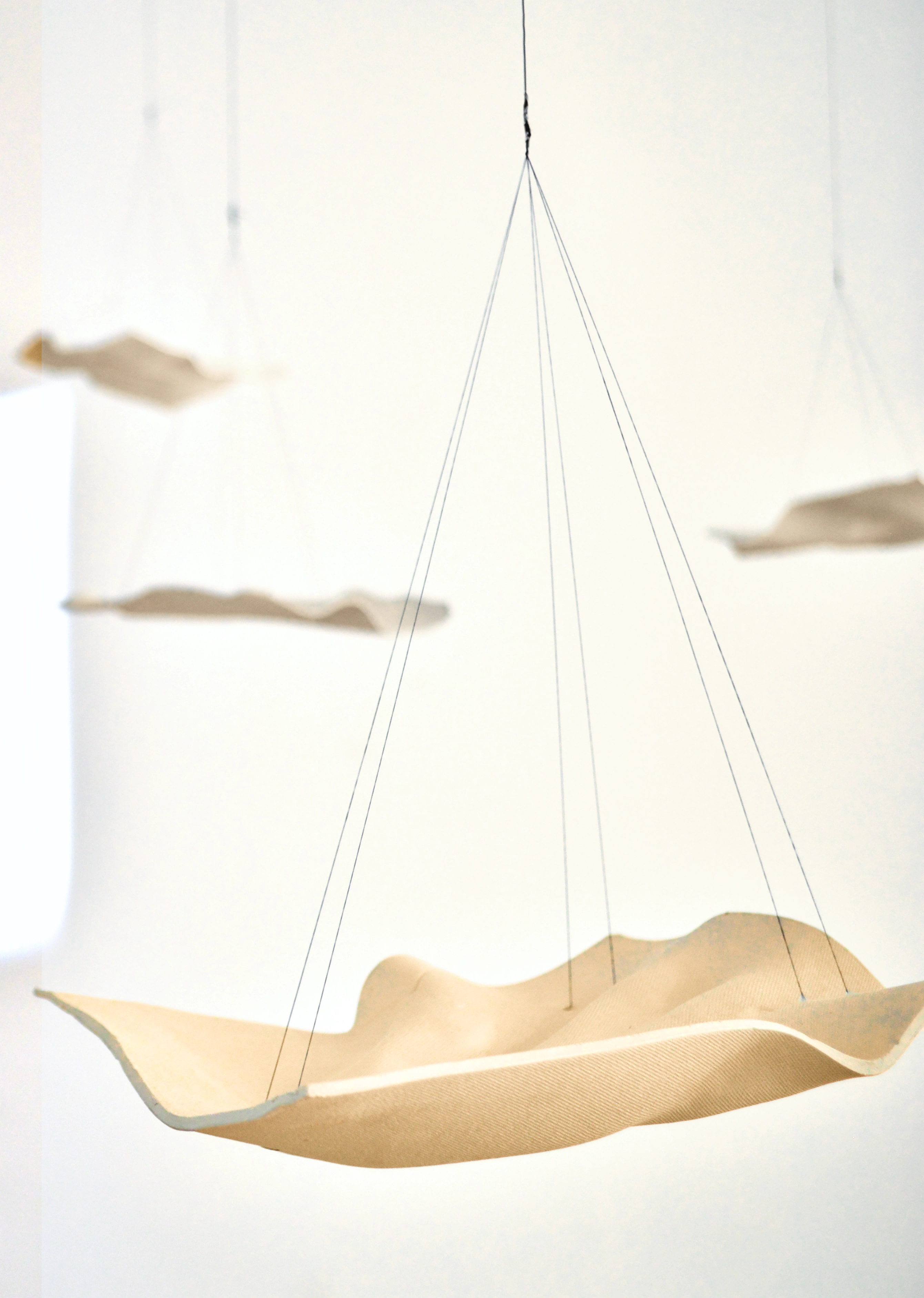
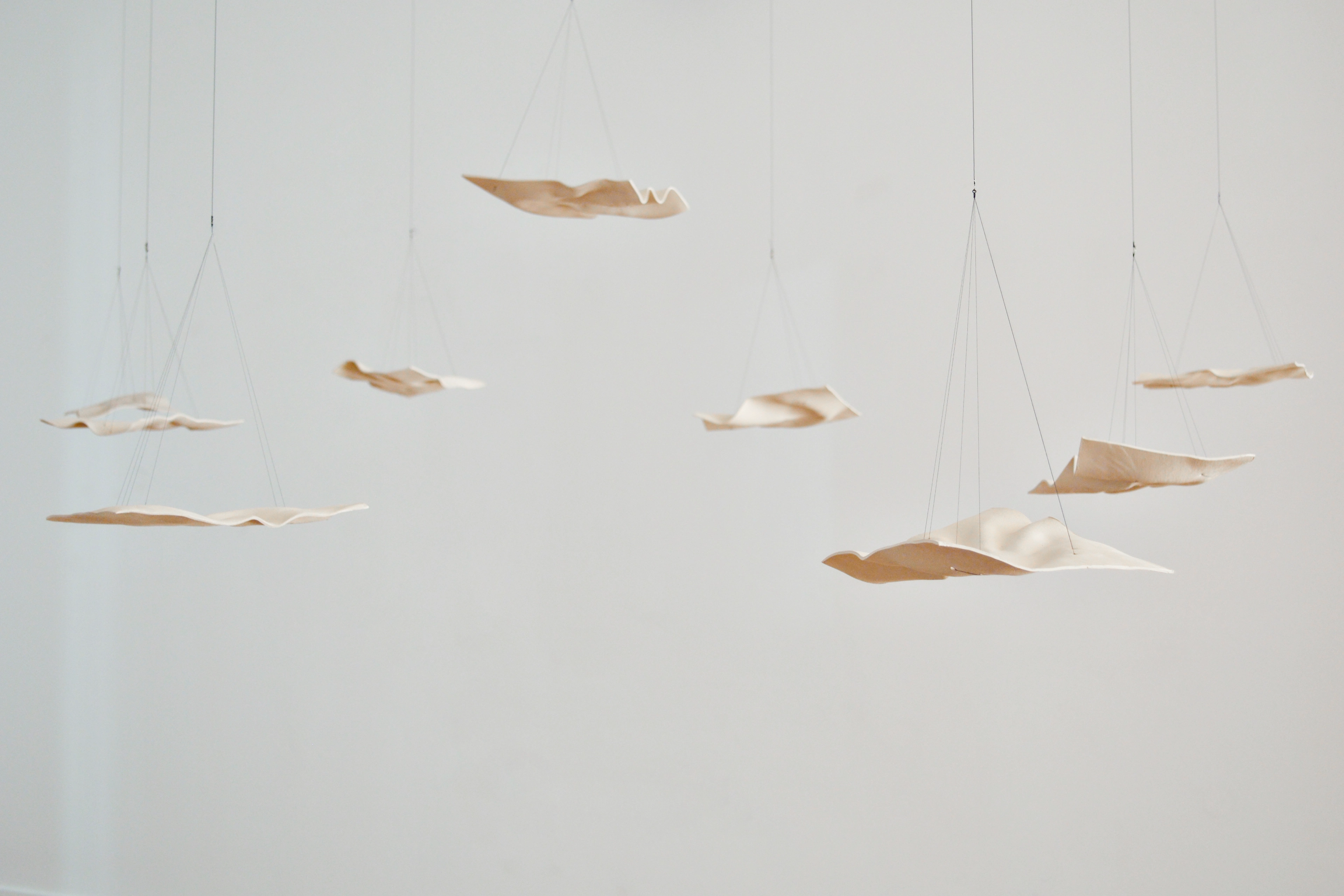
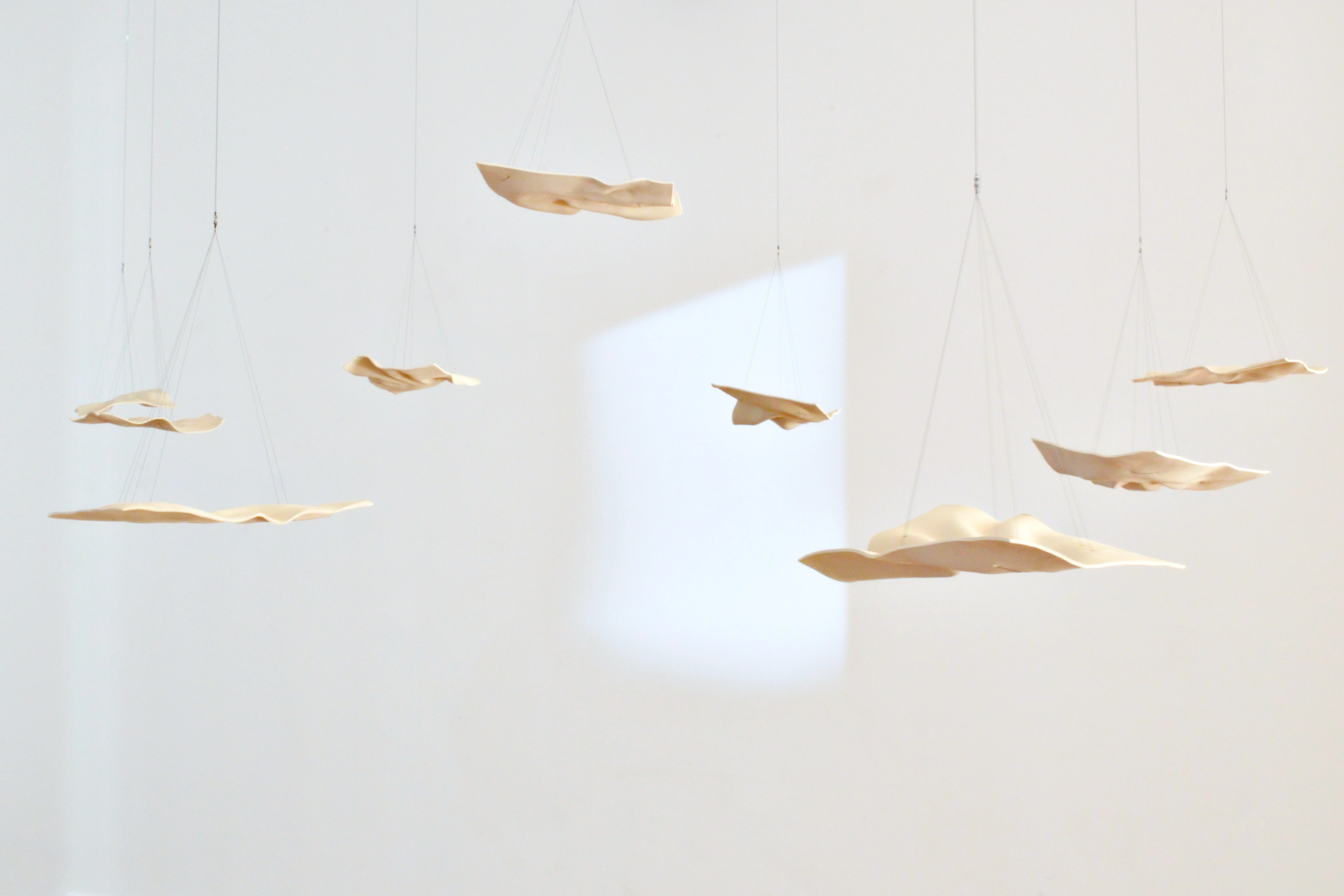
15 ceramic tablets suspended from a 5×2.6m grid [Each ceramic piece: 24×17.5cm], 3 Video projections [in 15 min. loop]

The installation is composed of ceramic tablets suspended in space and arranged as a single, ordered configuration. Each element is produced by pressing a clay tablet by hand and retains the imprint of that action. All components originate from the same procedure and function as material records of repeated contact. As viewers move through the space, their presence alters the alignment of the suspended ceramics. Movement produces a temporary spatial shift across the whole system, registering bodily passage as a transient disturbance. When movement stops, the elements gradually return to their initial position, re-establishing the original order. Three video projections are directed onto the suspended ceramics from opposing angles. The projections modulate the light in the room according to a fixed temporal cycle, changing the conditions of visibility without introducing representation or narrative. Light, movement, and material trace operate within the same structure and remain inseparable. The installation is constituted through repetition, alignment, and return. Individual elements do not function autonomously; the work unfolds as a relational field in which traces appear through movement and dissolve through the system’s own reconfiguration. Time is registered as duration, not as sequence, and the installation remains an open loop of inscription rather than an accumulating archive.

~ – ∞
2016

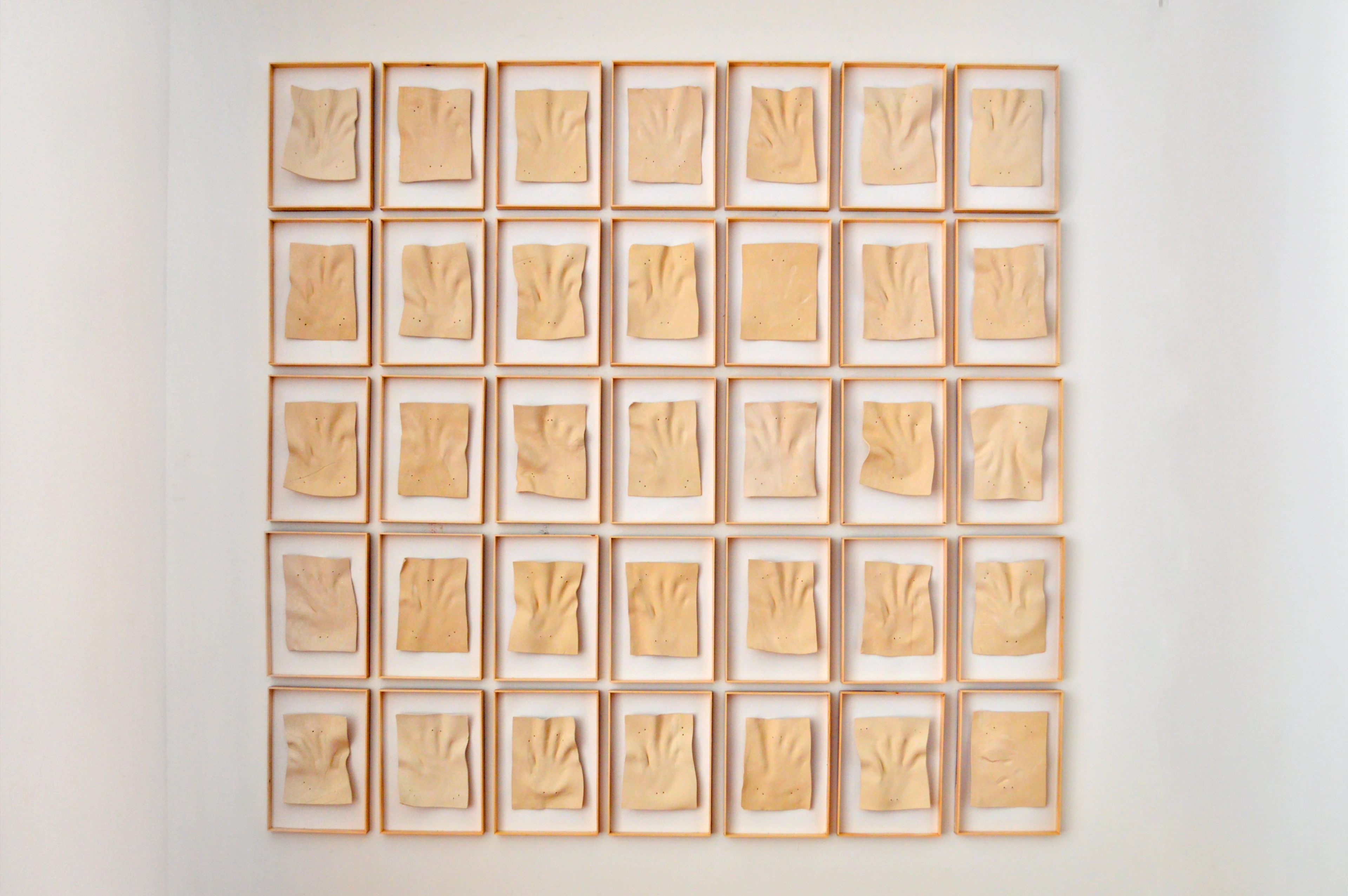
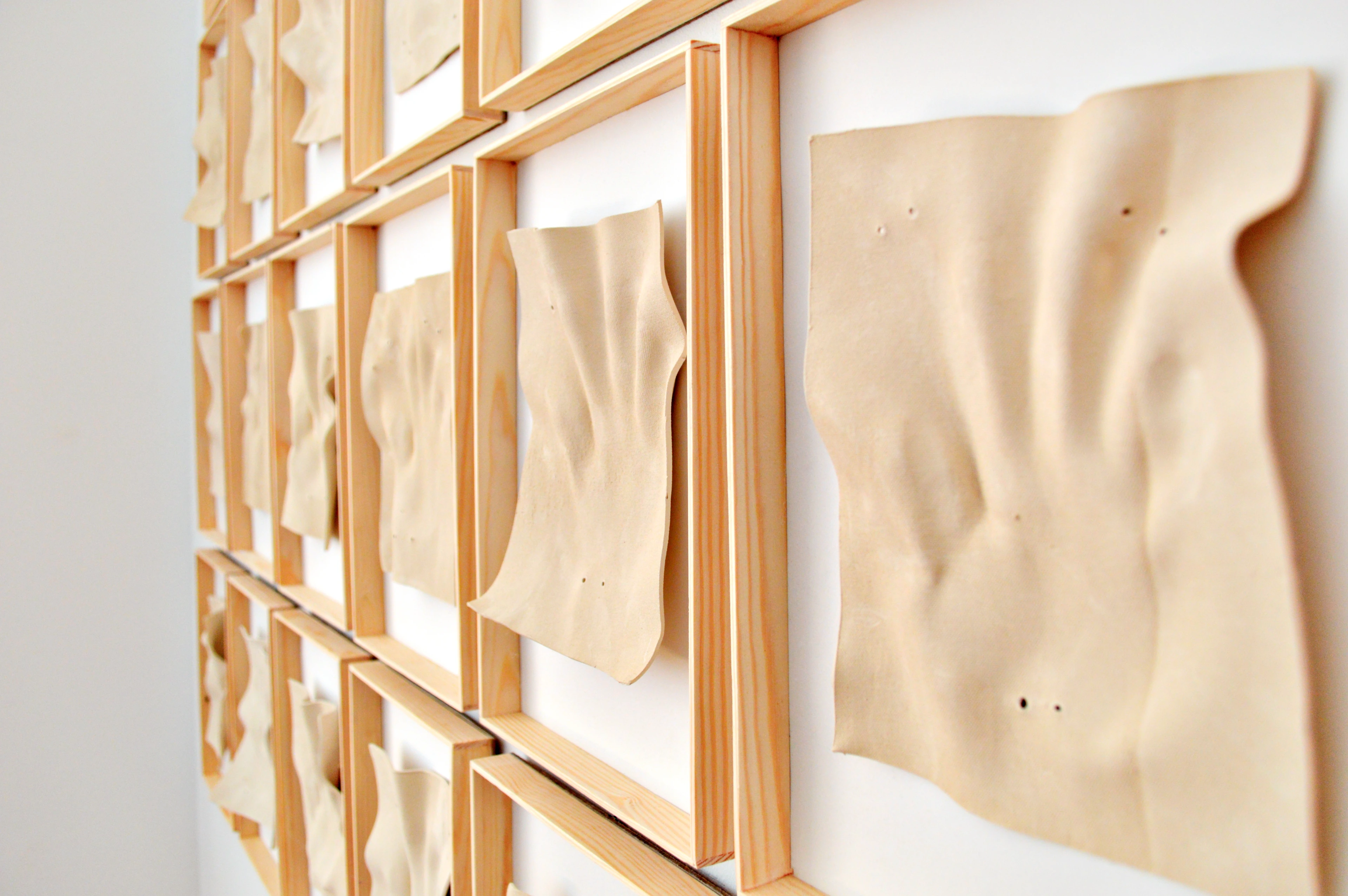
Replicas series: ceramics, wooden frames, 190.00 x 193.00 x 3.00 cm (frame: 35.5 x 25cm, ceramic: 24 x 17.5cm)

~ – ∞ is composed of framed ceramics. Each bears an imprint of the same process and is produced by pressing a clay tablet by hand. Each imprint is direct and unmodified, fixed in the material through firing. The gesture is repeated without variation. Pieces are presented together as a series. Individually, each ceramic functions as a partial record of a single imprint; collectively, they form an ordered sequence structured through repetition. The hand appears only as a trace registered in matter, not as an image or sign. Arranged on the wall in a grid, the elements operate through accumulation. No single piece is complete on its own. The work unfolds as a field of imprints, in which duration is established through serial presence and the persistence of repeated marks.

NOTES OF THE LIGHTHOUSE KEEPER
(LIGHTHOUSE BONITA )
Ewa Wes and Tan Wei Keong
2016

Two time-lapse video projections with sound, 50 Suspended A4 prints on foils, fans

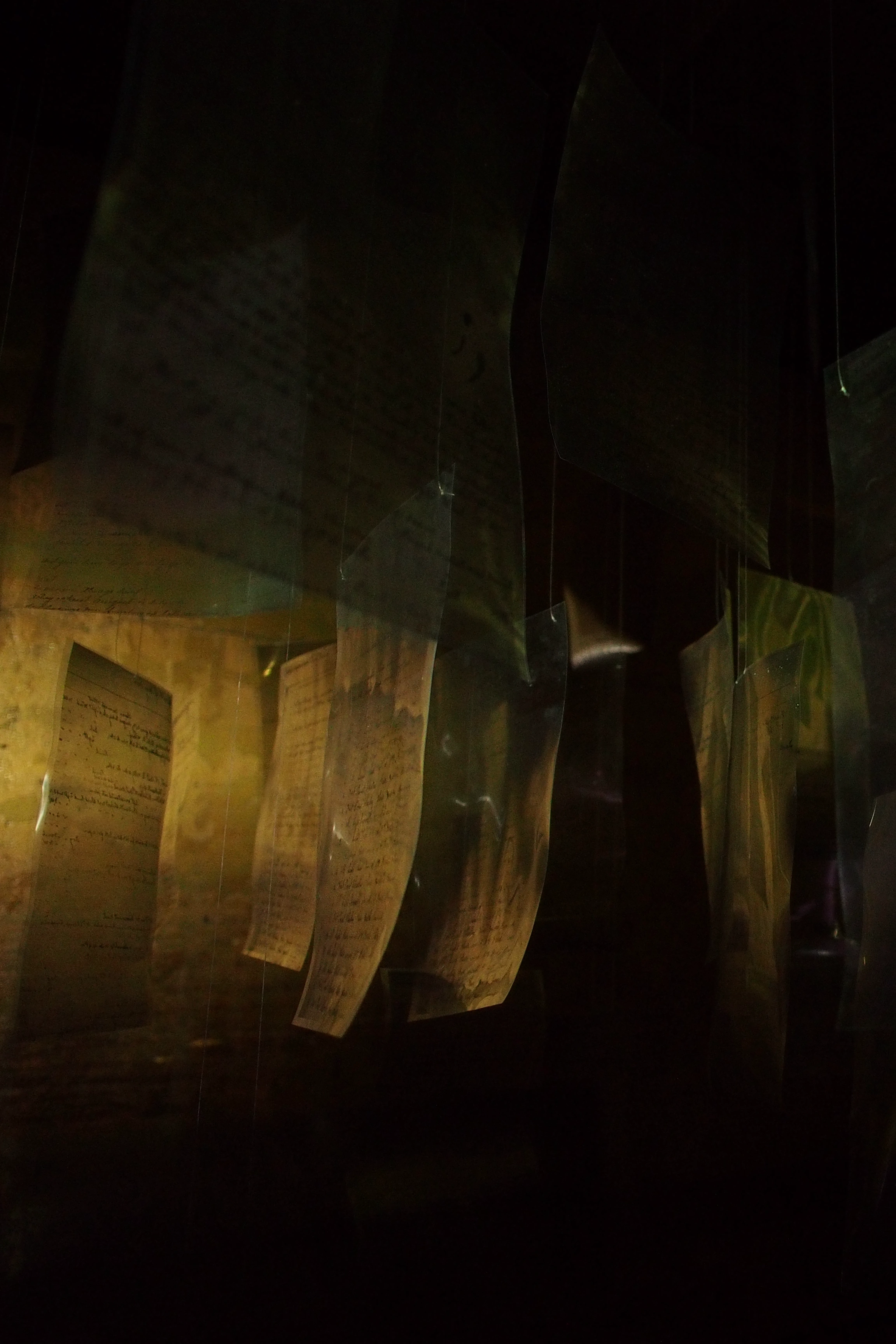
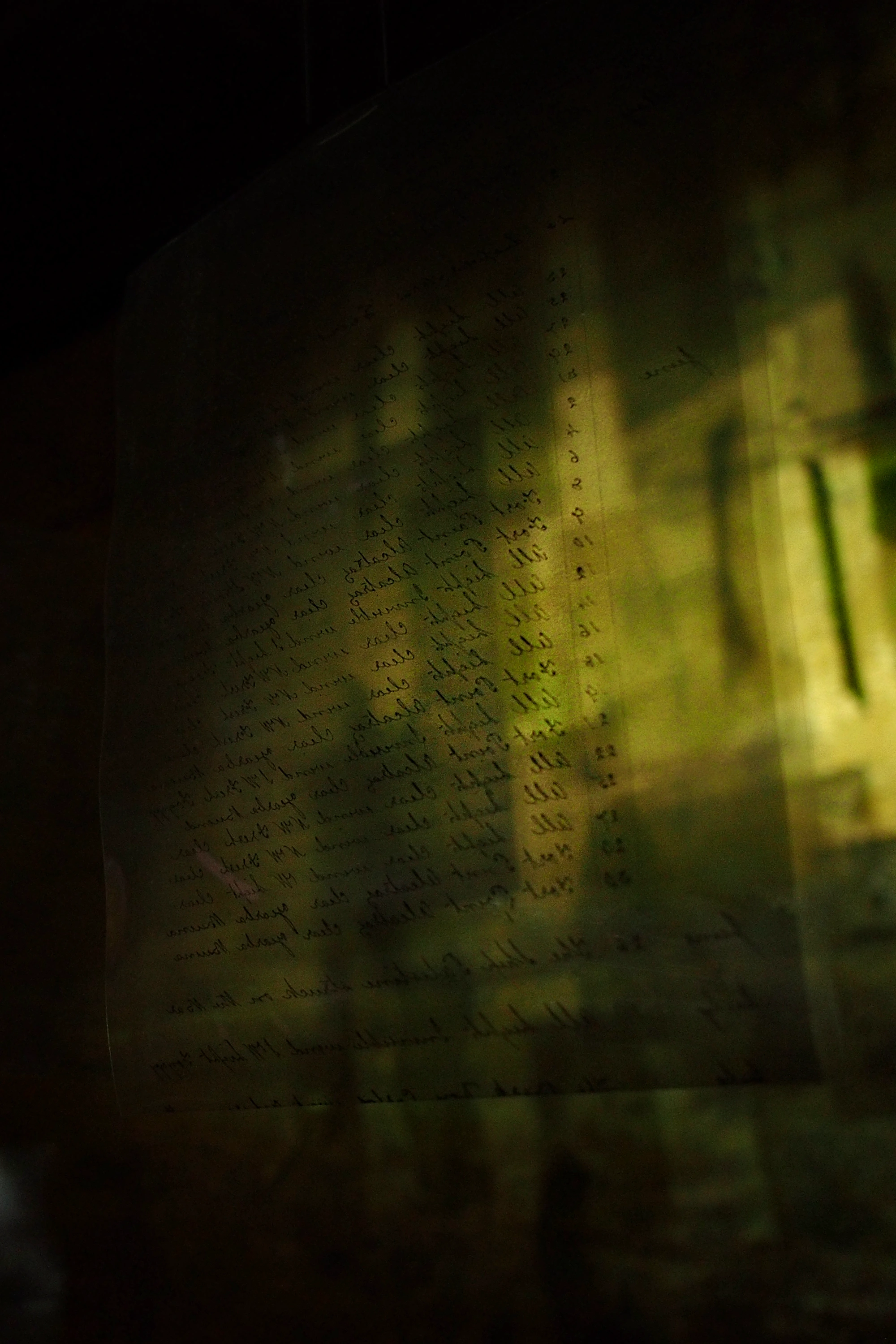
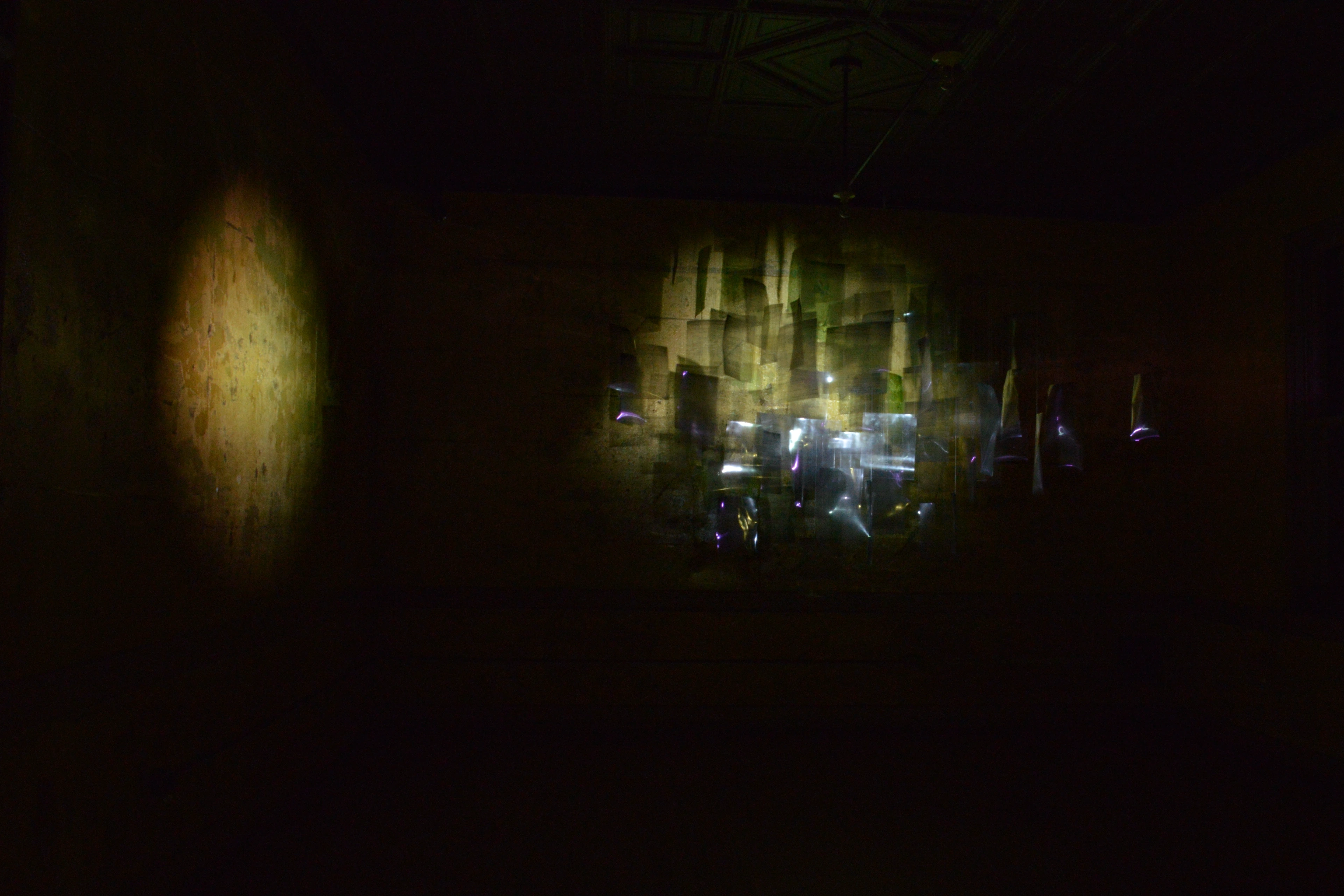
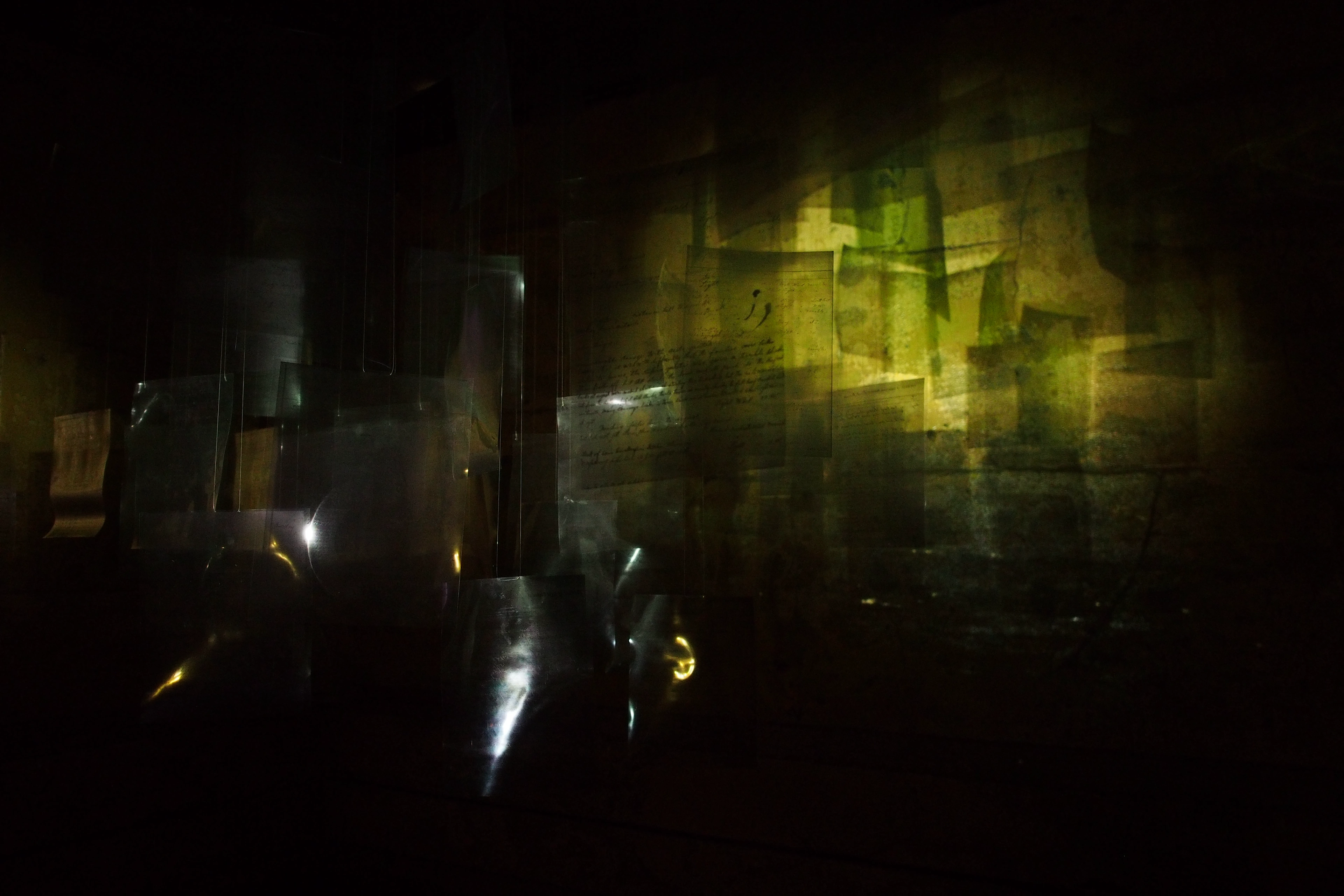
Monotonous, mantra-like daily notes from a Lighthouse Bonita keeper’s journal (1890–1891) were printed on transparent cards and suspended from the ceiling of the Headlands Art Center’s yellow Rodeo Room. [The room maps time by treating architectural rehabilitation as an archaeological process, explicitly freezing the 1907 decay through varnish and revealing layers of paint, as described in the Headlands Center for the Arts event page. The space merges different eras by forcing a dialogue between 1987 design interventions and the building’s 1907 military history].

A small fan in the corner of the room created a gentle breeze, causing the suspended pieces to move. Two circular video projections, composed of time-lapse photographs of the ocean taken from the Bay Area, were cast onto the cards. Their light cast shadows of letters slowly drifting across the walls. The videos faded in and out rhythmically every few seconds, evoking the sensation of viewing the ocean through the slow motion of closing and opening eyelids.

The installation was inspired by the research paper “Time Adaptation Shows Duration Selectivity in the Human Parietal Cortex“ (2015), which explores how the human brain adapts to repeated exposure to specific time intervals. The study reveals that the parietal cortex, particularly the inferior parietal lobule (IPL), demonstrates selectivity to these durations, influencing our perception of time. This adaptation alters how we experience temporal frequency, creating an elastic sense of time that can feel condensed or expanded depending on prior stimuli. Notably, the research highlights a key distinction: while temporal repetition produces neural adaptation in the IPL, repetition of non-temporal aspects of a stimulus, such as shape, does not. This finding emphasizes the unique neural processes underlying time perception, which are echoed in the mantra-like journal entries and the interplay of fluid, shifting projections and shadows within the installation, creating a meditative yet dynamic exploration of repetition and time.

Fragment of the Lighthouse Bonita keeper’s journal (1890–1891):

Day 23 All lights Clear wind NW Fresh Clear
Day 24 All lights Clear wind NW Fresh Clear
Day 25 All lights Clear wind NW Strong Clear
Day 26 All lights Clear wind NW Fresh Clear
Day 27 All lights Clear wind NW Strong Clear
Day 28 All lights Clear wind NW Fresh Clear
Day 29 All lights Clear wind NW Fresh Clear
Day 30 All lights Clear wind NW Strong Clear
Day 1 Fort Point Alcatraz Clear Yerba Buena
Day 2 Fort Point Alcatraz Clear Yerba Buena
Day 3 All Lights Invisible wind S light Foggy
Day 4 All Lights Clear wind NW fresh Clear
Day 5 All Lights  Clear wind NW fresh Clear
Day 6 All lights Clear wind NW Fresh Clear
Day 7 Fort Point Alcatraz Clear Yerba Buena
Day 8 All lights Invisible wind SW Fresh Foggy
Day 9 Fort Point Alcatraz Clear Yerba Buena
Day 10 All lights Clear wind NW Fresh Clear
Day 11 All lights Clear wind NW Fresh Clear
Day 12 All lights Clear wind NW Light Clear
Day 13 Fort Point Alcatraz Clear Yerba Buena
Day 14 Fort Point Alcatraz Clear Yerba Buena

O=O
2014

Objects with light and moving sensors: 60cm and 30cm

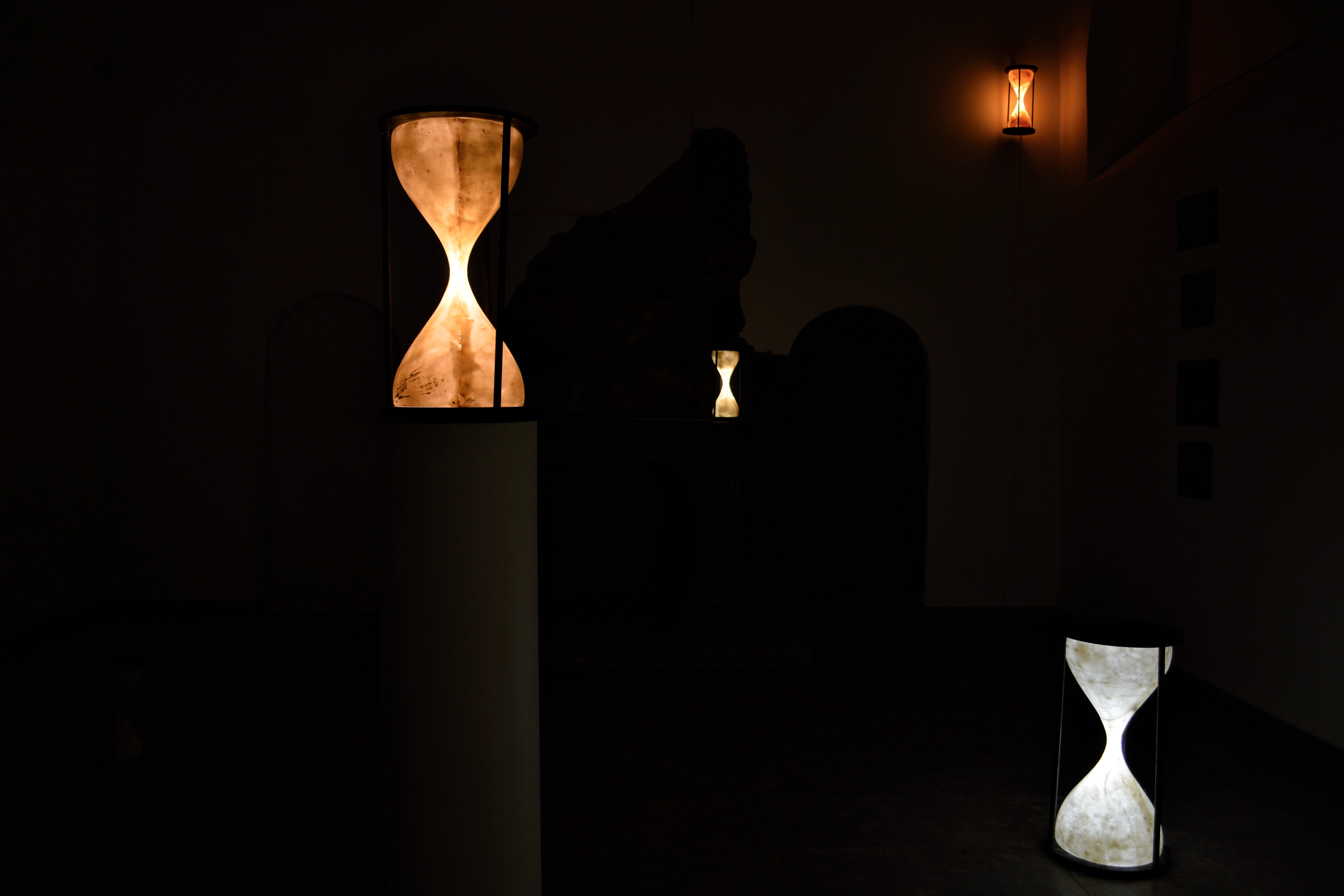
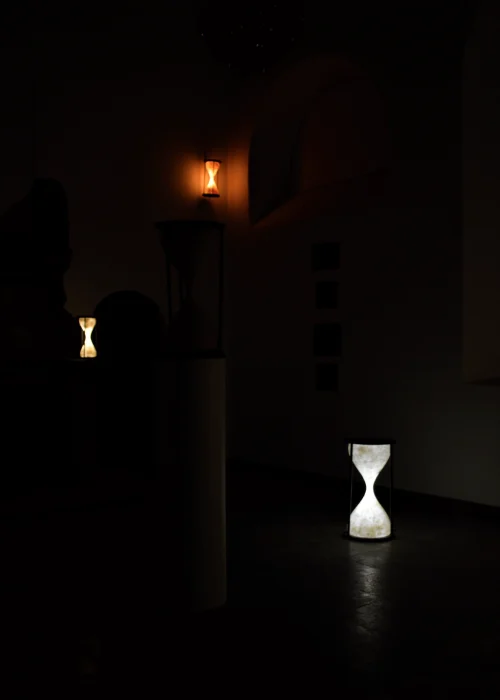
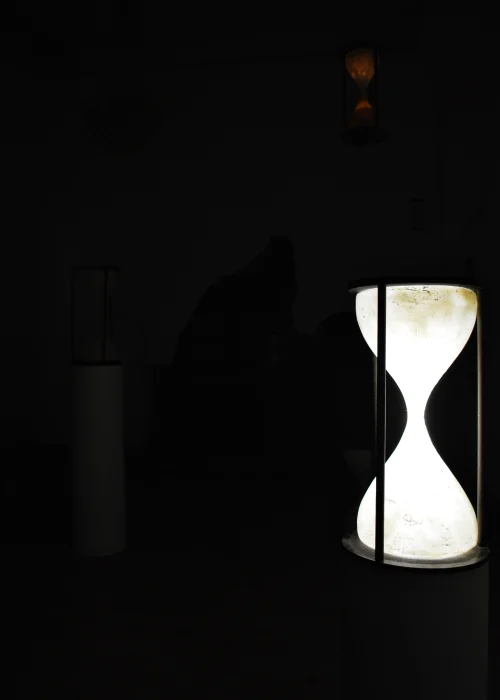
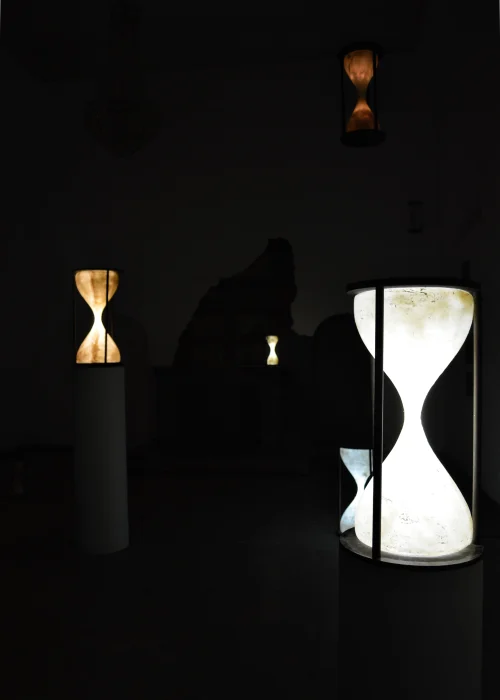
In a darkened space, hourglass-shaped O=O objects were arranged to interact with the movement of visitors. Motion sensors were embedded in each piece, triggering separately the flickering lights. Standing still for about a dozen seconds caused all lights to gradually extinguish, immersing the visitor in pitch-black surroundings. At Roodkapje Gallery and DordtYart Center, this effect was amplified by black-painted walls, black ceilings, and soft black carpeted floors. After remaining motionless in complete darkness, visitors’ eyes adjusted, and subsequent movement, reactivating the lights, could provoke an afterimage — an ephemeral imprint of the interplay between light and shadow, presence and absence.

The work drew inspiration from research showing the brain’s ability to detect meaning in images within just 13 milliseconds. Studies reveal that even brief exposure allows people to identify complex visuals through an initial wave of neural processing, demonstrating the mind’s rapid and efficient interpretation of visual information, often without conscious awareness or context.

MUSIC BOX
2013

Wood, plaster, sound, 3x4m

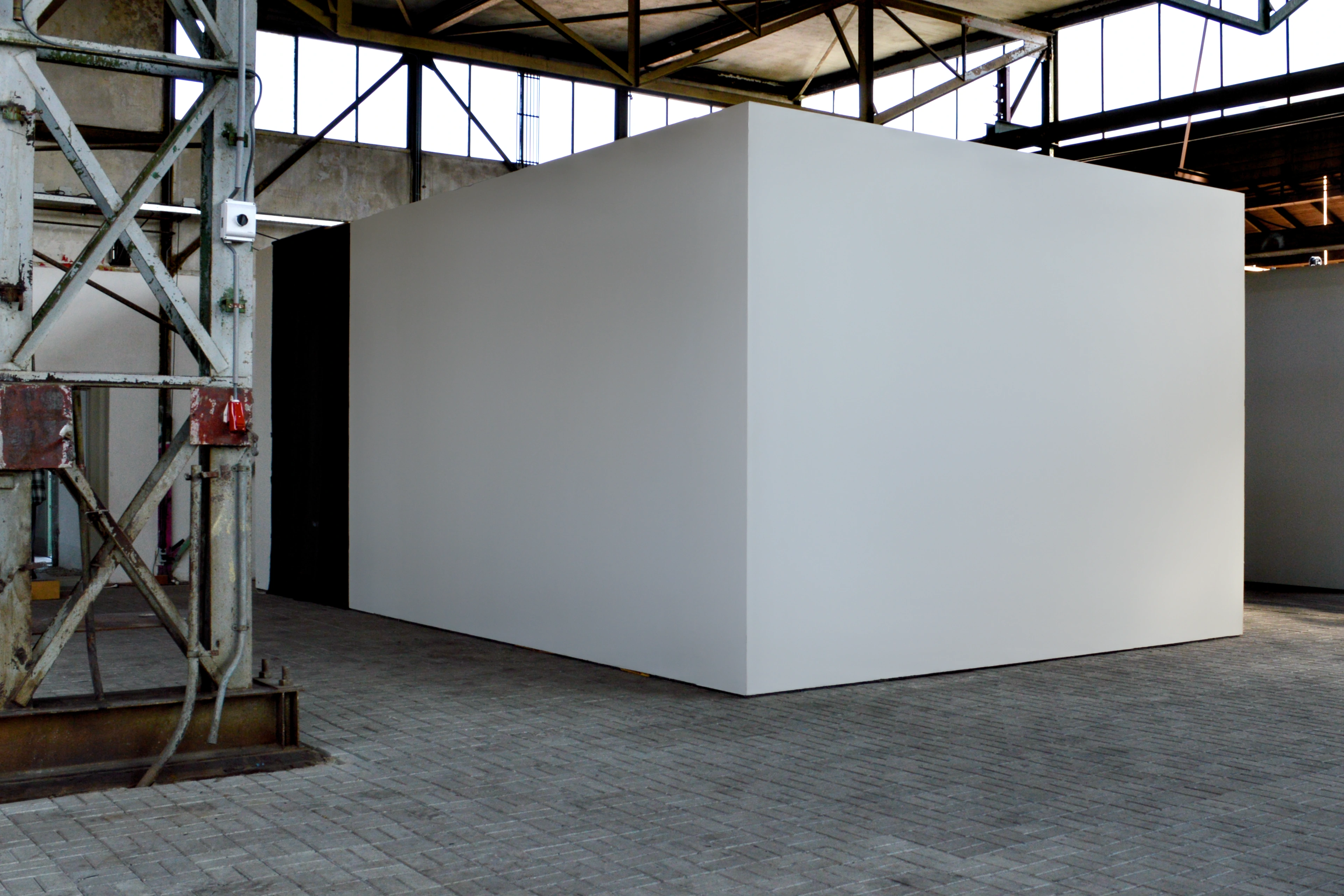
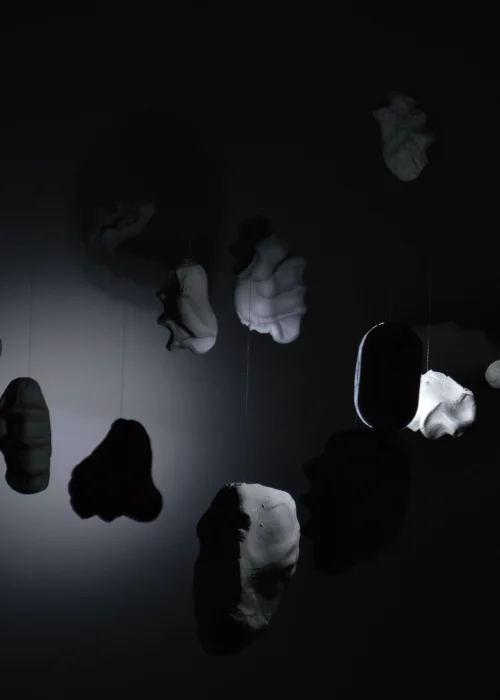
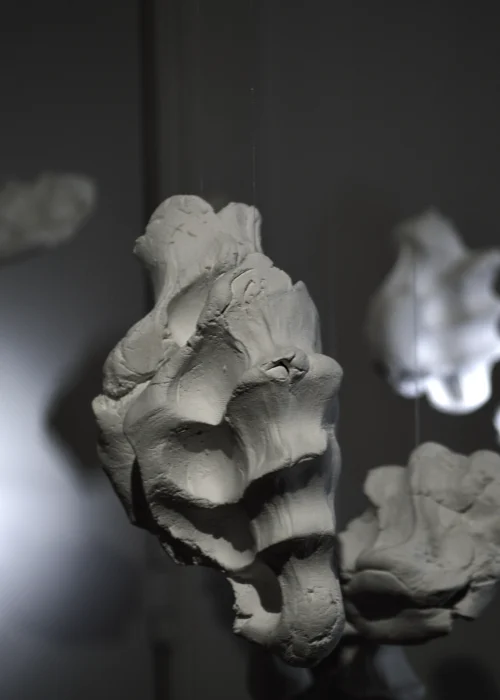
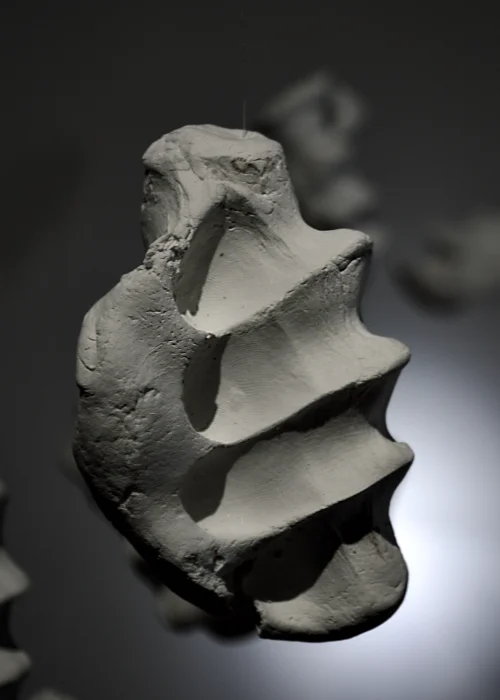
From the outside, the installation appeared as a white cube. Upon stepping inside, visitors entered a darkened space, with a soft black carpet, and the melody of a children’s music box played quietly throughout the space. Sculptural forms, each uniquely shaped by the impression of a squeezing hand, were suspended from a slowly revolving circle attached to the ceiling. A single light, positioned between these forms was casting shadows moving slowly across the walls.
Music Box invited visitors to immerse themselves in a child-like environment, evoking a sense of intimacy and security. The work drew on research emphasizing the vital role of safety and comfort in shaping memory, perception, and cognitive engagement. By creating a contrast between its unassuming exterior and the emotional refuge within, Music Box offered visitors a hidden, deeply personal space.

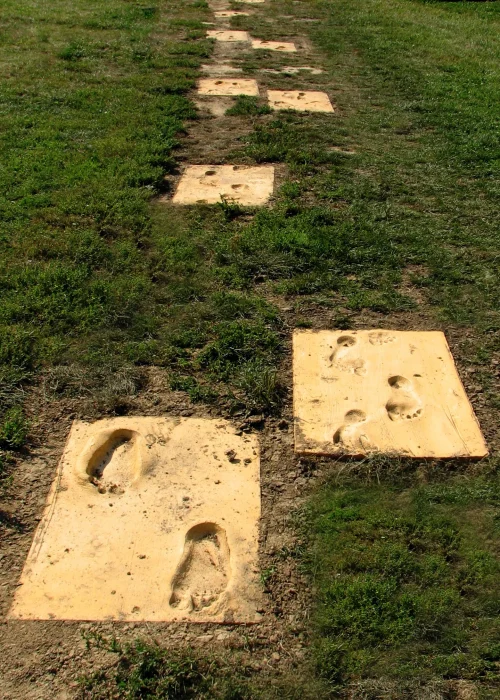
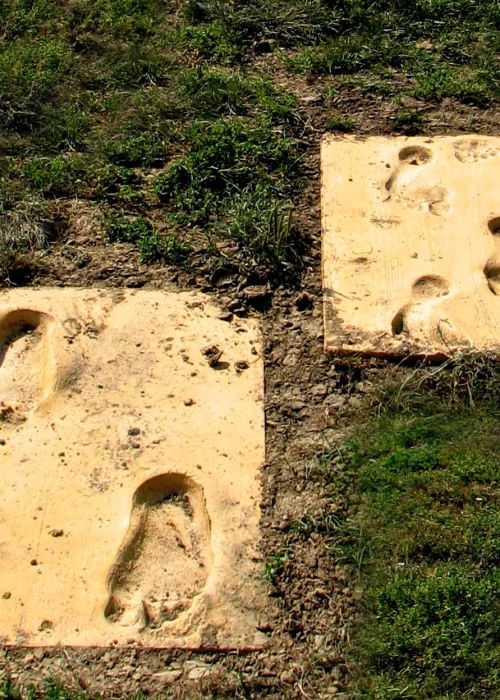
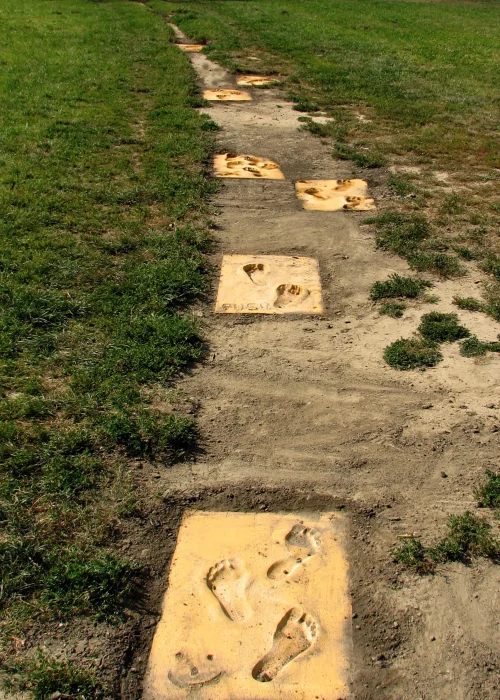
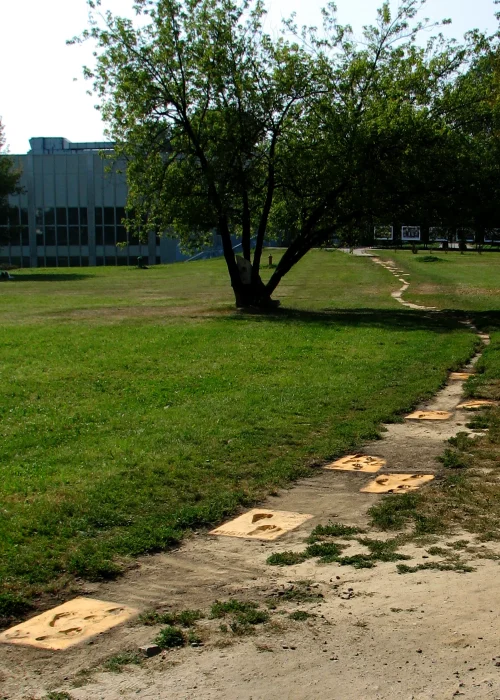
FOLLOW THE YELLOW BRICK ROAD
2011

32 concrete plates developed with the public within a month happening, NCK – Nowa Huta Cultural Centre, Krakow, Poland

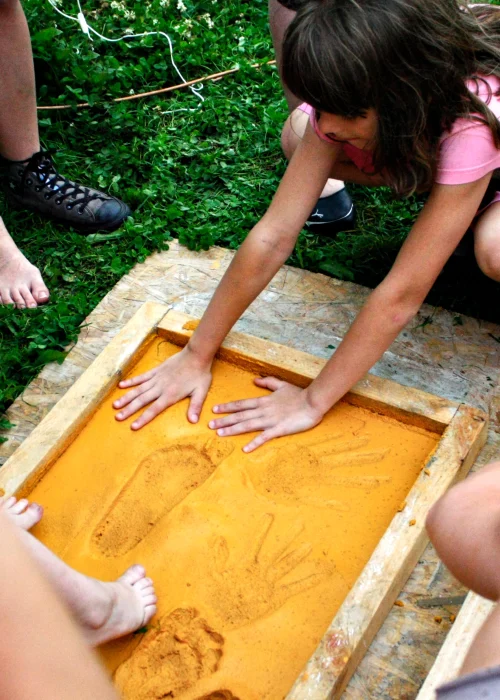
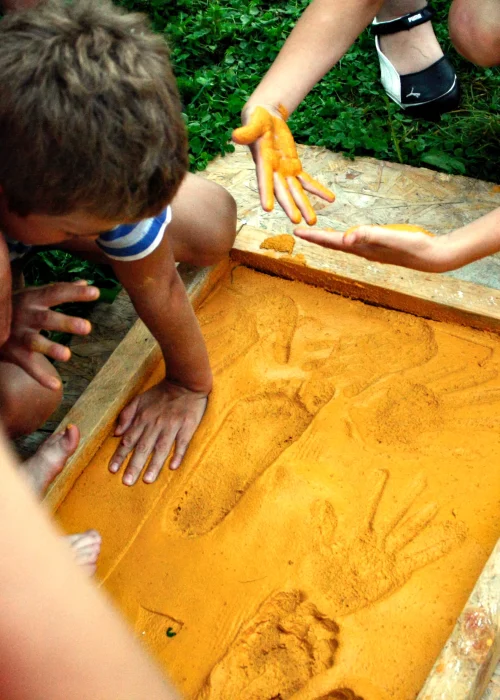
Can a memory from childhood change our life? Follow the Yellow Brick Road was developed in dialogue with school teachers and activists from the Nowa Huta district to address the lack of activities for children spending summer holidays in the city and to respond to the deficiency of art and cultural events for children during the school year. It questioned how art activism could contribute to the reinterpretation of the area, its public life, and its future development. By employing the language of play the project motivated children to create their own footprint and handprint casts in yellow concrete, using the symbol of a Forecourt of the Stars to point out the importance of each child participating in the process. The work operates through inscription rather than representation. Handprints and footprints function as direct registrations of presence, produced through a repeated, elementary action. Each concrete plate holds traces without hierarchy or differentiation, forming a structure based on accumulation rather than composition. Installed in public space, the plates entered everyday circulation as material traces embedded in the urban fabric. They were encountered incidentally, subjected to use, erosion, and disappearance. Meaning was not fixed or communicated through narrative, but emerged through repetition, duration, and gradual loss. Originally realized as a permanent installation within a festival framework, the work is no longer present in the site. Its current absence remains undocumented. What persists is the record of a public-space inscription that entered everyday circulation for a period of time, functioning through accumulation, exposure, and gradual erasure. Memory operates here as storage rather than narration, and presence is registered only through the trace it leaves behind.
AAAAAAAA